Markets Fall as Fed Chair Warsh Signals Possible Rate Hike in Jackson Hole Speech
Key Takeaways
- •Federal Reserve Chair Kevin Warsh signaled in his first Jackson Hole address that additional tightening may be necessary if inflation does not return to the 2% target.
- •Market-implied odds of a September rate hike jumped from roughly 35% to above 57% following the speech, according to CME FedWatch data.
- •Technology and small-cap stocks led the decline, with the Nasdaq down 0.52%, the S&P 500 down 0.25%, and the Russell 2000 down 1.4%, while the Dow finished nearly flat.
- •Treasury yields rose across the curve, with the 2-year yield climbing about 13 basis points to 4.36%, and the dollar index gained 0.61% to 99.71, its largest one-day advance in about two and a half months.
- •Gold fell 3.19%, silver dropped 4.15%, and Bitcoin declined 2.77%, while the European STOXX 600 gained 0.51% before the speech's full impact reached global markets.
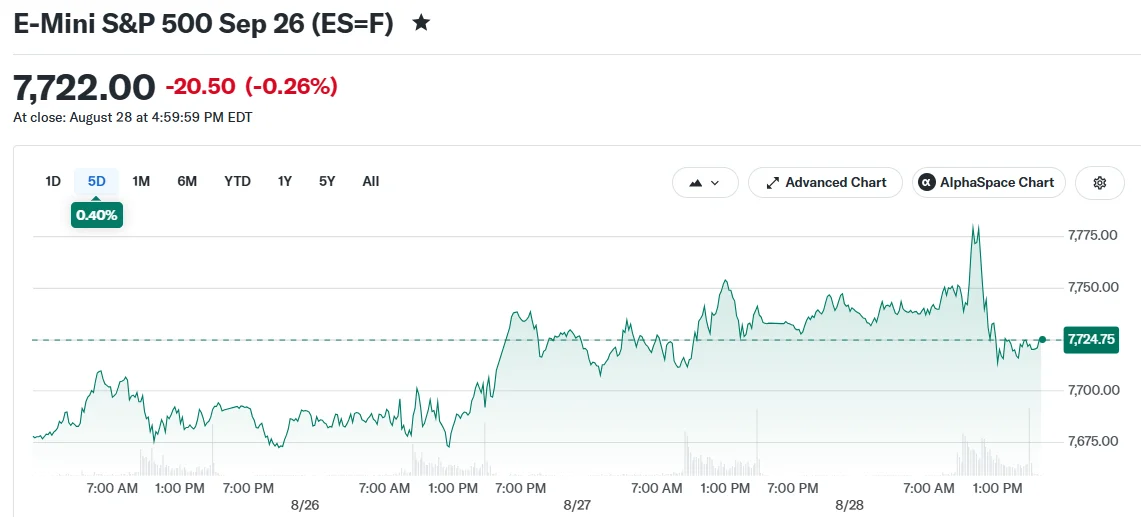
Financial markets fell broadly on Friday after Federal Reserve Chair Kevin Warsh used his inaugural Jackson Hole address to indicate that additional monetary tightening might be necessary, a hawkish message that underscored persistent inflation concerns.
The annual symposium, hosted by the Federal Reserve Bank of Kansas City in Jackson Hole, Wyoming, has historically served as a venue where Fed chairs signal shifts in policy direction, which is why investors parse the speeches closely for clues about the rate path.
Key Points
- Federal Reserve Chair Kevin Warsh delivered hawkish remarks at Jackson Hole, emphasizing persistent inflation concerns.
- Market expectations for a September rate increase surged from 35% to above 57%.
- Major indices closed lower: Nasdaq declined 0.52%, S&P 500 fell 0.25%, Russell 2000 plunged 1.4%.
- Bitcoin declined 2.77% amid rising rate hike expectations.
- The U.S. dollar rallied, recording its strongest single-day advance in more than two months.
FED WARSH AT JACKSON HOLE (Summary):
On policy:
• He gave no timetable for a rate hike and said the speech should not be viewed as forward guidance or a formal reaction function
• Short-term interest rates remain the Fed's main policy tool
• A "good majority" at the July… pic.twitter.com/pUZUOUa0Lj
— Wall St Engine (@wallstengine) August 28, 2026 (X post)
During his remarks, Warsh emphasized that the Fed "will have work to do" should inflation fail to retreat to the central bank's 2% objective. He added that current financial conditions do not appear sufficiently restrictive. Those comments were enough to pressure markets downward and sharply raise expectations for an interest rate increase.
September Rate Hike Odds Surge
Before Warsh spoke, market participants assigned just a 35.4% probability to a September rate increase. After the speech, that likelihood climbed above 57%, according to data from CME Group's FedWatch tool, which derives implied policy expectations from pricing in fed funds futures contracts.
The 2-year Treasury yield, a widely watched barometer of Federal Reserve policy expectations, jumped roughly 13 basis points to 4.36%. The 10-year yield advanced to 4.728%, while the 30-year yield touched 5.21%. Rising yields reflect the repricing of rate expectations across the curve, and higher borrowing costs ripple through everything from mortgages to corporate financing.
Currency markets also moved significantly. The dollar index rallied 0.61% to finish at 99.71, its largest one-day percentage gain in about two and a half months. The euro weakened to $1.158. Higher U.S. rates tend to attract capital toward dollar-denominated assets, and a stronger dollar in turn affects overseas earnings for U.S. multinationals and dollar-priced commodities.
Technology shares and small-capitalization companies bore the brunt of the selloff, as these equity categories typically underperform in rising-rate environments due to higher financing costs and reduced present value of future profits. Small caps, which often carry more floating-rate debt relative to their size, are especially sensitive to tighter credit conditions.
Technology and Small-Cap Stocks Lead the Decline
The Nasdaq Composite lost 138.93 points, a 0.52% decline, to settle at 26,402. The S&P 500 gave up 19.23 points, or 0.25%, closing at 7,711. The Dow Jones Industrial Average shed just 9.45 points, ending essentially unchanged at 53,559.
The Russell 2000 index, which tracks smaller companies, posted the steepest drop among major benchmarks, tumbling 1.4%.
Nvidia shares retreated on Friday even after rallying in the prior session on strong quarterly results. Mizuho analysts noted that Warsh's Jackson Hole commentary lifted rate hike probabilities, a development that has historically pressured high-momentum technology stocks.
Precious metals also suffered sizable losses, with gold plummeting 3.19% and silver falling 4.15% as the strengthening dollar weighed on commodity prices. Gold, which pays no interest, tends to lose relative appeal when rates and the dollar rise.
Cryptocurrency Markets Follow Suit
Bitcoin could not escape the downdraft. The leading cryptocurrency dropped 2.77% over the session as rate hike concerns pressured risk-oriented assets across the board. Digital assets typically move with broader risk appetite, and elevated interest rates generally discourage investment in speculative holdings.
European equity markets proved more resilient. The STOXX 600 index managed to advance 0.51% before the full impact of Warsh's statements reached global markets, though European central bank policy decisions can also diverge from the Fed's depending on their own inflation dynamics.
Looking ahead, market participants will closely watch the August employment report due next week, along with August inflation figures, both of which will offer important clues about the Federal Reserve's likely policy path. Beyond those releases, the Fed's September meeting and accompanying economic projections will be the next formal checkpoint for whether the tightening signal in Warsh's remarks translates into action.

