Trump DOJ Accused of Misleading Epstein Files Judge With Six-Month-Old Letter
Key Takeaways
- •The DOJ published a Feb. 14 letter in the Federal Register as a Section 3 report to Congress, which does not fulfill Section 2's requirement of written justifications for every redaction.
- •Judge Emmet Sullivan ruled in June that the DOJ was violating the Epstein Files Transparency Act and had threatened contempt proceedings while seeking a sworn declaration on compliance with the redaction log.
- •Section 2's redaction log was due by Dec. 19, 2025, and the Section 3 report was due within 15 days of the February files release, making the August publication late under both timelines.
- •The DOJ refused to produce handwritten FBI interview notes behind four reports, citing redundancy and victim-exposure concerns, and asked Sullivan to pause any order so it can appeal to the D.C. Circuit.
- •Katie Phang, whose lawsuit prompted the rulings, is due to file her reply by Sept. 3 as the dispute over accountability for the redactions continues.
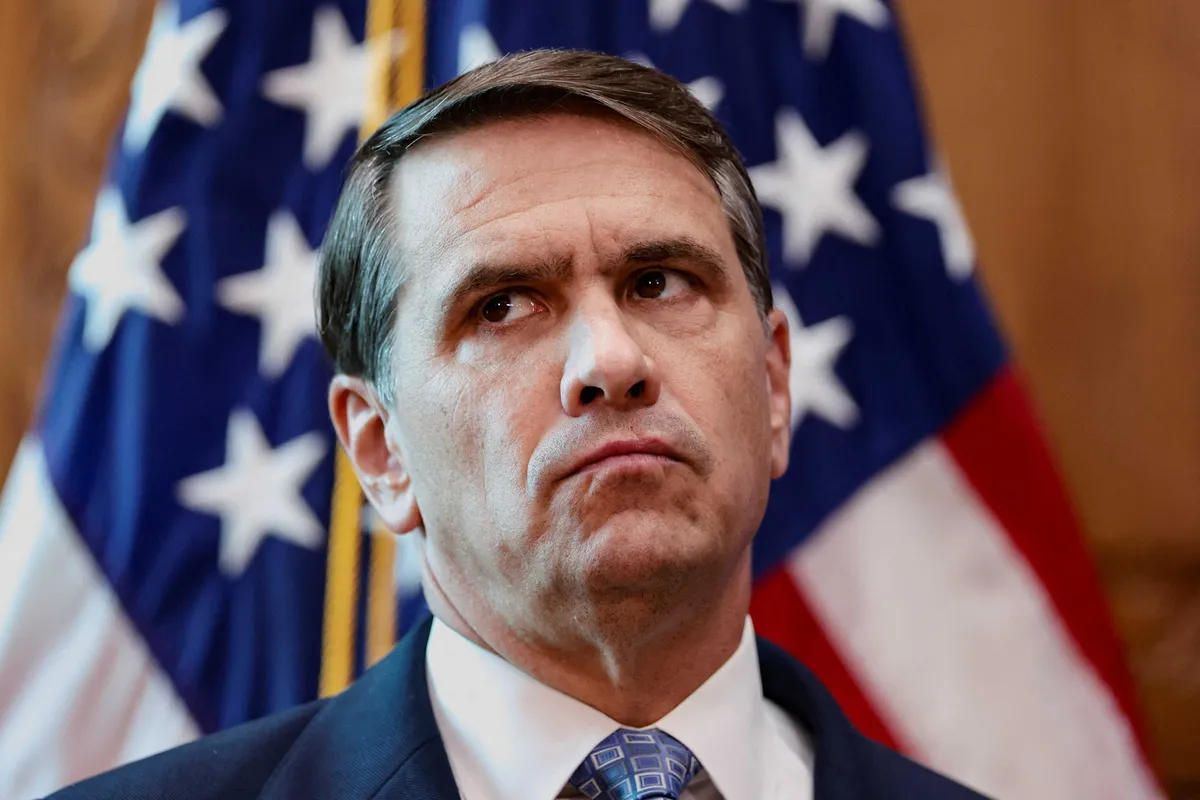
Acting Attorney General Todd Blanche attempted to avoid swearing under oath about his redactions in the Epstein files case by inserting a six-month-old letter to Sen. Chuck Grassley (R-IA) into government records overnight and then telling a judge it was something it was not.
Senior U.S. District Judge Emmet Sullivan had ordered the Justice Department to respond by Thursday, after ruling in June that the department was violating the Epstein files transparency law, which required an explanation for redactions. That explanation was never published in the Federal Register, even though the law set a deadline of Dec. 19, 2025.
The law at issue, the Epstein Files Transparency Act (H.R. 4405), enacted as Public Law 119-38, was designed to force the government to disclose what it had withheld from the files tied to Jeffrey Epstein, the financier who died in federal custody in 2019 while awaiting sex-trafficking charges, and who had decades of documented associations with powerful figures in politics, business and royalty.
Earlier this year, journalist Katie Phang sued Blanche demanding answers. Sullivan attempted to force Blanche's hand in June with a preliminary injunction, but the attorney general continued to stall. The judge eventually threatened to hold DOJ attorneys in contempt and gave Blanche until Thursday to respond.
That response arrived Thursday night, but not from Blanche himself. Andrew Block, senior counsel to the associate attorney general, filed a motion on his behalf.
Phang had asked the judge to require Blanche, or someone in the department who knew how the redactions were done, to swear to it under penalty of perjury. Thursday night's filing insisted the declaration was no longer needed because the DOJ had met the requirement at the last minute by publishing it in the Federal Register.
"Therefore, no declaration, or any further action, is needed," the filing states, pointing to the notice published in that morning's Federal Register (Federal Register notice).
Phang revealed in a video on Friday (YouTube) that the document Blanche had inserted into the Federal Register did not meet the requirements of the Epstein law at all. In fact, the Feb. 14 letter Blanche had inserted was labeled as a response to an entirely different section of the Epstein Files Transparency Act (H.R. 4405).
"Oh, but Todd, we know how to read, and I guess you guys don't," Phang said.
The notice runs seven pages, and its appendix is a scanned letter headed "Epstein Files Transparency Act – Section 3 Report to Congress."
The two sections of the law ask for unambiguously different things.
Section 2 requires a written reason for every single redaction. Section 3 requires only a one-time summary of the published files to be sent to congressional committees.
"All — not some, not a summary of, not the ones that Blanche feels like picking out of the air to do — all redactions must be accompanied by a written justification published in the Federal Register and submitted to Congress," Phang said, reading from the statute.
"Section 2 is different than Section 3," she added. "You know what he just cites? He cites Section 3. He doesn't do Section 2."
"Good for you for Section 3. Good for you. You were late — you didn't do it 15 days after you published all this crap in January. Doing it in August, six and a half months later. Not the law," she continued.
Section 3 was due within 15 days after the DOJ completed the release of the Epstein files, which it sent on Feb. 14, even though all of the files had not been released.
The department also never fully complied with the redaction log requirement in Section 2. Sullivan gave the DOJ until July 2 to publish it or explain why it could not, according to his June 25 opinion (preliminary injunction).
"In fact, there's names of perpetrators, recruiters, enablers, co-conspirators, and other people that — I don't know — committed child rape," Phang pointed out on Friday.
At an Aug. 13 hearing, Sullivan said he would seek a sworn declaration regarding the government's compliance with the release of the redaction log, which could have exposed Blanche or other DOJ attorneys to the risk of perjury (Courthouse News).
"I don't want to do it, but I will do it to ensure justice is fairly administered," Sullivan said. "That's not a threat, that's a promise."
Sullivan warned that he had previously held three prosecutors in contempt in the 2008 corruption case against former Sen. Ted Stevens (R-AK) for withholding evidence — a case whose conviction was later dismissed after the Justice Department's own misconduct came to light, an episode that has made Sullivan's courtroom a frequent arena for fights over government transparency.
The DOJ's answer also refuses to hand over handwritten FBI interview notes behind four reports, arguing they repeat what is already public and risk exposing victims.
"The Department maintains its objections to producing any such documents," the filing states (court filing PDF), warning that review would "open the door to" line-by-line examination of millions of pages.
The department asked Sullivan to pause any such order so it can appeal to the D.C. Circuit. If the judge declines, the dispute over who must account for the redactions — and under oath — moves to the federal appeals court, with Phang's reply due Sept. 3.
Source: Raw Story

