MARA's Bitcoin Mining Cost Falls to $59,774 per BTC, CryptoQuant Estimates
Key Takeaways
- •CryptoQuant CEO Ki Young Ju estimated MARA Holdings' mining cost at $59,774 per BTC on Oct. 14, down sharply from $70,027 in February 2026 and below Bitcoin's market price near $80,743.
- •Bitcoin's seven-day average hashrate climbed from 909 EH/s in February to 1,007 EH/s by Oct. 14, though it remains below the roughly 1,115 EH/s peak recorded in October 2025.
- •Three of the last four Bitcoin mining difficulty adjustments have been increases, signaling potentially tougher conditions for miners ahead.
- •Approximately 84% of the 164 analysts tracked by CryptoQuant held bullish views on Bitcoin, up from 37% in July and the strongest reading since August 2025.
- •Bitcoin fell roughly 1.2% to near $80,743 on Oct. 15 following a stronger-than-expected September U.S. inflation report that raised expectations of additional Federal Reserve rate hikes.
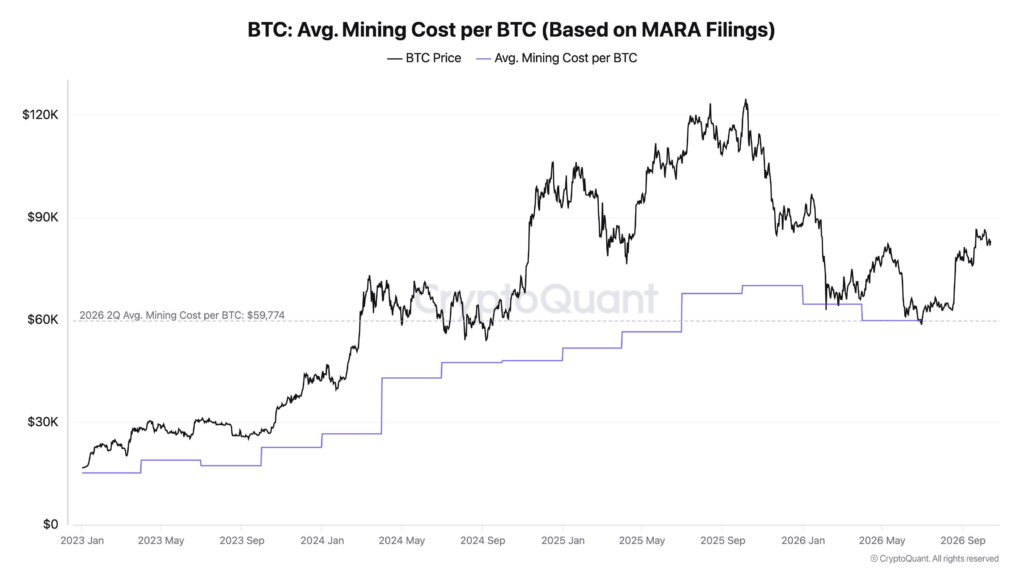
Bitcoin mining economics showed signs of improvement as MARA Holdings' estimated production cost fell below the cryptocurrency's market price, according to data published by on-chain analytics firm CryptoQuant. CryptoQuant Chief Executive Officer Ki Young Ju reported an estimated mining cost of $59,774 per BTC on Oct. 14, based on operating figures drawn from MARA's financial disclosures.
The estimate pointed to improved mining margins for the company, although it did not establish company-wide profitability. For publicly listed miners, the gap between per-coin production cost and the market price is a widely used gauge of operating headroom. The calculation multiplies MARA's average operational hashrate by its cost per petahash, then divides the result by the average BTC mined per day. The figure marks a sharp decline from the $70,027 per BTC estimated in February 2026.
Meanwhile, Bitcoin's network hashrate has climbed over the preceding two months. That recovery coincided with stronger analyst sentiment, even as BTC faced renewed selling pressure in the market.
Rising Hashrate Signals Renewed Miner Activity
The decline in production costs comes amid a rising Bitcoin hashrate, a sign that more miners are joining the network and competing for block rewards. Hashrate, measured here in exahashes per second (EH/s), with one exahash equal to one quintillion hash computations, reflects the total computational power securing the network and expands or contracts as miners respond to changing economics. According to Hashrate Index, the network's seven-day simple moving average (SMA) had fallen as low as 909 EH/s in February. That figure increased to 1,007 EH/s by Oct. 14.
The current level is still below the peak of roughly 1,115 EH/s recorded in October 2025, when Bitcoin was trading at its all-time high. Even so, the rebound highlights how improved performance is bringing miners back online.
Ju acknowledged the trend, noting that Bitcoin's hashrate has been rising for two months after falling for nine months. "More mining rigs = miners are bullish," he said.
Mining difficulty is also rising again. Difficulty adjusts roughly every two weeks to keep new blocks arriving on schedule, recalibrating alongside changes in network hashrate. After several declines over the past year, three of the last four difficulty adjustments have been increases, a sign that miners could soon face greater challenges producing BTC.
Bitcoin Price Slips Toward $80K Despite Bullish Analyst Views
Bitcoin's price weakened on Oct. 15 despite reports of improving mining economics. Barron's reported BTC trading near $80,743, down approximately 1.2% during the session. The cryptocurrency also fell to an overnight low around $80,247.
The decline followed September's stronger-than-expected U.S. inflation report. Higher inflation raised concerns that the Federal Reserve could raise interest rates again, and those expectations weighed on risk assets as investors assessed tighter financial conditions.
Sentiment data pointed in the opposite direction. CryptoQuant reported that approximately 84% of the 164 analysts tracked on its platform held bullish views on Bitcoin, compared with 37% in July. The reading marked the strongest reported sentiment since August 2025, although the percentage covered CryptoQuant's tracked analysts rather than the entire investment research industry.
The improvement contrasted with Bitcoin's recent price performance. Despite stronger analyst expectations, BTC continued to struggle to sustain a recovery above nearby resistance levels. The $80,000 region now represents an immediate psychological price reference: a sustained breakdown could weaken the near-term outlook, while renewed buying could support another recovery attempt.
However, analyst sentiment does not guarantee future price gains. Bitcoin also remains sensitive to institutional demand, market liquidity, and monetary policy expectations.
What Comes Next for Bitcoin Mining and BTC Price
Bitcoin mining economics will remain sensitive to production expenses, network difficulty, and BTC market prices. MARA's estimated $59,774 production cost suggests a favorable operating spread under the reported conditions. The company's quarterly financial results, however, highlight expenses beyond direct mining operations, and further difficulty increases could affect production economics even if network hashrate continues recovering. Bitcoin's halving schedule, which cuts the block subsidy roughly every four years with the next reduction expected in 2028, adds a longer-term structural constraint on miners' per-coin costs.
The next development to monitor is whether mining activity remains elevated while Bitcoin trades near $80,000. Sustained price weakness could narrow operating margins and affect equipment deployment decisions.
CryptoQuant's analyst sentiment figures suggest optimism among its tracked participants. Stronger demand and a confirmed price recovery, however, would provide clearer evidence of improving market conditions. For now, MARA's estimated production cost remains below Bitcoin's reported market price, and whether that spread persists will depend on energy costs, network competition, and future BTC price movements.
This article is for informational purposes only and does not constitute financial or investment advice.
Source: The Market Periodical

