Commerce Secretary Lutnick Confronted Over USA Rare Earth Conflict-of-Interest Concerns
Key Takeaways
- •Commerce Secretary Howard Lutnick denied a conflict of interest linked to the Commerce Department's $1.6 billion investment in USA Rare Earth, despite his former firm Cantor Fitzgerald serving as placement agent on the deal.
- •Lutnick said his sons bought and now run Cantor Fitzgerald, and that he had no knowledge of the USA Rare Earth transaction until Ken Moelis alerted him.
- •Democratic lawmakers led by Sen. Elizabeth Warren sent a July letter to Cantor Fitzgerald Chairman Brandon Lutnick seeking details on the firm's role, fees, and communications; the inquiry does not establish wrongdoing.
- •The funding deal, announced in January 2026 and finalized in June, forms part of Washington's broader push to onshore critical-mineral supply chains and reduce dependence on Chinese rare-earth processing.
- •Lutnick argued the U.S. must outpace China in rare earths, which Beijing dominates and 'weaponizes' through export restrictions affecting defense, electric vehicle, and electronics industries.
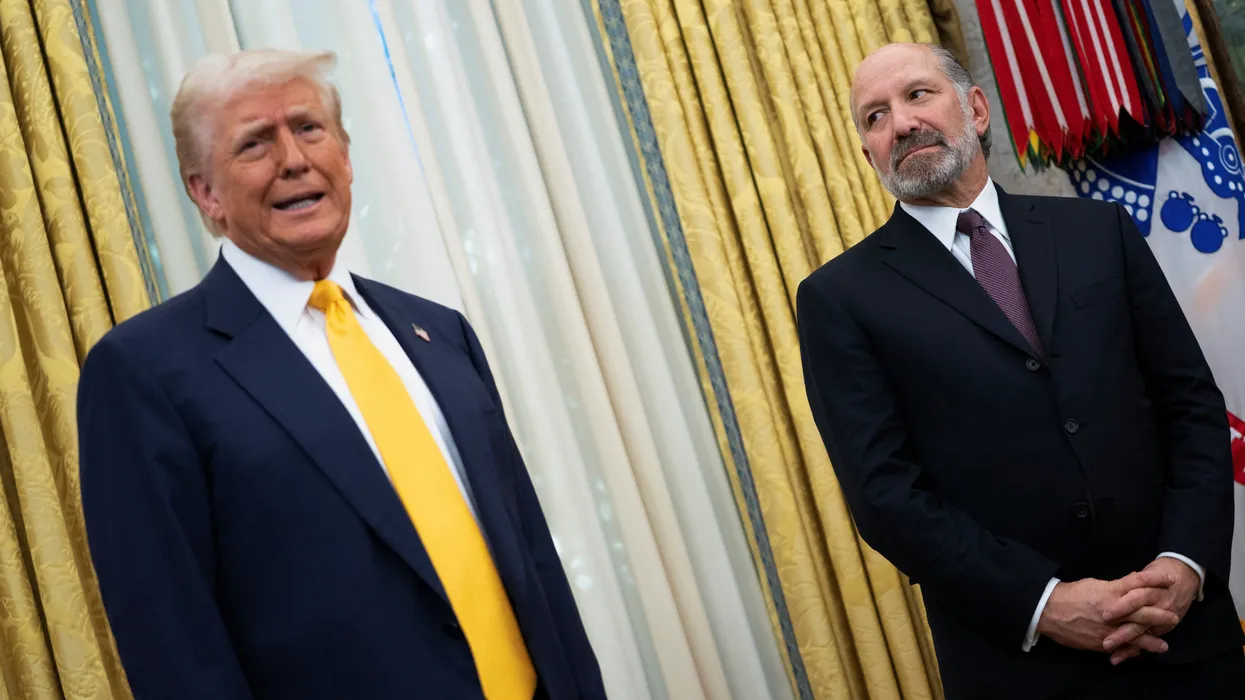
Conservative "Squawk Box" host Joe Kernen raised concerns Wednesday that Commerce Secretary Howard Lutnick may have a conflict of interest stemming from the Commerce Department's $1.6 billion investment in USA Rare Earth.
The issue, as Kernen framed it, is that Lutnick's former financial services firm, Cantor Fitzgerald, served as placement agent for the deal and may have benefited financially. Lutnick insists his sons now run the firm — an argument similar to the one President Donald Trump makes when describing his sons' management of the Trump Organization.
Kernen pressed the secretary directly: "So, USA Rare Earth, I understand this, you ran Cantor [Fitzgerald]. You had a relationship. You ran their IPO before you became a commerce secretary. So, no surprise there. You put it in a trust and your sons are now running a Cantor. And you know, there was a pipe financing deal done. Where to get, I think, the financing is from the Commerce Department was involved with raising some of the, some of the equity and obviously they get a fee. So, the perception is that you're sitting now at Commerce and you're able to control what Cantor is getting in terms of fees. With your sons running that company, it looks like a conflict of interest. How do you respond to that?"
Lutnick's reply was blunt: "It's just not."
He maintained that he had no knowledge of what was happening with USA Rare Earth until his friend Ken Moelis flagged it.
In July, Democratic lawmakers sent a letter to Cantor Fitzgerald Chairman Brandon Lutnick seeking information about the firm's role, fees, and communications surrounding the transaction. The inquiry does not establish wrongdoing; it asks whether Lutnick's government position, family ties, and prior leadership of Cantor Fitzgerald created an improper overlap in a deal involving strategically important rare-earth minerals.
"It is imperative your company provide complete transparency about the substantive conflict of interest concerns raised by the circumstances of this investment," the letter, led by Sen. Elizabeth Warren (D-Ma.), stated. "Secretary Lutnick appears to have played a part in facilitating USAR's deal with Commerce."
USA Rare Earth acquired Texas Mineral Resources in March 2026. According to a report from the Junior Mining Network, "Moelis & Company LLC acted as financial advisor and White & Case LLP acted as legal advisor for USA Rare Earth. Roth Capital Partners LLC acted as financial advisor and Loeb & Loeb LLP acted as legal advisor to Texas Mineral Resources Corp."
The government announced its funding deal with USA Rare Earth in January 2026 and made it official in June. The deal is part of a broader push by Washington to onshore critical-mineral supply chains, which also includes a previously announced Pentagon agreement with MP Materials, as the United States seeks to reduce dependence on Chinese processing of rare earths.
Lutnick told Kernen that the United States must gain an edge over China in rare-earth minerals, arguing that China is "weaponizing" them. China dominates global rare-earth refining and has restricted exports of several of these materials — which are used in defense systems, electric vehicles, and electronics — heightening the strategic stakes of the administration's industrial policy.
"These are small businesses, right? In the larger scheme of the US economy," Lutnick said of USA Rare Earth, which has a market capitalization of between $3.9 billion and $4.3 billion, depending on the stock price.
"And I got to tell you I didn't put my companies in a trust. My kids bought my company, so I am no longer involved in my old company at all. My kids bought it from — from me," said Lutnick. "This is minor stuff, anyway. You know that I am well-to-do. I don't worry about this kind of stuff."

