Amazon Drought Triggers Container Surcharges of Up to $1,900
Key Takeaways
- •MSC, ONE and Maersk have introduced low-water surcharges for cargo moving toward Manaus as river levels fall.
- •ONE said its surcharge will start on imports from September 15 and on exports from October 1 if the Rio Negro drops to a set level.
- •Maersk expects the highest operational risk between late October and November and may need to discharge cargo at Itacoatiara or a floating pier.
- •Brazil’s ANTAQ is monitoring the charges and says carriers must justify any additional fees technically and financially.
- •Low water is also disrupting the Paraná, Tapajós, Rhine and Danube rivers, affecting grain, fuel and other freight movements.
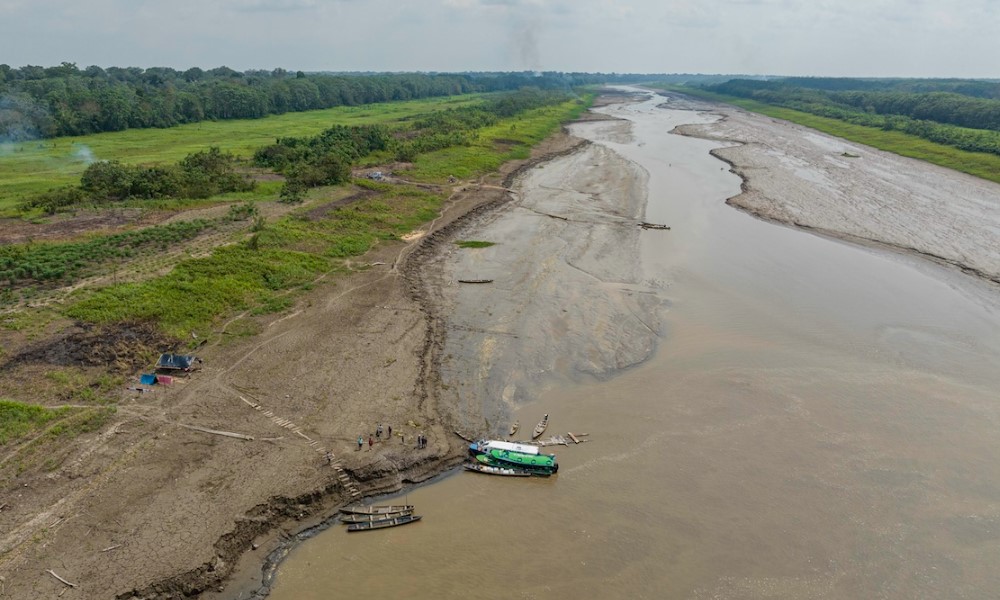
Carriers are preparing costly contingency plans to keep Manaus connected as low water disrupts an expanding list of the world's major freight rivers.
Container lines are bracing for another difficult Amazon dry season, announcing low-water surcharges of as much as $1,900 per box as falling river levels threaten access to Manaus, the manufacturing hub of the Manaus Free Trade Zone, which depends heavily on river connections to coastal ports for its container flows. The season follows the severe 2023 drought, when the Rio Negro at Manaus fell to its lowest level since records began in 1902.
Carriers set surcharges and contingency plans
Mediterranean Shipping Co (MSC) will charge $1,400 per dry container and $1,900 per reefer, while Ocean Network Express (ONE) has announced a $1,458 surcharge per container.
ONE's charge will apply to imports from September 15 if the Rio Negro falls to a certain level, with exports following from October 1. The carrier warned that contingency measures could include additional ships, tugs and pilots, barge transport, alternative ports and floating piers.
Maersk has set its own low-water surcharge at $1,228 per dry container, effective from September for cargo originating in Asia, India, the Middle East, Africa and Europe if anticipated navigation restrictions materialise. The Danish carrier expects the greatest operational risk between late October and November. If conditions deteriorate sufficiently, cargo could be partially discharged at Itacoatiara and transferred onwards. Should river levels fall lower, Maersk is preparing for the possibility that vessels will be unable to reach Manaus at all, requiring full discharge at the floating pier.
Brazilian terminal operator Grupo Chibatão is preparing to reactivate temporary transhipment infrastructure at Itacoatiara, while Brazil's waterways regulator ANTAQ is monitoring the latest surcharges and has stressed that carriers need to provide technical and financial justification for additional charges. River levels in the basin typically reach their seasonal low between October and November, meaning the contingency arrangements — and the scrutiny they attract from regulators — could remain in force for several months.
Low water also gripping Paraná and Tapajós
The Amazon is far from alone. Argentina's Paraná, the artery serving the giant Rosario grain-export complex through which the bulk of the country's grain exports move, has again been running at low levels. Recent Argentine industry reporting has indicated that deep-draft ships have at times been forced to leave Rosario with around 10% to 12% less cargo than normal, increasing the amount that must be topped up elsewhere. Argentina's National Water Institute continues to monitor below-normal conditions across the Paraná system.
Within Brazil, industry groups are warning that declining levels on the Tapajós could interrupt grain and fuel movements unless navigation channels can be maintained, with as much as 5m tonnes of grain potentially exposed.
Rhine and Danube under strain
Across Europe, drought has hammered two of the continent's most important commercial rivers this summer. The Rhine gauge at Kaub, the key bottleneck between northern European ports and Germany's industrial heartland, dropped below 10 cm earlier this month, effectively severing normal barge traffic through the Middle Rhine. Water levels have since recovered somewhat, but vessels remain heavily restricted and low-water surcharges are still in force. Maersk has warned that loading guarantees cannot be provided below certain river levels, while some carriers have diverted cargo onto already stretched road and rail networks. The corridor normally carries substantial volumes of coal, fuels and agricultural products, and past drought summers, including 2018 and 2022, brought comparable disruption and surcharges.
Conditions on the Danube have been even more dramatic. Austria said this month that freight shipping had "largely come to a halt" on parts of the river, with navigable water depths falling to around 1.8 m east of Vienna. Further downstream, vessels across Hungary, Serbia, Romania and Bulgaria have been forced to reduce loads or wait for sufficient water.

