Lemissoler Navigation Names First Two Dual-Fuel Methanol Bulk Carriers
Key Takeaways
- •Lemissoler Navigation named its first two dual-fuel methanol dry bulk carriers, MV Lem Azalea and MV Lem Plumeria, on 27 July 2026 as part of a four-vessel newbuilding programme.
- •The 65,000-dwt vessels were constructed by CSSC Huangpu Wenchong Shipbuilding with CSTC, designed by SDARI, and classified by ABS based on the Lem65ePlus-SDARI design.
- •Both carriers can operate on conventional marine fuel or methanol, providing operational flexibility as bunkering infrastructure for alternative fuels continues to develop.
- •MV Lem Azalea and MV Lem Plumeria will operate under charter to Cargill, a major global dry bulk charterer that has emphasized lower-emission tonnage.
- •The newbuilding programme supports Lemissoler's target of reaching net-zero emissions by 2045 and aligns with the IMO's revised GHG strategy and the EU Emissions Trading System's coverage of maritime CO2 emissions.
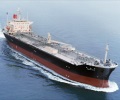
Lemissoler Navigation has named MV Lem Azalea and MV Lem Plumeria, the first two vessels in its four-ship dual-fuel methanol newbuilding programme, during a ceremony held on 27 July 2026.
The two 65,000-dwt dry bulk carriers were constructed by CSSC Huangpu Wenchong Shipbuilding in cooperation with China Shipbuilding Trading Co. (CSTC). According to Lemissoler, the vessels grew out of the company's operational experience and its goal of developing efficient, competitive dry bulk carriers flexible enough to meet both current operational demands and the evolving requirements of the maritime energy transition.
The project involved multiple partners. Shanghai Merchant Ship Design and Research Institute (SDARI) translated Lemissoler's operational requirements and ongoing owner input into the vessel design and detailed engineering, while the American Bureau of Shipping (ABS) provided classification expertise and technical guidance.
The resulting Lem65ePlus-SDARI design pairs dual-fuel methanol capability with advanced hull optimisation, improved propulsion efficiency, energy-saving technologies, and modern environmental systems. ABS granted the design Approval in Principle in 2023.
MV Lem Azalea and MV Lem Plumeria are capable of operating on both conventional marine fuel and methanol. Methanol has emerged as one of the leading alternative fuels being explored across the shipping industry, as it can reduce carbon dioxide emissions on a tank-to-wake basis and offers a pathway to near-zero well-to-wake emissions when produced from renewable feedstocks. Lemissoler stated that this operational flexibility allows the vessels to maintain reliable service while supporting the adoption of lower-carbon fuels as availability and bunkering infrastructure develop. Both vessels will operate under charter to Cargill, one of the world's largest dry bulk charterers, which has publicly emphasised the role of lower-emission tonnage in its maritime logistics activities.
Designed for long-term operational efficiency and regulatory readiness, the vessels are intended to remain competitive throughout the maritime energy transition. Their regulatory relevance aligns with the International Maritime Organization's revised GHG strategy, which targets net-zero emissions from international shipping by or around 2050, as well as the inclusion of maritime CO2 emissions in the EU Emissions Trading System from 2024. Their delivery marks an important step toward Lemissoler's objective of achieving net-zero emissions by 2045.
Philippos Philis, Chairman and CEO of Lemissoler Navigation, said: "The naming of MV Lem Azalea and MV Lem Plumeria is a significant milestone for Lemissoler and for everyone who has contributed to this programme."
"The concept began with a clear operational objective from our team: to develop efficient dry bulk vessels with the flexibility to meet both present requirements and the transition towards alternative fuels."
"Bringing that concept to life required close collaboration. SDARI translated our operational requirements and continuous input into the vessel design and detailed engineering, while ABS provided valuable classification expertise and technical guidance. Together with the shipbuilding capabilities of CSSC Huangpu Wenchong and CSTC, and the commitment of our technical and commercial partners, this collaboration turned our ambition into working vessels."
"MV Lem Azalea and MV Lem Plumeria demonstrate what can be achieved when operational experience, specialist engineering knowledge and close cooperation are brought together."
The programme builds on Lemissoler's established fleet development approach, in which the company defines vessel concepts and performance requirements before collaborating with naval architects, shipyards, classification societies, and technology providers to deliver commercially relevant solutions.
Lemissoler expressed appreciation to SDARI, ABS, CSSC Huangpu Wenchong, and CSTC, as well as its financial institutions, equipment suppliers, technology providers, supervision teams, and all other partners involved in the programme. The company also acknowledged its newbuilding, technical, procurement, commercial, legal, finance, and operations teams, along with the captains, engineers, and crews responsible for the vessels' safe operation.
MV Lem Azalea and MV Lem Plumeria are the first two of four vessels in the programme. Together, the series represents a significant fleet renewal for Lemissoler and a practical investment in lower-emission dry bulk shipping.

