LayerZero (ZRO) Rallies Toward $2 After Reclaiming August Resistance
Key Takeaways
- •ZRO traded near $1.85 on Kraken on October 1, roughly 6.1% higher, after clearing the $1.20–$1.30 zone containing both the August resistance area and the 200 simple moving average near $1.248.
- •The token now approaches $1.90–$2.00 resistance with a 14-period RSI near 77.9, while the $1.55–$1.65 zone stands as the first support if selling returns.
- •On September 21, Anchorage Digital selected LayerZero as its preferred cross-chain connectivity provider for stablecoin issuance, with USAT as the first stablecoin to launch using the OFT standard.
- •Under the announced ATLAS design, trading venues can stake ZRO for higher fee rebates, with 75% of remaining fees funding ZRO purchases and burns, and launch is planned for later this year.
- •The LayerZero Foundation's dashboard records about 2.38 million ZRO purchased through Stargate revenue-funded buybacks, while monthly token unlocks to partners and contributors could offset some of that buying demand.
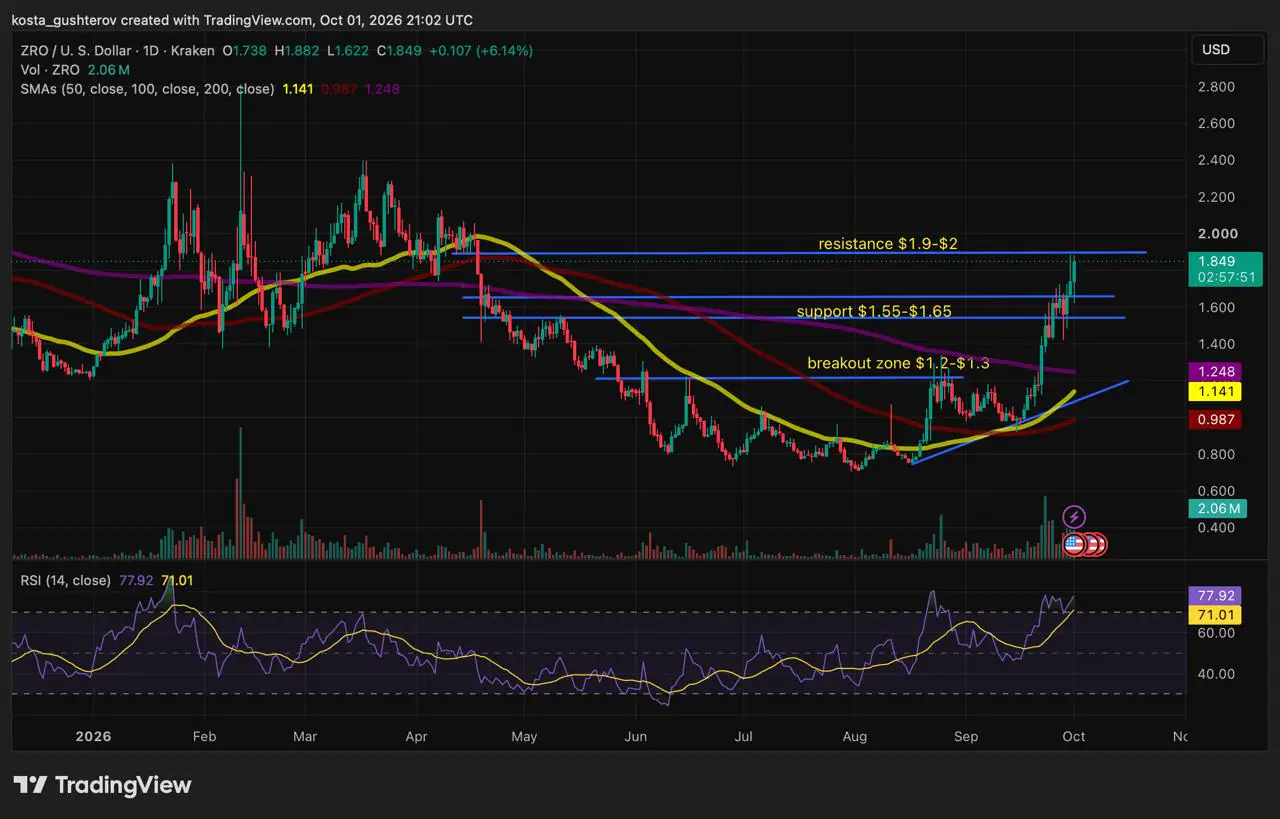
LayerZero's ZRO token traded near $1.85 on Kraken's daily chart at 21:02 UTC on October 1, up roughly 6.1% from the previous close, with the session still underway.
ZRO reclaims its August trading ceiling
After months of decline, ZRO formed a base over the summer and rebounded in August. September's pullback halted above that base, and the subsequent rally cleared the August peak, producing the higher low and higher high associated with an emerging uptrend.
The break above $1.20–$1.30 carried the price through both the August resistance area and the 200 simple moving average (SMA), now near $1.248. Holding that zone during any future retreat would help preserve the breakout that started the latest advance.
The same rally has lifted ZRO above all three moving averages. The 50 SMA is turning higher, although it remains below the 200 SMA, which is still falling — a mixed alignment that reflects how recent the improvement is relative to the preceding decline.
Closer to the current price, buyers have already responded within the $1.55–$1.65 zone. The October 1 candle reached $1.622 before rebounding toward $1.85, making this the first area to watch if selling returns. A daily close above the zone would strengthen the evidence that it is holding.
ZRO now approaches $1.90–$2.00, where it traded before April's sharp decline. A daily close above $2, followed by a pullback that holds the area, would provide stronger evidence of a breakout. The next visible historical trading region sits around $2.20–$2.40.
ZRO is approaching that resistance with its 14-period Relative Strength Index (RSI) near 77.9, reflecting the rapid advance. Readings above 70 are commonly described as overbought, but momentum can remain elevated during a strong rally. A falling RSI would become more concerning if the price also lost recently reclaimed support.
If resistance holds, the depth of the pullback would help distinguish consolidation from a weakening rally:
- Holding $1.55–$1.65: Buyers would retain the most recently reclaimed area, leaving the recovery intact below resistance.
- Losing that zone and failing to recover it: Attention would shift toward the earlier breakout at $1.20–$1.30 and the nearby 200 SMA.
- A deeper decline below that breakout area: This would approach the rising blue trendline near $1.10 and the 50 SMA around $1.14, followed by the 100 SMA near $0.99. The trendline moves higher with time, so its position needs to be checked against the date of any later test.
Anchorage and ATLAS broaden LayerZero's plans
LayerZero's September announcements offer possible context for the recovery. The project provides cross-chain interoperability: it helps applications on different blockchains communicate, allowing stablecoin issuers to coordinate transfers of a token made available across several networks.
On September 21, LayerZero announced that Anchorage Digital had selected it as the preferred provider of cross-chain connectivity for its stablecoin issuance platform. USAT was identified as the first Anchorage-issued stablecoin to launch using LayerZero's Omnichain Fungible Token (OFT) standard.
LayerZero followed that announcement with a performance demonstration of ATLAS on September 28. ATLAS is intended to provide the infrastructure behind trading venues that operate their own customer-facing services, with a proposed role that includes matching orders and settling trades — extending LayerZero's plans beyond transferring assets between blockchains.
How that activity could create demand for ZRO
Under the announced ATLAS design, trading venues can stake ZRO to qualify for higher fee rebates. After those rebates, 75% of the remaining fees would fund purchases and burns of ZRO. For example, a $40 venue rebate on $100 in trading fees would leave $60, of which $45 would go toward buying and burning the token.
That mechanism depends on trading activity generating fees after launch. LayerZero currently describes ATLAS as launching later this year, so its potential token purchases remain separate from the buybacks already taking place through Stargate revenue.
The Foundation's dashboard records roughly 2.38 million ZRO purchased cumulatively through revenue-funded buybacks and identifies Stargate revenue buying as active. Its latest monthly entry covers August, so it cannot establish whether fresh purchases supported September's rally. A later monthly entry covering September would show whether revenue-funded buying continued during the rally. The separate protocol fee switch remains inactive.
Buybacks must also be weighed against tokens becoming available through vesting. Under the Foundation's published allocation schedule, strategic partners and contributors receive monthly unlocks after an initial lockup. Those releases give recipients additional tokens they could sell, potentially offsetting some of the demand created by purchases.
After launch, trading volumes and the fees left after venue rebates would let investors estimate how much buying the ATLAS model can fund. Comparing that estimate with published purchase and burn transactions would show whether the announced mechanism is operating as designed.
This article is for informational purposes only and does not constitute investment advice. Technical levels are approximate and do not guarantee future price movements.
Originally reported by Coindoo.

