Nomura-Backed Laser Digital Secures Japan's First New Crypto Exchange Registration in Four Years
Key Takeaways
- •Laser Digital Japan completed its crypto exchange service provider registration on August 21, ending a four-year period without a new exchange license in Japan.
- •The registration from Japan’s Financial Services Agency covers Bitcoin, Ether, XRP, Bitcoin Cash, Litecoin and Shiba Inu.
- •Laser Digital plans to start by providing liquidity to licensed domestic virtual-asset service providers rather than launching immediately as a retail exchange.
- •Japan passed amendments on July 15 to expand crypto market regulation, with the new framework scheduled to take effect within one year.
- •The regulatory overhaul could eventually support crypto ETFs and shift qualifying crypto income toward investment-style taxation.
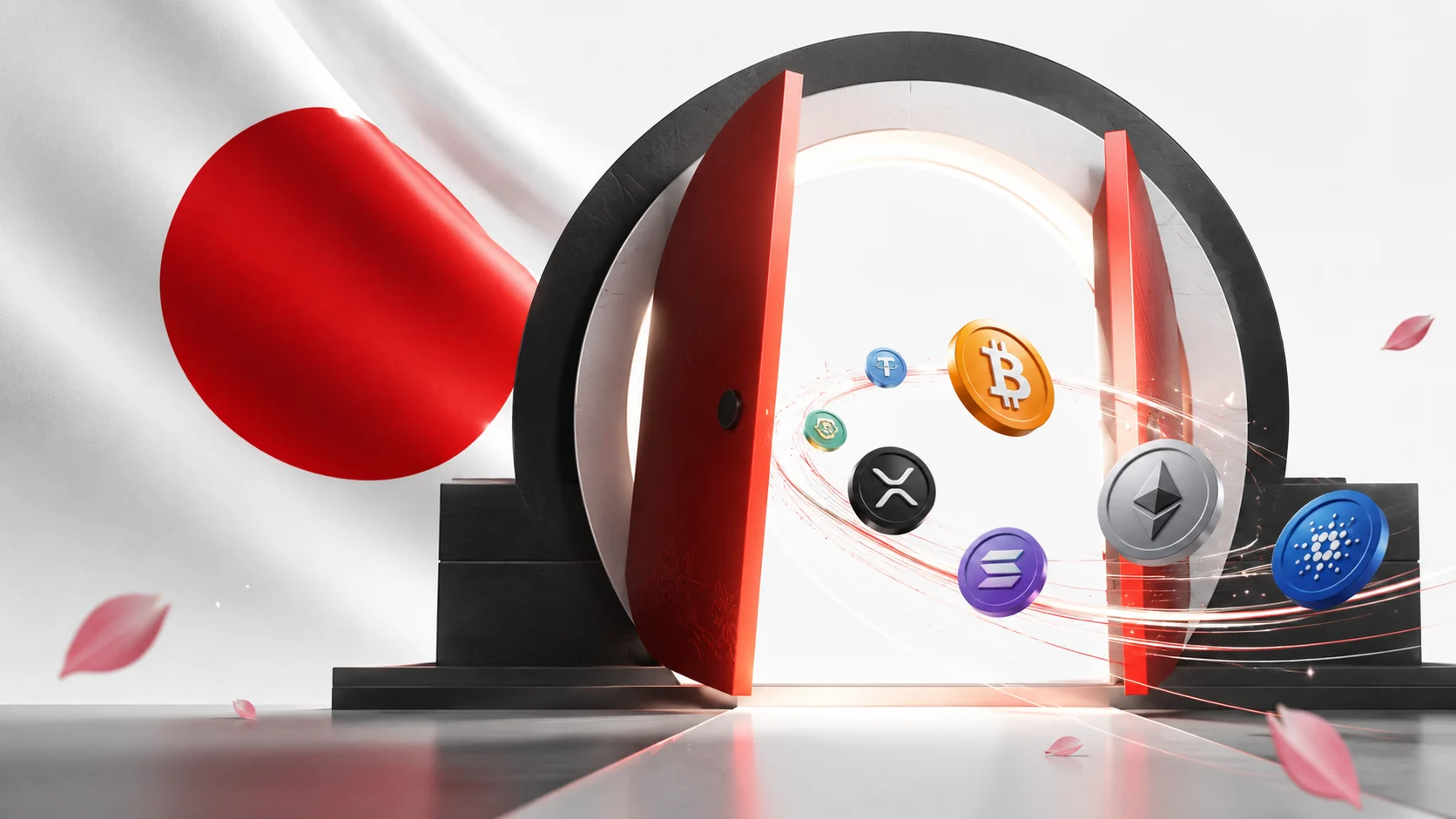
Nomura-backed Laser Digital has secured Japan's first new crypto exchange registration in four years, clearing the institutional digital-asset firm to operate under the country's Payment Services Act.
Laser Digital Japan completed its Crypto Asset Exchange Service Provider registration on August 21. Japan's Financial Services Agency added the firm as registration No. 00032, covering Bitcoin, Ether, XRP, Bitcoin Cash, Litecoin and Shiba Inu.
The approval ends a four-year stretch without a new crypto exchange registration and gives Nomura's digital-asset arm a regulated route into Japan as the country rewrites the rules for crypto investment, trading and taxation.
Laser Digital Will Start With Liquidity Services
Rather than launching immediately as a retail exchange, Laser Digital Japan will initially provide liquidity to licensed domestic virtual-asset service providers. The firm plans to add digital-asset trading opportunities for institutional investors later, with the launch date and final product scope still to be announced.
Nomura, Japan's largest brokerage, established Laser Digital in 2022 with headquarters in Dubai and opened the digital-asset arm's Japanese operation in Tokyo in 2023. The group already runs institutional trading, asset management, financing and investment businesses across other regulated markets.
The Japanese license arrives as local brokers and asset managers prepare for wider crypto distribution. SBI Securities, Rakuten Securities, Nomura and other firms have been developing or evaluating crypto investment funds that could eventually place Bitcoin and Ether exposure inside conventional brokerage accounts. SBI and Rakuten already operate registered domestic crypto exchanges — SBI VC Trade and Rakuten Wallet — alongside their brokerage arms.
Japan Moves Crypto Deeper Into Financial Markets
Japan's parliament passed amendments to the Financial Instruments and Exchange Act and the Payment Services Act on July 15, creating a new framework covering crypto market conduct, disclosure and investor protection. The July 15 legislation is scheduled to take effect within one year.
The licensing system itself dates to 2017, when earlier Payment Services Act amendments took effect and made Japan one of the first major economies to require crypto exchanges to register. FSA screening tightened after the January 2018 hack of Coincheck, in which roughly $530 million in NEM tokens was stolen.
The change moves Japan beyond the payment-focused structure that historically governed much of its crypto market. The new financial-product framework introduces securities-style rules, including restrictions on insider trading and stronger disclosure requirements for digital assets handled by regulated operators.
Japan is also preparing a route for crypto ETFs, although spot Bitcoin and Ether ETFs still require separate changes to the rules governing investment trusts and subsequent product approvals. That groundwork trails other major markets: spot Bitcoin ETFs began trading in the United States in January 2024, spot Ether funds followed there later that year, and Hong Kong listed spot Bitcoin and Ether ETFs in April 2024.
Tax policy is moving alongside the regulatory overhaul. After the new financial-markets regime takes effect, qualifying crypto income is set to move from Japan's progressive taxation system toward separate investment-style taxation, potentially bringing eligible crypto gains closer to the roughly 20% treatment applied to stocks. Individual crypto profits are currently taxed as miscellaneous income at progressive rates that can reach about 55%, a level the domestic industry has lobbied for years to cut.
Institutional Demand Builds Ahead of New Products
Japanese institutions are already positioning for greater access. A 2026 survey of 518 investment professionals, published by Nomura and Laser Digital, found that 65% viewed crypto as a diversification opportunity, up from 62% in the previous survey.
Among respondents considering crypto investment over the next three years, 79% planned to invest, while 60% expected crypto allocations of between 2% and 5% of total assets. Interest extended beyond spot exposure: 66% expressed interest in staking or mining, 65% in lending, 63% in derivatives and 65% in tokenized assets.
Laser Digital's August 21 registration covers BTC, ETH, XRP, BCH, LTC and SHIB, with its first Japanese services focused on supplying liquidity to domestic licensed crypto firms. The milestones ahead are procedural: implementing rules for the July 15 amendments are due before the one-year effective deadline, the investment-trust changes needed for crypto ETFs have not yet been legislated, and the FSA's public register will show whether other newcomers follow Laser Digital onto the list.

