VCs Explain What Startups Must Do to Raise Funding in 2026 at Africa Capital Allocators Mixer
Key Takeaways
- •Panelists said pre-seed funding still exists, but the bar for accessing it has risen sharply since 2022.
- •Lawyers warned that startups often overlook governance, IP assignment and regulatory compliance before raising capital.
- •Investors said they now want working products, real user adoption and meaningful monthly recurring revenue rather than only a pitch deck.
- •Speakers stressed that a venture-backable business must have high operating leverage and a large enough market to scale significantly.
- •The organizers said the Lagos mixer is the first in a planned quarterly series that may expand beyond Nigeria and later engage Silicon Valley capital.
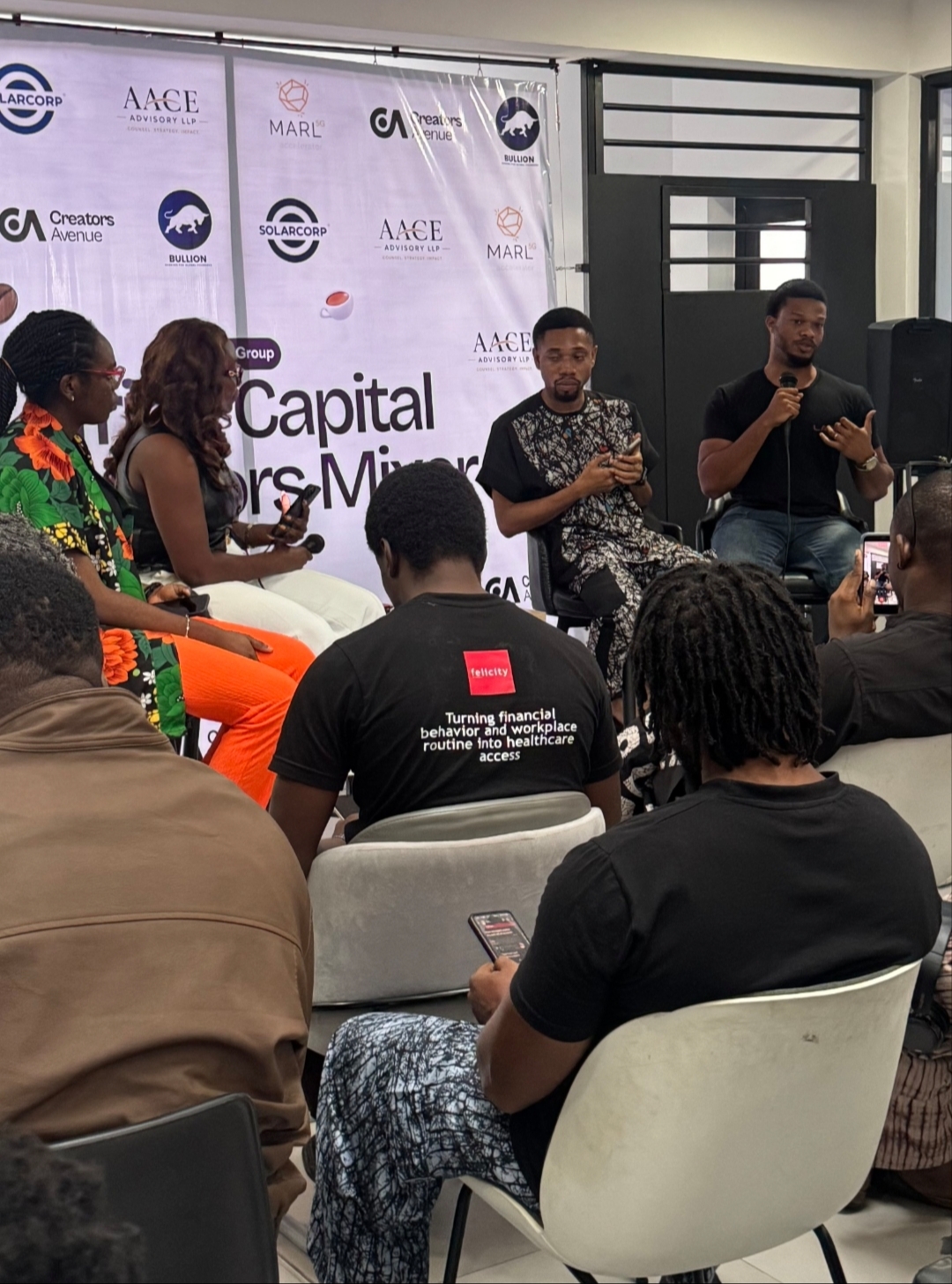
The maiden Africa Capital Allocators Mixer brought together lawyers, venture capitalists and founders last Friday in Lagos for a discussion that has been quietly building across Nigeria’s startup scene for years: is pre-seed capital actually available, or is the category being redefined out from under the founders who need it most?
The event, powered by MarlVC and Bullion, was hosted and moderated by Amarachi Nwachukwu, a Venture Partner at MarlVC, and aimed to create a direct conversation between Nigerian tech founders and the venture capitalists who control the capital.
Two panels anchored the evening: one on legal readiness, featuring Chukwuebuka Okoli-Akirika, Senior Associate at Duale, Ovia & Alex-Adedipe (DOA), and another on investment realities, with Samuel Frank of Sahara Ventures, Mercy Ndubueze of WEAV Capital and Ryan K. Uche-Tasie of Lava VC.
By the end of the night, one point was uncontested: money exists. The real disagreement was over what startups now need to do to get it, and whether the expectations have kept pace with the realities of building in Nigeria.
Nwachukwu began by outlining MarlVC’s model: a 12-week virtual accelerator, initial cheques of $50,000, and follow-on funding ranging from $100,000 to $250,000. She also raised a concern she said she hears frequently from founders.
“VCs announce new funds, Fund 1 and Fund 2, and founders ask where this money is actually going,” she said, describing the frustration founders feel when fundraising announcements do not seem to translate into cheques. She said she had been on both sides of the table, first as a founder and now as an investor, and wanted the event to help close that gap.
What “investment-ready” means legally
Okoli-Akirika said he sees a recurring pattern in his work with both founders and investors at DOA: startups become so focused on building products that governance is treated as an afterthought. He divided legal readiness into three pillars.
Governance structure. He said too many startups exist only on paper, with co-founders operating on informal understandings instead of a formal charter or clearly defined board powers.
Intellectual property. This was the strongest warning of the evening for founders relying on outside developers. Okoli-Akirika explained that copyright protection in Nigeria attaches automatically the moment something is created. But that does not mean the company owns the work. If a startup hires a contractor or engineer to write code without a signed IP assignment agreement, the code legally belongs to the person who created it, not the company that paid for it.
“If that developer leaves on bad terms, your startup is left running code it does not legally own or license,” he said, noting how common contract and freelance development is among early-stage Nigerian startups.
Regulatory compliance. He also flagged the rapid changes around CBN guidelines, SEC approvals, FCCPC rules and NDPR data protection requirements as frequent red flags in due diligence, especially for fintech companies.
On term sheets, Okoli-Akirika urged founders to look beyond the valuation line. He specifically pointed to board representation and “reserved matters,” the veto rights investors often attach to board seats, warning that if those reserved matters cover routine operating spending, investors can effectively freeze day-to-day decisions.
His practical checklist for founders preparing to raise capital included locking down co-founder agreements with proper vesting, signing IP assignment agreements with every contractor and employee, and using a formal instrument such as the FAST agreement if building an advisory board rather than relying on informal handshake equity.
That set up the evening’s central tension. Nwachukwu asked the investor panel directly: funds keep announcing capital raised, yet founders keep saying pre-seed money is dry. Which is it?
Samuel Frank of Sahara Ventures answered bluntly.
“I will be as blunt and honest as possible,” he said. “Yes, pre-seed capital exists, but the definition of pre-seed in Africa shifted completely after 2022.”
Before then, he said, pre-seed could mean backing a pitch deck and two founders with conviction. Today, the bar has moved. What once might have qualified as seed-stage traction is now often the pre-seed standard: a working MVP, real user adoption, and roughly $2,500 to $3,500 in monthly recurring revenue growing at 20 per cent month-on-month.
He said the shift was structural rather than cynical. Venture capitalists answer to limited partners, and the market has matured, so capital allocators are now expected to de-risk much more aggressively than they were three or four years ago.
Mercy Ndubueze of WEAV Capital focused on what earns an internal champion inside an investment committee, and she said the answer is harder to fake than a polished pitch deck: obsession.
“I want to smell obsession from the moment a founder speaks,” she said, distinguishing founders chasing a fashionable narrative from those solving a problem they are personally committed to.
In Nigeria’s harsh macroeconomic environment, she argued, that kind of obsession often separates founders who persist through difficult periods from those who give up.
Frank linked that point back to venture math. VC investing, he said, works on a power-law model: out of ten investments, nine may underperform or fail outright, and the fund depends on the one that does not. A founder who clearly understands the path to profitability, acquisition or a secondary sale gives investors confidence that the capital can eventually return multiplied.
Ryan K. Uche-Tasie of Lava VC addressed another issue that often trips up founders seeking VC money for the wrong reasons: the difference between a good business and a venture-scalable one. A company generating a steady $1 million to $3 million annually and paying healthy dividends is a genuinely good business, he said, but if its addressable market is limited, it cannot absorb institutional capital to scale tenfold or 100-fold.
What venture investors look for instead is high operating leverage: revenue that can grow exponentially without operating costs rising at the same pace. Asset-heavy, thin-margin businesses in small markets may be solid businesses, he said, but they are not necessarily venture-fit.
On the role of domestic capital, Frank pointed to Ghana as a model worth studying, where a fund-of-funds structure built around local pension money reportedly unlocked more than $35 million equivalent in local venture funds. He contrasted that with Nigeria, where pension funds manage over ₦20 trillion in assets under management, yet regulatory caution means an estimated 70 per cent or more is held in government debt instruments rather than venture funds. In his view, the solution is for local allocators to demonstrate viable exit pathways and secondary sales strongly enough to mobilize pension capital.
In closing, Nwachukwu said the event was designed to narrow the gap between what founders believe investors want and what investors are actually screening for.
“Founders hear about VC fund announcements yet feel starved of pre-seed cheque sizes. Investors, on the other hand, struggle to find investment-ready startups with clean legal structures and verified traction,” she said, describing the mixer as an effort to get both sides speaking candidly in the same room.
She confirmed that this was the first in a planned quarterly series, with MarlVC and Bullion intending to take the format beyond Lagos to other parts of Africa and eventually toward direct engagement with Silicon Valley capital.
Also read: Nigeria leads Africa’s equity funding in H1 2026 with $214m, as early-stage investment grows

