Kyrgyzstan Joins UN Security Council: Priorities, Challenges, and Central Asian Diplomacy
Key Takeaways
- •Kyrgyzstan won a two-year non-permanent term on the UN Security Council with 142 votes, defeating the Philippines in four rounds of voting on June 3, and will begin its tenure on January 1, 2026.
- •Kyrgyzstan becomes only the second Central Asian state to hold a Security Council seat, following Kazakhstan's service during the 2017–2018 term.
- •The government plans to expand its UN diplomatic mission in New York from nine to twenty-eight officials to handle the demands of Council membership.
- •Kyrgyzstan's priorities include climate change impacts on water and food security, reducing Afghanistan's international isolation to boost regional trade, and reforming UN institutions including the Security Council itself.
- •On contentious geopolitical issues, Kyrgyzstan has abstained on every UN resolution related to Ukraine since 2022 and is expected to maintain that stance throughout its Council term.
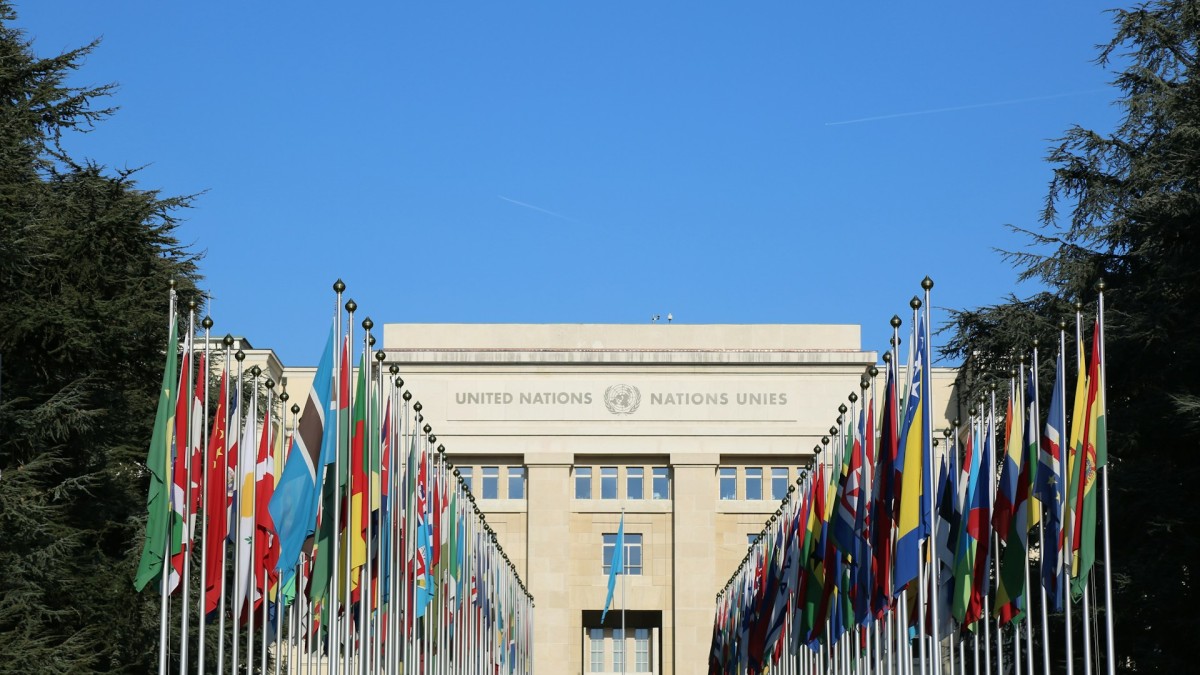
Kyrgyzstan has won election to a two-year term on the United Nations Security Council after a sustained campaign to build international support for its candidacy. The outcome places a Central Asian state on the UN's most powerful decision-making body — the only UN organ with binding authority to impose sanctions, authorize peacekeeping operations, and refer situations to the International Criminal Court — for only the second time since the collapse of the Soviet Union. Kyrgyzstan's term begins January 1, 2026.
Kazakhstan remains the only other Central Asian nation to have held a Security Council seat, serving during the 2017–2018 term.
Now attention is turning to what Kyrgyzstan hopes to accomplish during its tenure — and the constraints it will face as one of ten non-permanent members, without the veto power wielded by the Council's five permanent members.
"This is a new test for us," Kyrgyz President Sadyr Japarov stated in a late-June speech. "We view membership on the UN Security Council as an enormous responsibility."
Foreign Minister Zheenbek Kulubaev told reporters on July 13 that Kyrgyzstan plans to expand its UN mission in New York City from nine diplomats to 28 to meet the demands of Security Council membership.
The Scope of Security Council Work
Mirgul Moldoisaeva, who served as Kyrgyzstan's ambassador to the United Nations from 2016 to 2021, noted that smaller UN missions typically concentrate on issues of greatest national importance. However, Security Council membership fundamentally alters that calculus.
"The moment you join the Security Council, that changes completely. Suddenly, almost every major international crisis becomes part of your daily responsibilities," said Moldoisaeva, who now works for the United Nations Development Programme. She provided written comments to Eurasianet in her personal capacity.
Despite the broadened workload, Kyrgyzstan will retain the ability to champion specific issues. Moldoisaeva anticipated a "degree of continuity" between the country's General Assembly priorities — preventative diplomacy and climate change — and its Security Council agenda. That emphasis aligns with the work of the UN Regional Centre for Preventive Diplomacy for Central Asia, established in Ashgabat in 2007 to support regional cooperation and conflict prevention among the five Central Asian states.
Climate, Water, and Food Security
Climate change and its cascading effects on water and food security rank among Kyrgyzstan's foremost concerns. Temperatures in Central Asia are rising faster than the global average, and the rapid melting of glaciers in the Tien Shan mountains — which feed the Naryn River and, downstream, the Syr Darya, one of the region's two major waterways — threatens both drinking water supplies and agricultural productivity for tens of millions of people across Kyrgyzstan, Uzbekistan, and Kazakhstan.
"It's impossible to detach climate change [from] security," said Nargiza Muratalieva, a professor of international relations at the American University of Central Asia in Bishkek.
Afghanistan and Regional Trade
Seeking to expand global trade opportunities for Central Asia, Kyrgyz officials are also interested in easing the international isolation of Afghanistan's Taliban government. Greater engagement could help Afghanistan attract international development assistance for infrastructure projects designed to facilitate the transit of goods from Central Asia to ports in Pakistan.
Central Asian states have shifted from "building big walls" around Afghanistan to actively seeking to integrate the country's economy into regional networks, Muratalieva told Eurasianet. She expects Kyrgyzstan to advocate for a similar approach within the Security Council.
Push for UN Reform
Kyrgyzstan is also expected to prioritize reform of UN institutions and operations, reflecting a view that the organization has been largely sidelined from the major international conflicts of the past decade.
"They [Central Asian diplomats] see in the United Nations the guarantee against a unipolar or hegemonic order run by the great powers," said Filippo Costa Buranelli, a professor of international relations at the University of St. Andrews in Scotland.
Foreign Minister Kulubaev has emphasized the need for UN reform, particularly the expansion of the UN Security Council itself — a long-debated issue at the General Assembly, where proposals to add new permanent and non-permanent members have stalled for years amid disagreement among the P5 and regional rivals.
Navigating Divisive Conflicts
On the Security Council's most contentious issues, however, Kyrgyzstan is likely to tread carefully. Since the onset of the full-scale invasion of Ukraine in 2022, Kyrgyzstan has abstained on every resolution directly related to the conflict, as well as on votes concerning resolutions critical of current and former Russian allies such as Iran, Syria, Abkhazia, and South Ossetia.
That pattern is unlikely to shift during Bishkek's term.
"I would expect a round of abstentions," said Costa Buranelli, who has researched Central Asian states' engagement with the UN and maintains regular contact with diplomats from the region. "For Russia, it's important that Kyrgyzstan doesn't vote in favor of some pro-Ukraine resolutions, but they recognize that abstentions may be in everyone's interest," he told Eurasianet.
The five permanent members of the Security Council — the United States, the United Kingdom, France, China, and Russia — find themselves on opposing sides of the Ukraine conflict.
On Middle East matters, Kyrgyzstan has supported General Assembly resolutions backing Palestinian statehood. In a 2025 speech, Japarov demanded an "end to the genocide against Palestinians."
Central Asia's Voice on the Council
Regardless of the specific conflict under discussion, Moldoisaeva said Kyrgyzstan will work to ensure that Central Asia's experience — particularly in conflict prevention and the management of complex borders — is reflected in Security Council deliberations.
"The real value of this opportunity lies not simply in drawing more attention to Central Asia, but in helping the region increasingly be seen as a source of practical solutions, constructive diplomacy and successful regional cooperation," she said.
During Kazakhstan's tenure on the council, its ambassador regularly convened fellow Central Asian ambassadors to discuss Security Council developments, a practice that kept the region informed and promoted dialogue, Moldoisaeva recalled.
The Long Road to Election
Kyrgyzstan's previous bid for a Security Council seat, in 2011, ended in a resounding first-ballot defeat to Pakistan.
"Experiencing a loss at such an international scale, it can derail you," Kyrgyzstan's newly appointed ambassador to the United States, Edil Baisalov, said during a July 2 talk at the Hudson Institute in Washington, DC.
Baisalov added that the country secured a "considerable number" of reciprocal agreements with other governments — pledging support for their bids "to this board or to this court or to this position" — in exchange for backing Kyrgyzstan's Security Council candidacy.
Security Council campaigns are "measured not in months but in years," Moldoisaeva observed, but "nothing is certain until the result appears on the screen."
After four rounds of voting on June 3, Kyrgyzstan achieved the outcome it sought, winning the support of 142 nations compared to 49 for the Philippines and clearing the two-thirds majority threshold required for election.
Costa Buranelli suggested Manila's bid may have been hampered by its "perceived excessive proximity to the US" — a perception sharpened by the Philippines' deepening security cooperation with Washington amid escalating maritime disputes with China in the South China Sea. In contrast, despite Kyrgyzstan's close ties with Russia and China, Japarov's high-profile visit to the White House for the 5+1 summit in 2025 and his trips to European capitals in 2024 may have satisfied "all the important constituencies," he said.
Additional factors worked in Kyrgyzstan's favor: the Philippines had already served on the Security Council four times — most recently in 2004–2005 — while Central Asia has drawn growing international attention in recent years due to its wealth of critical minerals and logistics potential.
Kyrgyzstan's upcoming term may further elevate the country's global standing.
"Kyrgyzstan has received a chance to show its constructive role [on] the global stage because Kyrgyzstan's aim is to build, not to disrupt," said Muratalieva.

