Nobel Economist Paul Krugman Warns Trump Is Preparing to 'Punish' the in His Final Two Years
Key Takeaways
- •In a Substack essay, Paul Krugman compared Trump's likely response to anticipated midterm losses with Hitler's 1945 Nero Decree, an order directing the destruction of Germany's own infrastructure.
- •Krugman predicted Trump would claim the midterm elections were rigged and try to overturn the results, while retaining immense capacity to inflict destruction on America and its allies even if Republicans lose Congress.
- •He cited President Zelenskyy's report that Ukraine stopped receiving Western warnings about impending Russian missile strikes, suggesting the suspension could be intended to punish Ukraine.
- •Krugman pointed to the sudden cutting of hundreds of trees at a Washington, D.C., golf course and Trump's role at the Kennedy Center as examples of what he described as acts of spite and vandalism.
- •He urged Democrats to make clear that anyone aiding Trump's destructive agenda can and will be held legally accountable, warning that a partisan Supreme Court majority and law-breaking figures in Trump's orbit could enable further harm.
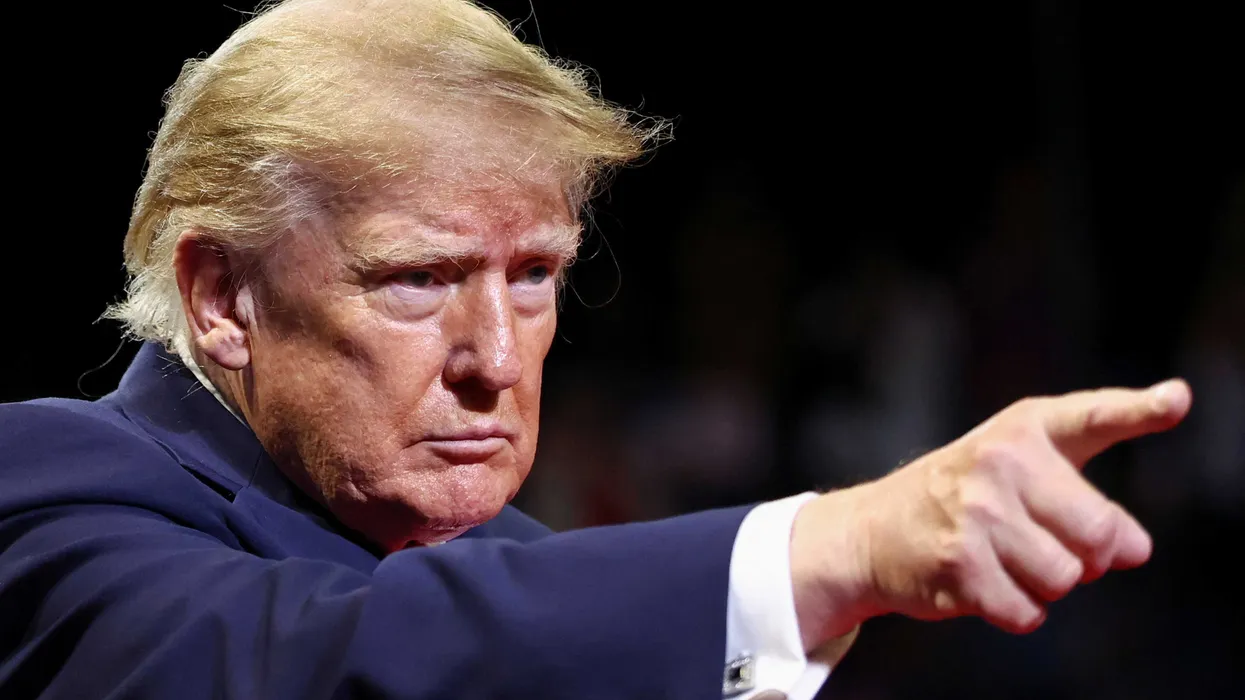
Nobel Prize-winning economist Paul Krugman, who received the 2008 Nobel Memorial Prize in Economic Sciences and wrote a New York Times opinion column for more than two decades before moving to Substack, warned on Wednesday that President Donald Trump is preparing to "punish" the United States over the final two years of his term, arguing that the president is taking a page from two of history's most terrible tyrants.
In an essay published on his Substack newsletter, Krugman opens with the collapse of Nazi Germany. "By the middle of March 1945," he writes, "even Adolf Hitler knew that the war was lost. Soviet forces were within 45 miles of Berlin. American forces had crossed the Rhine and were well on their way to encircling the remaining German defenders. But Hitler didn't believe that he had failed. He believed that he had been failed by the German people."
On March 19, 1945, Hitler issued the "Decree concerning demolitions in the Reich territory," which has come to be known as the Nerobefehl, or Nero Decree — a name borrowed from the Roman emperor whom ancient legend accuses of setting fire to his own capital. The order directed the destruction of Germany's own infrastructure — ostensibly to deny it to the advancing Allies, though Krugman writes that "the obvious purpose was to punish his own country." The decree was never carried out, but Krugman presents it as a warning for how Trump will respond after his party takes a beating in the midterm elections, a campaign the president has already put himself at the center of by telling voters to "pretend I am on the ballot." Those contests will determine control of the House of Representatives and roughly a third of the Senate — the legislative branch that controls federal spending and oversight of the executive.
With the GOP poised to take major losses, Krugman writes that Trump is unlikely to be happy "when Americans show what they really think of him." In his assessment, the president will almost certainly "claim that the election was rigged and try to overturn the results" — and if that effort fails, he will likely escalate the punishment. "Loss of Congress will limit Trump's power, but by no means eliminate it," Krugman writes. "Above all, he will retain immense capacity to inflict destruction on America, not to mention America's allies."
As an example of the potential harm to allies, Krugman points to recent news out of Ukraine. According to President Volodymyr Zelenskyy, the country has not received warnings from its Western allies about impending Russian missile strikes for several days — a service that has been a routine feature of Western military support since Russia launched its full-scale invasion of Ukraine in February 2022. Krugman concedes this could merely be due to a technical issue, but argues: "Anyone dismissing the possibility that Trump is trying to punish Ukraine for daring to deny victory to his friend Vladimir Putin must have slept through the past two years."
Domestically, Krugman contends that Trump is continuing a destructive spree of vanity projects. He cites recent reports that the administration suddenly cut down hundreds of trees at a Washington, D.C., golf course in an attempt to remake it according to the president's whims. Although the course full transformation is "unlikely to happen given the political winds," Krugman writes that "in any case there was no need to rush the destruction. This was almost surely an act of spite, a deliberate act of vandalism, undertaken precisely because Trump knows he won't get his way."
"And while a few hundred trees are not in themselves that big a deal, they represent the shape of things to come," he continues. Krugman points to the Kennedy Center — "a national icon that Trump is destroying because he can't put his own name on it" — as the model for what he says is all too likely to happen to America over the next two years. The John F. Kennedy Center for the Performing Arts, which opened as Washington's national cultural center in 1971, elected Trump as chairman of its board in February 2025.
Krugman warns that even if Democrats take congressional power, Trump's destructive efforts will still be enabled by a "corrupt, partisan majority on the Supreme Court" and by those in the president's orbit who are willing — and "even eager" — to break the law. What Democrats must do, he concludes, "is make it clear that everyone who aids and abets Trump in his Neroism can and will be held accountable to the full extent of the law. At this point, anyone who says something like 'We should look forward, not back' is making it significantly less likely that we will have anything to look forward to."

