Jake Tapper Fact-Checks Rep. Andy Harris After He Threatens Reporters With Arrest for Recording
Key Takeaways
- •Rep. Andy Harris threatened to have reporters referred to a prosecutor after they recorded him following his Tuesday night debate against Democratic challenger Dan Schwartz.
- •Harris argued that Maryland's two-party consent law prohibited the recordings, but federal appeals courts in multiple circuits have recognized a First Amendment right to record public officials in public places.
- •CNN's Jake Tapper publicly stated that Harris was incorrect on the law, noting that public officials have no expectation of privacy in public settings.
- •Harris, the lone Republican in Maryland's congressional delegation, has represented the Eastern Shore-based 1st District since taking office in 2011.
- •The only public polling in the race, a July New York Times survey, showed Harris leading by 13 points ahead of the Nov. 3, 2026 general election.
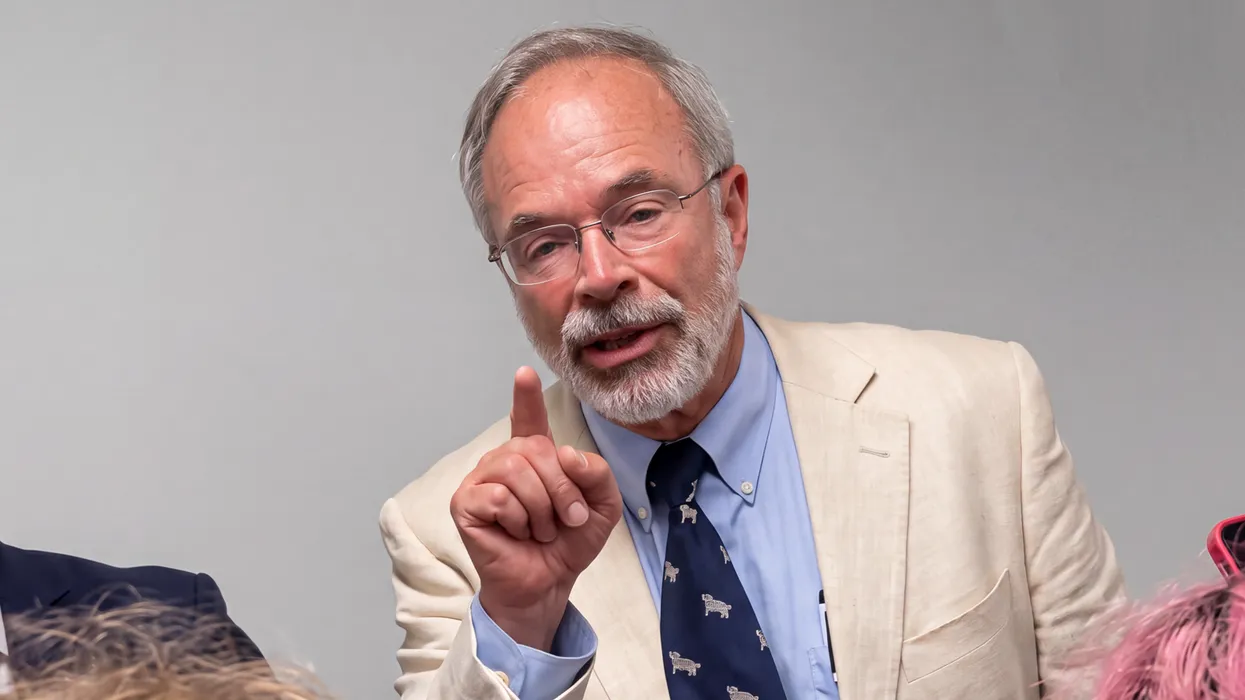
Rep. Andy Harris (R-Md.) confronted reporters and threatened to have them referred to a prosecutor after they recorded him following his debate Tuesday night, as first reported by the Baltimore Banner. The video of the encounter shared on X sent reporters rushing to fact-check his claims.
"You do not have my permission to record. If you record, we will refer you to the prosecutor," Harris told the reporters.
The debate against Democratic challenger Dan Schwartz did not go smoothly for Harris, the lone Republican in Maryland's congressional delegation, who has represented the Eastern Shore-based 1st District since taking office in 2011. The Baltimore Banner noted that he "scolded" the audience during the event.
"Everyone in here is recording," the reporters told him.
"But you're not allowed to!" Harris replied, wagging his finger.
According to Harris, Maryland is a "two-party consent state," meaning that both parties to a conversation must agree before it can be recorded, and he said he had not consented.
The problem with that logic, according to veteran CNN reporter Jake Tapper, is that Harris was standing in a public place after a public debate. "To say the very least on this, the congressman is incorrect on the law," Tapper wrote on X. "Two-party consent is relevant only to private oral conversations, and he has zero expectation of privacy here. 1st Amendment gives you the right to record public officials in public places as long as you're not interfering with their official duties."
Maryland is indeed an all-party consent state for private conversations, but federal appeals courts in multiple circuits have recognized a First Amendment right to record public officials in public places — the exact scenario that unfolded after Harris' debate.
Even if Harris' interpretation of the law were correct, two reporters in the room could have consented to the recording. That did nothing to slow the confrontation: the reporters kept asking questions and even had some fun at his expense.
"With due respect, this is a public forum," a well-informed person in the room explained.
"Do you know the law?" Harris shot back, though he was no lawyer himself.
"I'm no lawyer," the person replied. "Are you? You're a doctor."
"Yeah, actually I know the law well, because we have to," Harris said, before putting his hands over the reporter's recording device. Holding office, or believing that one "knows the law," does not make a person a lawyer or qualified to practice law.
When a reporter pressed him with another question about the Iran war, Harris motioned for someone off to his right to come and take her camera and phone.
"In fact, I've got an officer — get an officer in here!" Harris ordered. "She's violating the law on two-party — two-party recording. We need an officer."
"Isn't that just for telephone communication?" another reporter asked.
"I don't know the law but that's just a recording," Harris conceded. "Video and audio and video have two-party approval in Maryland. Now they may not have to have it in Washington, D.C. They have to have it in Maryland. She needs my approval to record." In fact, she did not.
"Sir, we're in public," a reporter explained.
Harris went on to insist that it made no difference whether the setting was public, before attempting to argue that the group was not in public at all. He was then challenged on how his effort to have reporters arrested squared with his stated support for the First Amendment.
"Alright, guys," Harris said, pointing at the reporter while looking to the side for someone to step in. "She's ruining all your chances to get an answer about anything. See y'all," he said, and walked off.
The only public polling in the race, The New York Times' tracking, has Harris leading by 13 points. That survey, however, dates to July, and with the general election not until Nov. 3, 2026, any shifts since then are unknown at this time.

