Korea's Economy Grew 0.6% in Q2, Matching Initial Estimate, BOK Data Shows
Key Takeaways
- •Korea's real GDP rose 0.6 percent quarter-on-quarter and 3.7 percent year-on-year in the second quarter, driven by exports and AI-related investments.
- •Nominal GDP jumped 26.4 percent from a year earlier, the fastest growth since the third quarter of 1979.
- •Real GNI increased 15.6 percent on-year, the steepest rise since the fourth quarter of 1988.
- •The BOK revised construction and intellectual property investment growth up by 0.1 percentage point each, while cutting government consumption growth by the same margin.
- •The central bank lifted its 2026 growth forecast to 3.3 percent, citing strong semiconductor exports amid the ongoing AI-driven chip demand.
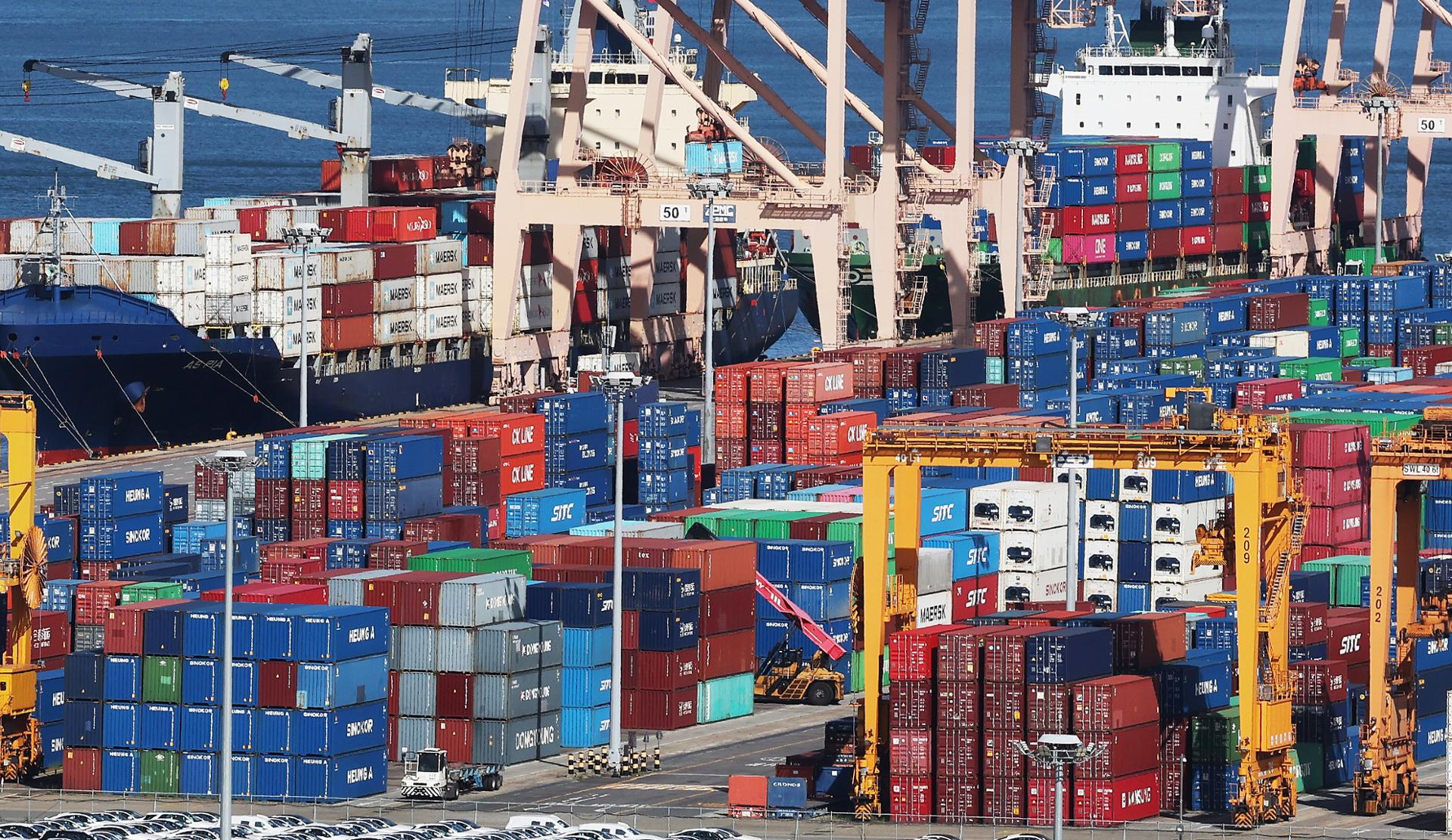
The Korean economy expanded 0.6 percent in the second quarter from the previous quarter, driven by strong exports and artificial intelligence (AI)-related investments, according to preliminary data released Tuesday by the Bank of Korea (BOK).
Real gross domestic product (GDP), a key measure of economic growth adjusted for inflation, rose 0.6 percent in the April-June period compared with three months earlier. On a yearly basis, the economy grew 3.7 percent in the second quarter, continuing its momentum after expanding 3.8 percent on-year in the first quarter.
The quarter-on-quarter figure matched the BOK's earlier estimate released last month. However, the central bank revised up growth in construction investment and intellectual property investment by 0.1 percentage point each, while lowering government consumption growth by 0.1 percentage point.
Nominal GDP, which is measured at current prices and is not adjusted for inflation, increased 9.2 percent in the three-month period ended June from the previous quarter and rose 26.4 percent from a year earlier, the sharpest growth since the third quarter of 1979, when the economy surged 27.7 percent on-year.
The data also showed that per capita gross national income (GNI), which measures income earned by residents including net income from abroad, climbed 8.8 percent on a nominal basis from the previous quarter and 26.4 percent from a year earlier.
Real GNI advanced 3.1 percent from the previous quarter and 15.6 percent from a year earlier, the steepest growth since the fourth quarter of 1988, when real GNI jumped 15.7 percent on-year.
Citing the continuing growth momentum, the central bank earlier raised its 2026 growth estimate to 3.3 percent, pointing to solid exports supported by the ongoing semiconductor super cycle. Semiconductors have long been Korea's largest single export item, and surging global demand for AI chips has been a key driver of the country's recent export performance.
