How 'The East Palace' and 'Hope' Show the Evolution of Korean Creature Stories
Key Takeaways
- •"The East Palace" follows a spirit-crossing man and a court lady investigating a curse in a Joseon-era royal palace.
- •"Hope" centers on a village near the demilitarized zone after reports of a tiger lead residents to face an unbelievable situation.
- •Korean creature works often combine horror and action with melodrama, historical drama, social commentary and thriller elements.
- •Monsters in Korean productions frequently serve as symbols of human desire, greed, abuse of power, social conflict or historical trauma.
- •The growth of Korea’s visual effects industry is supporting more large-scale creature productions by domestic companies.
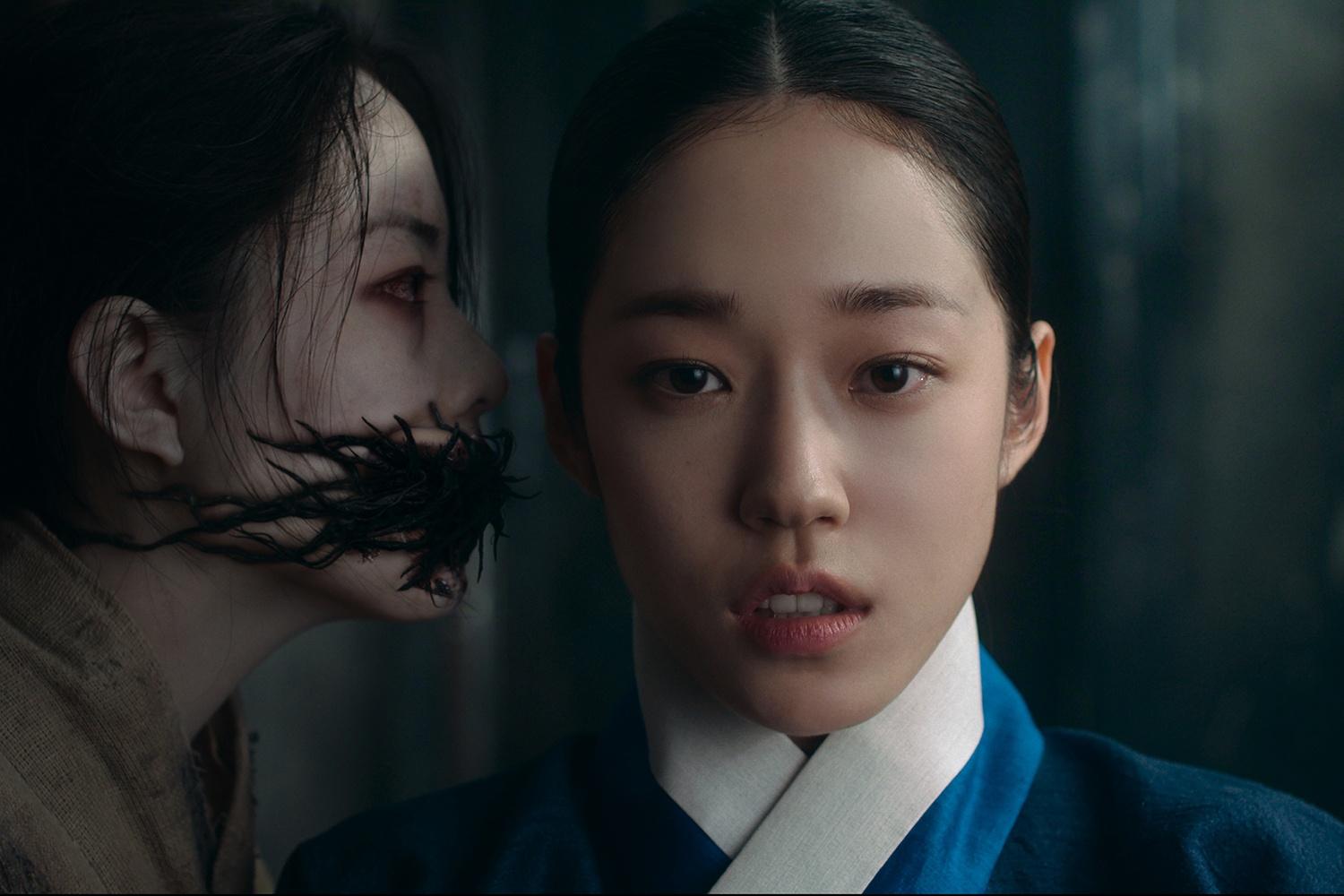
Korea's creature genre is continuing to broaden beyond the zombie stories that once defined much of its global profile, with new productions introducing ghosts, extraterrestrial beings and other supernatural figures rooted in Korean culture and tradition.
Netflix's original series "The East Palace" and the film "Hope" illustrate that shift. Both works extend the lineage of so-called K-creatures by presenting fantastical entities through settings, folklore and emotional conflicts that are distinctly Korean. The two titles arrive as Korean content continues to command growing attention on international streaming platforms, building on years of investment by global distributors eager to capture audiences beyond the domestic market.
"The East Palace," which premiered on Netflix on July 17, follows Gucheon, played by Nam Joo-hyuk, a man who can cross into the world of spirits, and court lady Saenggang, played by Roh Yoon-seo, who carries a secret of her own. After being summoned by the king, played by Cho Seung-woo, the two are drawn into an investigation of a mysterious curse haunting the Eastern Palace.
"Hope," which opened in theaters on July 15, centers on Beom-seok, the head of a small administrative office near the demilitarized zone. After local youths report the appearance of a tiger, panic spreads through the village, and residents are forced to confront an unbelievable reality. The DMZ setting carries particular resonance for Korean audiences, evoking a landscape shaped by decades of national division.
The creature genre has become one of the most competitive areas of the global content market, and Korean creature stories have built steady international recognition within that landscape. The phenomenon gained momentum with the film "Train to Busan," which premiered at the 2016 Cannes Film Festival and became a worldwide box-office sensation, and Netflix's "Kingdom," which debuted in 2019 as one of the streamer's earliest Korean original series and ran for multiple seasons. The genre then expanded through series such as "Sweet Home," based on a popular webtoon and renewed for successive seasons, and "Hellbound," as well as the more recent film "Colony."
K-zombies in particular have received enthusiastic responses from audiences worldwide. In Korean productions, however, zombies, monsters and ghosts often function as more than sources of horror. They frequently appear as symbolic expressions of human desires pushed to extremes.
In "Sweet Home," for example, the idea that desire itself can turn people into monsters moves the story beyond the framework of a survival thriller and toward an examination of human nature. The fear generated by the narrative comes not only from the monsters, but also from people, as selfishness, solidarity and sacrifice emerge under extreme conditions.
"The East Palace" expands that approach through a setting in a royal palace from the 1392-1910 Joseon Dynasty period. The series combines court intrigue, occult horror and creature fantasy, drawing on Korean palaces, traditional folklore, ghosts and mythical beings. By placing folk beliefs and traditional settings at the center of the creature genre, it creates an atmosphere that is both familiar and newly distinctive.
The series also makes extensive use of visual effects to depict supernatural beings, including gwimae, or malevolent spirits, and restless ghosts. Director Choi Jung-kyu said the production focused on faithfully expressing the supernatural creatures described in the script while preserving the distinctive characteristics of the folklore and oral traditions that inspired them.
"Hope" is also drawing attention as a major title. Directed by Na Hong-jin, known for "The Wailing" — a 2016 film that was both a commercial hit in Korea and the country's submission for the Academy Award for Best Foreign Language Film — the new film is described as a global-scale project. Although it begins with the familiar premise of extraterrestrial life, its central focus remains on ordinary people and their community. The creatures serve as the catalyst for the story, while the narrative is driven by the characters' choices and relationships, a pattern often associated with Korean creature storytelling.
Another defining feature of K-creature works is their tendency to blend genres. While many Western creature films emphasize horror and action, Korean productions often combine those elements with melodrama, family drama, social commentary and thriller conventions.
"Kingdom" fused zombies with historical drama. "Sweet Home" placed character-driven storytelling inside a dystopian world. "Gyeongseong Creature" mixed period drama, action and romance, while "The East Palace" brings together occult elements and palace mystery. This flexibility, rather than adherence to a single genre, has become one of Korean content's notable strengths.
In many Korean creature stories, monsters are not presented simply as the origin of a crisis. Instead, they often appear as the result of human greed, abuse of power, social contradictions or historical tragedy. The real enemy is frequently humanity itself. What remains with viewers after the story ends is therefore less the appearance of the monsters than the decisions made by the people around them.
That emphasis on moral and social questions helps distinguish Korean creature narratives from many international counterparts. These stories often use supernatural figures to examine responsibility, fear, community and the consequences of human action.
Distinctively Korean settings are also central to the genre's identity. Traditional folklore, shamanistic beliefs, royal palaces, hanok houses, mountains and forests create an atmosphere different from Western fantasy traditions. Combined with Korea's historical experiences, including colonial rule, national division, social inequality and recurring disasters, these elements help shape fictional worlds with a specific cultural texture.
For global audiences, such settings provide an unfamiliar but compelling viewing experience. For domestic audiences, they offer renewed immersion through stories grounded in recognizable cultural sensibilities.
Technological development has further supported the growth of K-creatures. Korea's visual effects industry has advanced rapidly alongside the expansion of the streaming market. Large-scale creature effects that once depended heavily on overseas studios are now increasingly being produced by domestic VFX companies.
With world-class visual quality increasingly paired with Korean storytelling, K-creature productions are strengthening their competitiveness in the global entertainment market.
This article from the Hankook Ilbo, the sister publication of The Korea Times, is translated by a generative AI system and edited by The Korea Times.

