Korean harassment survivor campaigns for victims' right to know how perpetrators were disciplined
Key Takeaways
- •Baek Song-yi said her company upheld her harassment complaint but did not disclose the disciplinary action taken against her boss.
- •Korea’s workplace anti-bullying law requires employers to act on confirmed harassment but does not require them to inform victims of the outcome.
- •Labour attorney Kim Yu-kyung said employers have discretion over disclosure because the law contains no such duty.
- •The labour ministry revised its guidelines in July to recommend that employers share investigation results and the basis for conclusions with victims.
- •Baek is seeking rules similar to California’s Silenced No More Act and has asked Korean lawmakers to restrict confidentiality agreements and require disclosure, but she said none responded.
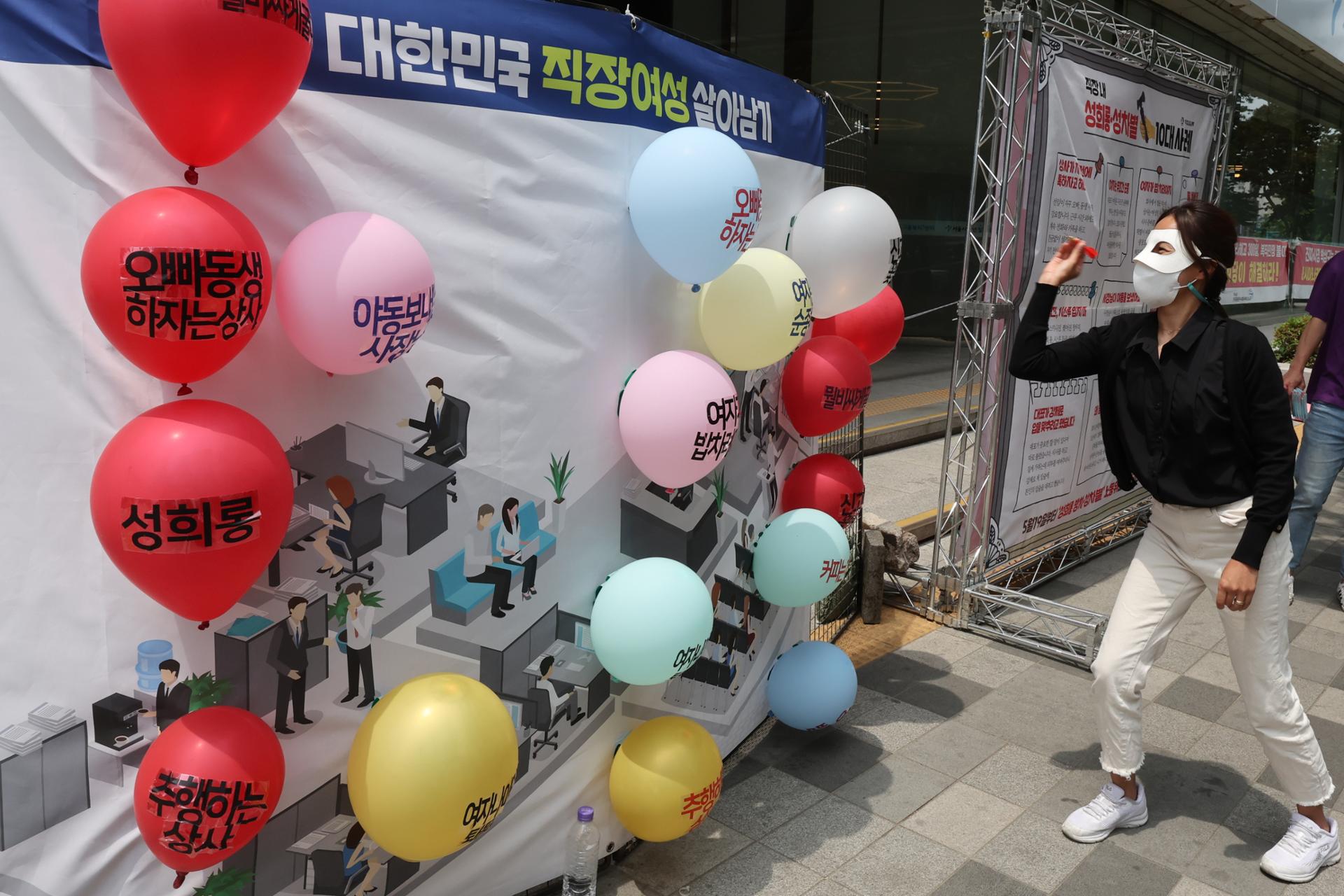
After reporting her boss for harassment only to be kept in the dark about the outcome, Korean advocate Baek Song-yi is now campaigning for survivors' right to know how their bullies were disciplined.
Baek, 40, experienced first-hand what critics describe as a troubling paradigm in Korea's workplace harassment response: victims are often expected to keep silent, while employers have no clear legal duty to tell them how their cases ended.
A confidentiality demand and a withheld outcome
At her former company, a US firm with offices overseas, Baek said she was verbally harassed by her boss, an older man. When she reported him, the company asked her to accept a confidentiality agreement warning she could be fired for disclosing information discussed during the process.
"I was just so stunned," Baek told AFP, adding she had believed her employer encouraged victims to come forward.
Baek refused the agreement, and the investigation went ahead anyway, ultimately upholding her complaint. The company still declined to disclose what disciplinary action had been taken, citing the need to "align with a privacy protection law" in Korea, Baek said. An investigator told her only that the harasser would be "monitored."
Baek, who has since left the company, never learned whether her request to bar him from the firm's Korean office had been granted.
"I just felt like victims are left with no closure, no sense of justice and no way of knowing," she said.
She is now campaigning for legislation similar to California's Silenced No More Act, passed in 2021 to stop employers from using settlement agreements to silence workers who have experienced harassment or discrimination, and for a clear legal right for victims to be informed of disciplinary measures.
'Pointless'
Korea introduced a workplace anti-bullying law seven years ago, the country's first statute specifically targeting workplace harassment, enacted through 2019 amendments to the Labour Standards Act. Critics say it fails to guarantee adequate protections. A study last year by workplace abuse support group Gapjil 119 — whose name borrows the Korean word for domineering behaviour by those in power — found that just 15.3 percent of victims reported harassment. Nearly half of respondents said they believed action would change nothing, and about one-third feared career repercussions.
Experts say the law requires employers to act against confirmed harassers but stops there, often leaving victims in the dark while shielding perpetrators and their reputations. Employers who fail to investigate or take action can face fines, but the statute sets no penalty tied to leaving victims uninformed.
"Employers have full discretion over whether to disclose disciplinary action, as there is no provision requiring them to inform the victim," labour attorney Kim Yu-kyung told AFP.
A woman identified only by her surname Yoo spent about 10 months pursuing a complaint, only to face a Kafkaesque process to learn how it ended. Her former employer, a Korean firm, cited "privacy concerns," saying only that action had been taken under "company rules."
The labour ministry, which upheld her complaint, later intervened, allowing Yoo to inspect the company rules — but only in person, without taking any photos or making notes. Yoo discovered that the rules contained no provisions on workplace harassment, she told AFP. She was then told that her harasser had merely been asked to submit a written account of what happened.
Yoo, who quit over the harassment and waited until leaving to report it for fear of retaliation, said she suffered insomnia and panic attacks.
"I wondered what I had put myself through more than 10 months of stress and fighting for," she said. "It all felt a bit pointless."
Right to know
In Baek's case, she turned to Seoul's regional labour office, hoping to find out what action had been taken. Instead, she was told the company had complied with the law.
"There is no provision in the law requiring disclosure of what measures the perpetrator received," a labour official said in a recorded call reviewed by AFP. The company was required only to ask Baek what measures she wanted before deciding what action to take, the official said.
Withholding the outcome to protect a perpetrator's privacy is a "distorted interpretation," labour attorney Kim said, arguing that seeking victims' views should also mean informing them of the decision.
Baek said her former employer was "just using ambiguous law" to protect victims "in the most minimal way possible."
"Victims should not be silenced, victims should be able to speak about their experiences" for their own safety and that of others, she said.
The labour ministry told AFP it revised its workplace harassment guidelines in July, "recommending" employers share with victims the outcome of investigations and the basis for their conclusions. But it said mandating such disclosure would "require careful consideration," weighing the involved parties' privacy and individual rights. Because the revision is a recommendation rather than a statutory duty, it leaves disclosure to employers' discretion unless lawmakers act.
Baek said she reached out to several Korean lawmakers proposing restrictions on confidentiality agreements and a requirement that employers disclose disciplinary measures to victims. None responded.
