Fan Death: South Korea's Most Persistent Urban Legend
Key Takeaways
- •The Korean urban legend of fan death claims that sleeping in a closed room with a running electric fan can cause death through suffocation, carbon dioxide poisoning, or hypothermia, though none of these proposed mechanisms are medically substantiated.
- •Most electric fans sold in Korea are equipped with automatic timers designed to shut off during the night, reflecting the deep cultural concern surrounding overnight fan use.
- •The Korea Consumer Protection Board issued a public safety alert as recently as 2006 advising citizens not to leave fans running overnight in unventilated rooms, lending the myth official credibility.
- •A 2015 NPR report documented that belief in fan death continued to persist among many South Koreans, particularly older generations, despite being debunked through numerous experiments.
- •Electric fans do not actually lower room temperature but instead circulate air to aid perspiration and create a cooling sensation on the skin.
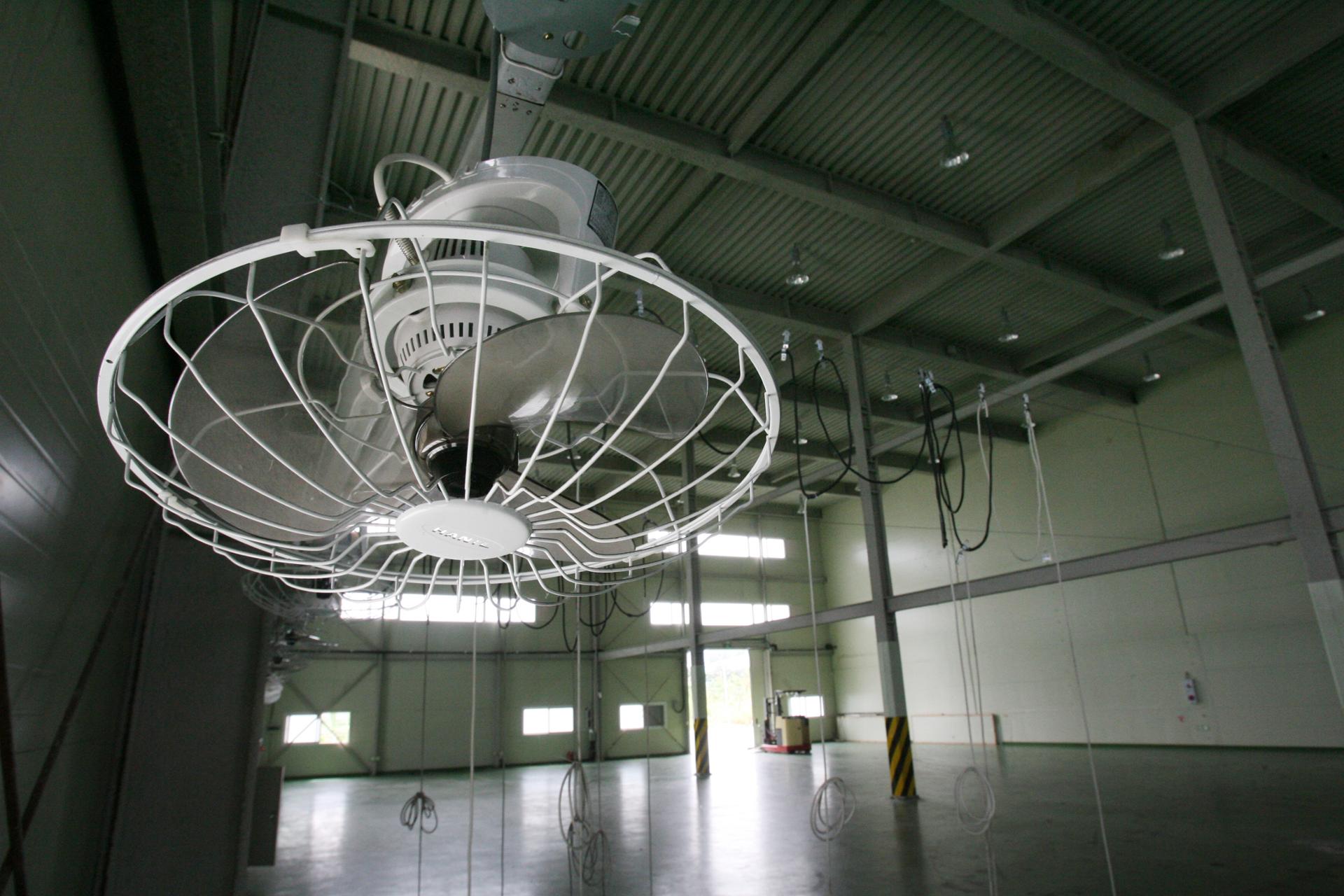
Published Aug 8, 2026 5:40 am KST
During my first summer in Korea, I genuinely thought I might not survive. The heat and humidity were suffocating. I had naively assumed that living near the Han River in southeastern Seoul would at least provide some cooling nighttime breeze. It did not — not even a whisper.
Fortunately, I had a fan: an old, rattling workhorse that labored through the night, pushing hot air from one side of my room to the other. It did not actually cool me, but it created the illusion of doing something, which was better than nothing.
The next morning, bleary-eyed after yet another sleepless night, I dragged myself to school. At least the classrooms were air-conditioned, which felt nothing short of miraculous.
"It was so hot last night, I slept with the fan on all night," I mentioned casually while taking attendance.
A collective gasp seemed to suck all the air out of the room.
I looked up. The entire class was frozen in horror — eyes wide, mouths agape — as though I had just confessed to something unspeakable.
"What's wrong?" I asked.
A long pause followed. Then one brave student slowly raised her hand.
"Yes?"
"Teacher," she said carefully, "you cannot sleep with a fan on at night."
"Why not?"
"You'll die."
And just like that, I was introduced to one of Korea's most curious — and persistent — urban legends: fan death.
Every summer, like clockwork, someone would bring it up. It was as dependable as the monsoon rains. There would be a story in the news about someone found dead in their room with a fan whirring beside them. Cause of death? Obviously, the fan. And just as reliably, an English-language newspaper would publish an op-ed by a foreigner debunking the myth, typically combining scientific logic with mild exasperation.
The belief — uniquely Korean, as far as I could tell — went something like this: if you sleep in a closed room with a fan running, you could die in your sleep, possibly from suffocation, carbon dioxide poisoning, or even hypothermia. None of these proposed causes are medically substantiated, but that never stopped the legend from taking deep root. Everyone believed in it, from students and parents to doctors and even fan manufacturers.
Most electric fans sold in Korea came equipped with timers designed to switch off automatically, just in case you forgot to save yourself from a death-by-breeze scenario.
This fear even extended to air conditioning. In the early 1990s, I would often ride in taxis with the air conditioning blasting — and the windows cracked open. A paradox of comfort and caution.
To be fair, the theories behind fan death attempted to sound scientific. One held that a fan creates a vortex that somehow depletes the oxygen in a room while increasing carbon dioxide levels. Another posited that a fan blowing directly on your face might disrupt your breathing rhythm, slowly depriving you of air. And then there was the hypothermia angle: your body cools too much at night, your metabolism slows, and the fan transforms your bedroom into a death chamber of chill.
The truth? Fans do not actually lower room temperature. They circulate air, increasing evaporation and making you feel cooler by aiding perspiration. They do not conjure a cold front from the void. You were not going to freeze to death with one running — unless your bedroom also happened to be a walk-in freezer.
Still, the myth persisted. People believed it because everyone around them did, and they had heard stories. Someone died of natural causes, a fan was found running in the room, and voilà — case closed. It was the fan. The legend's endurance was reinforced by institutional backing: as recently as 2006, the Korea Consumer Protection Board — a government agency — issued a public safety alert advising citizens not to leave fans running overnight in unventilated rooms, lending the myth an air of official credibility that foreign debunkers struggled to counter.
Back in 1991, I gently assured my students that I would survive the night, spinning blades and all. They were not convinced. Some even told me I was lucky to be alive. After that, I stopped mentioning my fan habits in class. There was no need to alarm anyone.
What surprised me even more was how long the belief endured. Years later, a 2015 NPR report noted that belief in fan death still persisted among many South Koreans, particularly older generations — even though it had been debunked in countless experiments. While younger people are now far more skeptical, the myth managed to hold its ground well into the 21st century. Fan timers remain common, and the warnings continue — proof that urban legends, once embedded in the collective imagination and reinforced by media and institutions, are remarkably difficult to shake.
To this day, when summer rolls in, I still sleep with a fan on. Timer off. Windows closed. Living dangerously.
Jeffrey Miller is the author of several novels including "War Remains," a story about the early days of the Korean War, and "No Way Out," a thriller set in Seoul in 1990. He can be reached at daejeonscribe@yahoo.com.

