Cheong Wa Dae Denies Report of Possible Korean Troop Deployment to Strait of Hormuz
Key Takeaways
- •Cheong Wa Dae denied a JTBC report that the government was leaning toward dispatching troops to the Strait of Hormuz, stating that details on the issue have yet to be decided.
- •The presidential office said Korea has been in discussions with other nations about contributing to peace and stability in the Middle East and the strait.
- •Under the Korean Constitution, any deployment of armed forces abroad requires approval from the National Assembly, making such deployments politically sensitive.
- •U.S. President Donald Trump has criticized Korea for declining requests to send naval assets to help secure the strait, saying President Lee Jae Myung refused his request to join U.S. efforts against Iran.
- •The Strait of Hormuz is a critical maritime chokepoint for global oil shipping, and Korea, which imports most of its crude from the Middle East, depends heavily on the security of the waterway.
Korea's presidential office on Thursday rejected a media report claiming the government was considering sending troops to the conflict-stricken Strait of Hormuz.
"It is different from the facts. Details related to the issue have yet to be decided," Cheong Wa Dae said in a notice to reporters.
The presidential office reiterated its previous stance that Korea has been in discussions with other nations on how it could contribute to restoring peace and stability in the Middle East and in the strait itself.
The denial came after local broadcaster JTBC reported earlier in the day that the government was "leaning toward" dispatching troops to the Strait of Hormuz and was reviewing related details in order to submit a request for parliamentary approval to the National Assembly.
Under the Korean Constitution, the dispatch of armed forces abroad requires approval from the National Assembly, making any troop deployment subject to legislative consent. The requirement has historically made overseas deployments politically sensitive in Korea, where public opinion on military involvement abroad can weigh heavily on lawmakers.
The Strait of Hormuz is one of the world's most strategically important maritime chokepoints, connecting the Persian Gulf with the Gulf of Oman. A significant share of the world's seaborne oil trade passes through the narrow waterway, and it has long been a focal point of regional tensions. For Korea, which imports the bulk of its crude oil from the Middle East, the security of shipping lanes through the strait is closely tied to its energy supply.
U.S. President Donald Trump has repeatedly criticized Korea for declining requests to send naval assets and help secure the strait, claiming that President Lee Jae Myung had said "no thanks" to his request to join U.S. efforts against Iran. The issue adds to the pressure on Seoul to balance its alliance with Washington against domestic constraints and its economic stake in regional stability.
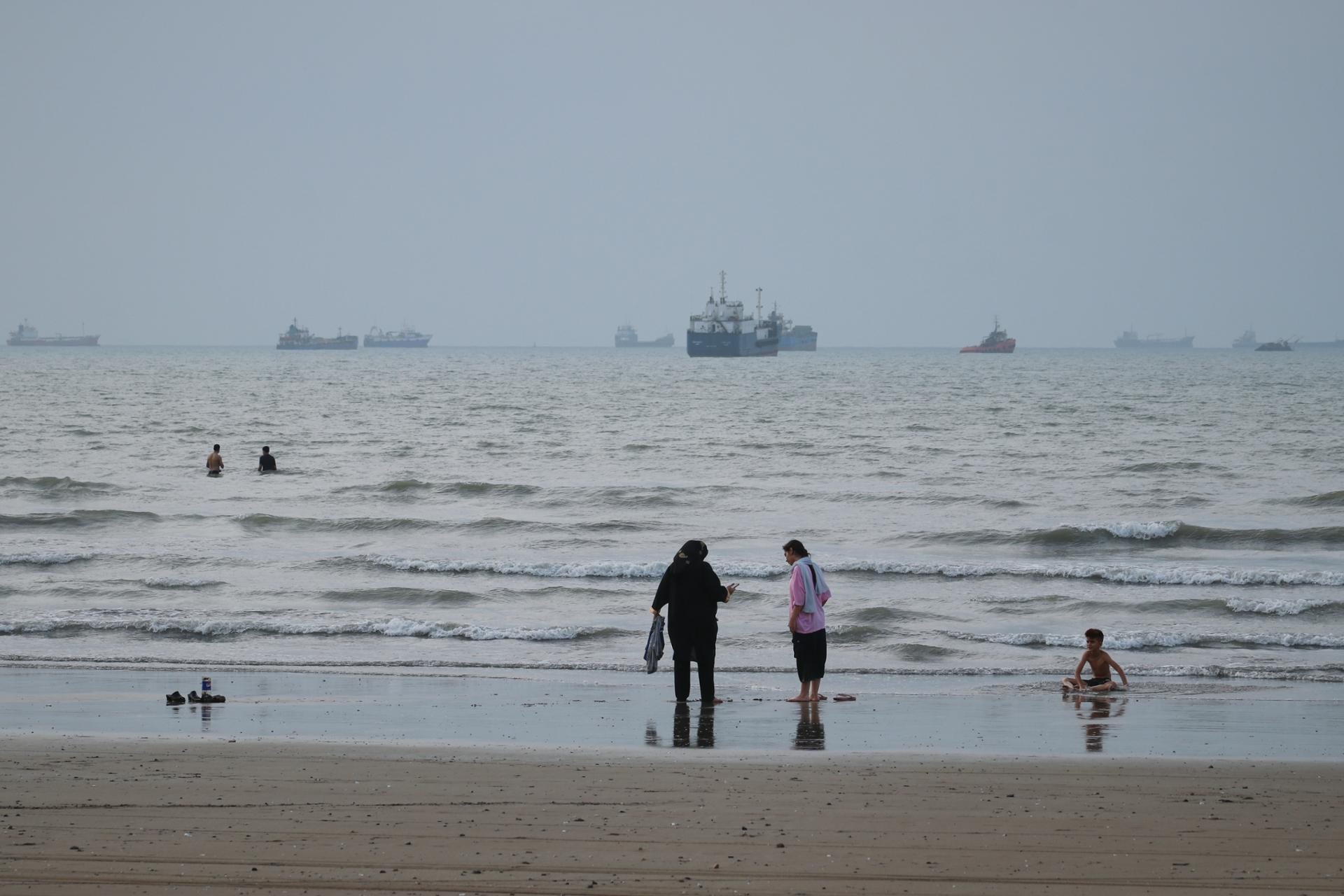
The Strait of Hormuz lies off the coast of Bandar Abbas, Iran, where commercial vessels were seen anchored on Wednesday (local time), AP-Yonhap reported.

