Former PM Kim Min-seok Wins Gangwon and Daegu-North Gyeongsang Primaries in Ruling Party Leadership Race
Key Takeaways
- •Former Prime Minister Kim Min-seok won the DPK primaries in Gangwon Province and the Daegu-North Gyeongsang region with 48.54 percent of the combined vote.
- •Incumbent leader Jung Chung-rae finished second at 44.4 percent, while former DPK leader Song Young-gil came third with 7.06 percent.
- •Kim's recent wins build on earlier victories in Jeju Island and Incheon, keeping him in the overall lead as the primary process passes its halfway point.
- •The DPK will formally elect its new leader at a national party congress scheduled for August 17, an outcome that will shape the party's legislative agenda and electoral strategy.
- •Despite Kim's lead, the cumulative race remains tight, with less than two percentage points separating him from Jung in the total vote tally.
Published Aug 9, 2026, 8:20 pm KST
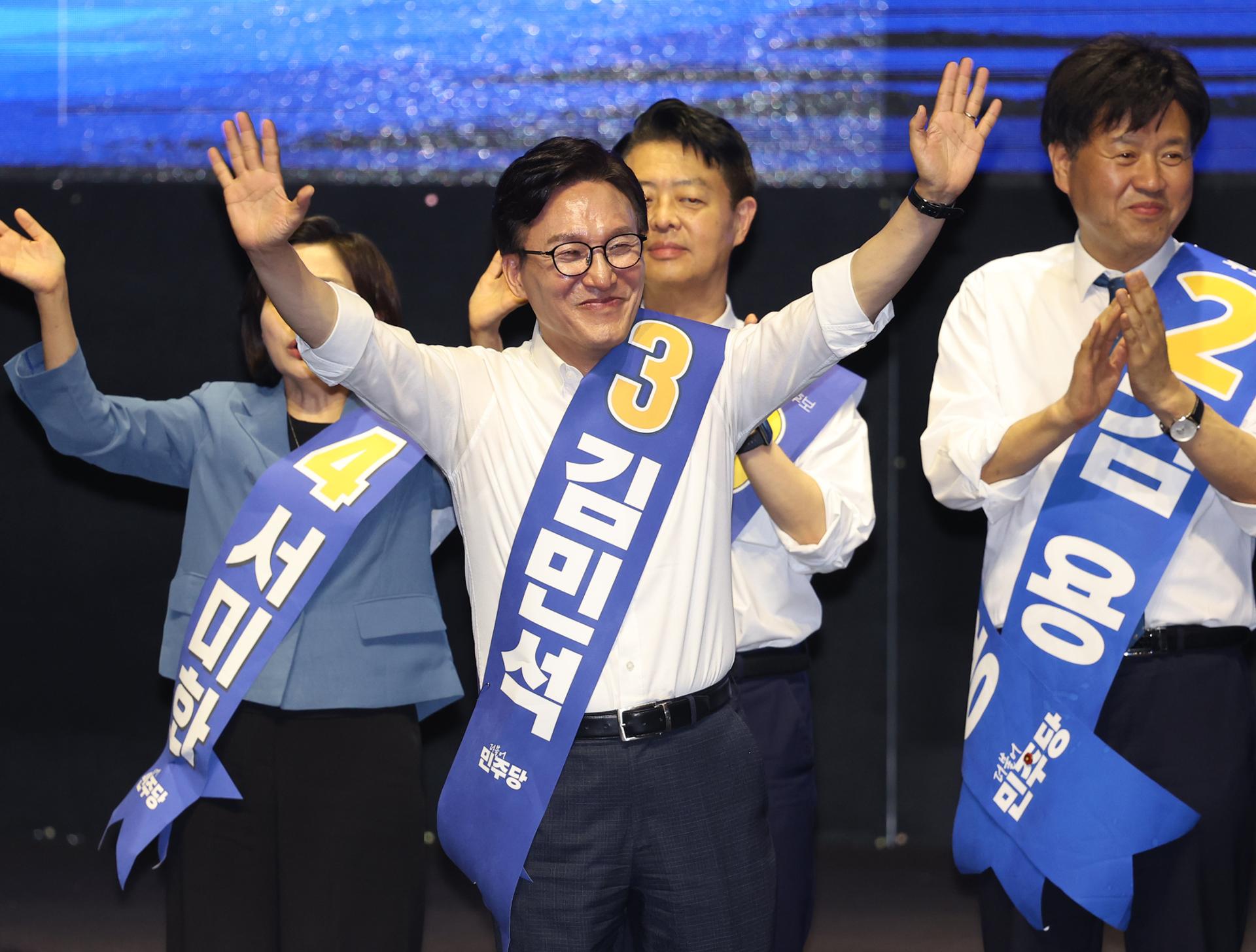
Former Prime Minister Kim Min-seok won the ruling Democratic Party of Korea (DPK)'s primaries in Gangwon Province and the Daegu-North Gyeongsang region on Sunday, further solidifying his front-runner status in a closely contested leadership election that will determine the direction of South Korea's governing party.
Kim garnered a combined 48.54 percent of the vote across the two regions, defeating Jung Chung-rae, who is seeking a second consecutive term as DPK leader, with 44.4 percent. Song Young-gil, a former DPK leader, placed third at 7.06 percent.
The Democratic Party of Korea, currently the ruling party of South Korea, is conducting a series of regional primaries ahead of its national party congress scheduled for Aug. 17, where the new leader will be formally elected. The outcome will shape the party's legislative agenda and electoral strategy for the remainder of President Lee Jae-myung's term.
Sunday's result builds on Kim's victories in Jeju Island and Incheon the previous day, keeping him in the overall lead as the primary process passes the halfway mark. The Gangwon and Daegu-North Gyeongsang regions, traditionally considered conservative strongholds, represent a key battleground for the ruling party's efforts to broaden its base beyond its strongholds in the Seoul capital area and Honam region.
However, the cumulative race remains tight. As of the latest tally, Kim holds 46.01 percent of the total vote compared to Jung's 44.53 percent, a margin of under two percentage points that leaves the remaining regional primaries as a decisive factor in the final outcome.
The Daegu-North Gyeongsang joint rally, held at Hotel Inter-Burgo Exco in Daegu, was part of the party's ongoing process to elect its leader and supreme council members. Kim greeted supporters at the event, which drew a crowd of party members and local residents.
Source: Yonhap / The Korea Times

