Kennedy Center Legal Fight Escalates as Dueling Court Filings Trade Closure and Demolition Accusations
Key Takeaways
- •Rep. Joyce Beatty's overnight court filing argues the Kennedy Center board illegally closed the building in defiance of a judge's order and raises concern that President Trump may demolish it, citing a photo of the president beside a "Kennedy Center DEMOLISH" poster.
- •Trump claimed the venue lost hundreds of millions of dollars before his involvement, but The Washington Post reported the Kennedy Center earned a profit of about $6.4 million in the fiscal year ending September 2023, before he took over and replaced its board.
- •The Justice Department maintains the closure is a seven-day renovation addressing safety hazards identified by Trump-appointed director Matt Floca, who it says acted without White House coordination.
- •Beatty's filing calls the safety rationale inconsistent and pretextual, noting the September 4 storm that caused plaster to fall in the Grand Foyer occurred 12 days before the shutdown, during which the Center stayed open with only a cordoned-off area.
- •The Justice Department has asked the judge to reject Beatty's request for an emergency hearing, leaving the court to decide whether an emergency safety closure can coexist with the order that the building remain open and operational.
A legal battle over the John F. Kennedy Center for the Performing Arts — the Washington, D.C., institution that opened in 1971 as a national cultural center and living memorial to President Kennedy — intensified on Thursday, as dueling court filings traded accusations over the building's abrupt closure. As one CNN reporter put it, the situation has "escalated quickly."
In an overnight court filing, Rep. Joyce Beatty (D-Ohio), a member of the Center's board, argued that the board illegally closed the building in defiance of a judge's order. The filing also raised what it called a very real concern that President Donald Trump will demolish the building, the way he did with the East Wing of the White House. As evidence, it cited a photograph of the president aboard Marine One standing beside a giant poster reading "Kennedy Center DEMOLISH" — or "DEMOLISHED"; the full word cannot be seen in the image.
"Things, Boris, are frankly very legally and politically messy right now over the fate of this building," CNN reporter Sunlen Sefaty told co-host Boris Sanchez. "And frankly, things have escalated rather quickly in the last 24 hours, not the least of which is because you have the president out there warning that the building potentially could be ripped down."
Speaking to reporters at Andrews Air Force Base on Wednesday evening, Trump called the building a "loser." He claimed that he and his administration "should certainly have recognition," or the iconic theater will "end up being ripped down."
"For me to go and fix it, I'm the one capable of fixing it and then have to subsidize it for years to come, because you will lose with the Kennedy Center," Trump said, asserting that the venue lost "hundreds of millions of dollars … before I got involved."
That assertion runs counter to the Center's recent financial record. Until the president took over the institution, fired its board and added his name, the Kennedy Center was turning a profit. In the fiscal year ending in September 2023, it recorded a profit of about $6.4 million, The Washington Post reported.
"So for the Trump administration, for me, to get involved and to take that on long term and to carry it or to raise money to carry it, I think that the Trump administration should certainly have recognition," the president continued. "Because frankly, if we don't do that, it's going to close. It'll end up being ripped down. It's in very, very bad shape, very dangerous shape."
Beatty's overnight court filing cites those remarks, arguing that it is clear Trump wants to demolish the building because he is angry about losing the lawsuits and being forced to take his name off it.
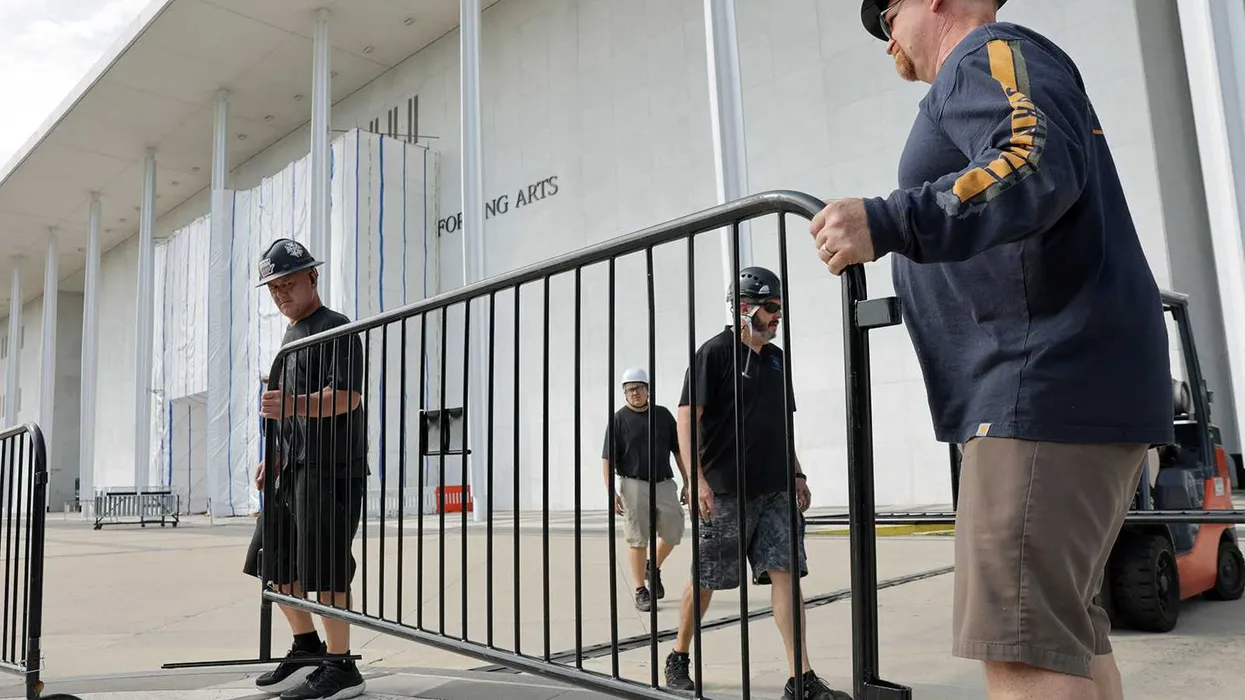
According to Beatty's first court filing, fencing began going up around the Kennedy Center on Wednesday, and witnesses saw a forklift repeatedly collide with the building's pillars.
The Justice Department, in its own filing, claimed that the Kennedy Center is not closing but simply undergoing renovations because the building is not "safe." The department said Matt Floca, the Trump-appointed director of the Kennedy Center, was the official who alleged the building was unsafe, and stated that he did so without any coordination with the White House. Until he was promoted to direct the entire organization, Floca was "in charge of HVAC and toilets."
Beatty's filing said the Center's board initially told her legal team that a "loudspeaker announcement" about the closure resulted from someone improperly triggering a fire alarm. Less than 24 hours later, the Justice Department was describing the shutdown as a management decision responding to "imminent life-safety risks." Beatty's filing calls that explanation inconsistent and "pretextual," noting that the cited triggering incident — a September 4 storm that caused water-damaged plaster to fall from the Grand Foyer ceiling — took place 12 days before the building was shuttered. The Center remained open throughout those 12 days with nothing more than an area cordoned off.
In its filing, the Justice Department asserted that the closure will last only seven days, despite a fence being erected around the full building to repair plaster that fell from the ceiling inside. The department said it is not violating the judge's orders to keep the building open and operational, arguing instead that the order allows an emergency closure and that it does not have to keep the Center open when there are "safety hazards." At the center of the standoff, then, is a single question for the court: whether a shutdown framed as an emergency safety measure can coexist with an order that the building remain open and operational.
The Justice Department asked the judge to reject Beatty's request for an emergency hearing. With the department saying the closure will run only seven days, the court's response to that request — and its weighing of the two sides' conflicting accounts of the shutdown — will shape the next phase of the fight over the building's fate.

