From ₦768 to ₦1,329 per Dollar: The Numbers Behind Cardoso's Three Years at Nigeria's Central Bank
Key Takeaways
- •The Central Bank of Nigeria raised its Monetary Policy Rate by 875 basis points during 2024, from 18.75% to a peak of 27.5%, before cutting it to 26.5% in February 2026 as inflation eased.
- •Nigeria's gross external reserves grew by roughly $21 billion during the tenure, from about $33.6 billion in October 2023 to approximately $54.61 billion by September 14, 2026.
- •The central bank resolved more than $7 billion in verified foreign exchange obligations, while about $2.4 billion in claims were deemed invalid and disputed amounts remain set aside for evaluation.
- •Capital requirements announced in March 2024, the largest such overhaul since 2004, were met by 32 banks as of March 27, 2026.
- •Despite the reforms, the official/interbank naira rate weakened from ₦768.73 per dollar at Cardoso's nomination to about ₦1,329.15 by September 15, 2026.
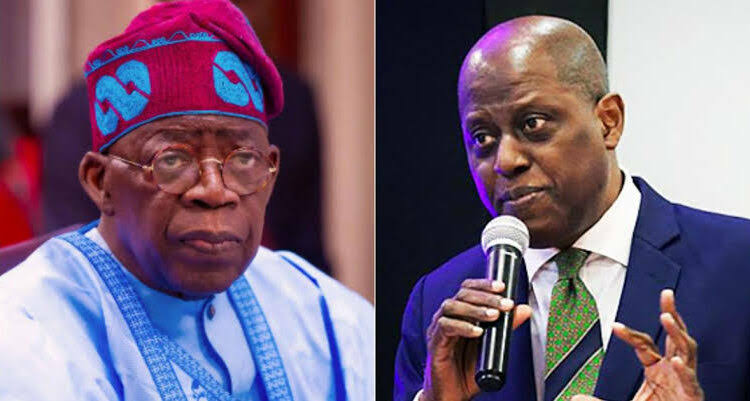
President Bola Ahmed Tinubu nominated Olayemi Cardoso as Governor of the Central Bank of Nigeria (CBN) — the institution that sets monetary policy for Africa's most populous country — on September 15, 2023, and his official tenure began on October 5, 2023 (official CBN biography). Three years on, the period can be traced through a series of defining figures: the Monetary Rate moved from 18.75% to a peak of 27.5% before easing to 26.5%; gross external reserves rose from roughly $33.6 billion to about $54.61 billion; and the bank cleared more than $7 billion in verified foreign exchange obligations, helping stabilise the currency. The naira, however, traveled in the opposite direction — the official/interbank rate stood at ₦768.73 to the dollar when Cardoso was nominated and had reached about ₦1,329.15 per dollar by September 15, 2026.
Cardoso's leadership falls into distinct phases. The CBN initially concentrated on rebuilding trust in its monetary policies, pursued aggressive tightening of the policy rate through 2024, entered a consolidation period in 2025, and then moved to cautious rate cuts in 2025 and 2026 as inflation eased.
A first year of repair
Cardoso's first year centered on revitalising a central bank burdened with more than $7 billion in foreign exchange (FX) claims. Upon review, about $2.4 billion of these claims were identified as invalid because of poor documentation and irregularities, prompting a Deloitte audit. Backlogs of unresolved FX obligations are closely watched by foreign investors because they signal whether money can move freely in and out of an economy, which made the clean-up an early test of the new administration's credibility.
He also sought to move the CBN away from the interventionist strategies of the previous administration, emphasising a return to core functions, stronger compliance and a reduction in quasi-fiscal activities. His 10-point agenda included restoring monetary stability, strengthening governance, improving the payments system, expanding financial inclusion and boosting FX liquidity.
A key policy change came in October 2023, when the CBN lifted restrictions on foreign currency access for importing 43 items and adopted a willing-buyer, willing-seller framework — a step toward a unified foreign exchange market.
An 875-basis-point tightening cycle
When Cardoso took office, the Monetary Policy Rate (MPR) stood at 18.75%. The MPR is the benchmark rate around which banks anchor their own lending and deposit rates, so each move reshapes the cost of credit for companies and households across the economy. In February 2024, the Monetary Policy Committee (MPC) raised it by 400 basis points to 22.75%, beginning a sequence of hikes that lifted the rate to 24.75% in March, 26.25% in May, 26.75% in July and 27.25% in September. By November 2024, the MPR had reached 27.5%.
The CBN described the 2024 cycle as an 875-basis-point increase aimed at fighting inflation and improving the effectiveness of monetary policy. The shift marked a significant change in the bank's approach: away from quasi-fiscal measures and toward interest rates as the primary tool for combating inflation — a pivotal moment for both the institution and the economy.
Market structures in year two
In its second year of reforms, the CBN moved beyond simply reacting to the FX crisis and began establishing sustainable practices in the foreign exchange market, with a focus on transparency and risk reduction. In December 2024, it launched the Electronic Foreign Exchange Matching System (EFEMS) to make FX transactions clearer and safer, giving traders and investors a more visible record of where the naira actually trades. A month later, it introduced the Nigerian Foreign Exchange Code, which set high standards for ethics and compliance among FX dealers to foster trust in the market. By early 2025, Cardoso announced significant progress in clearing the FX backlog, with verified claims resolved and disputed ones set aside for further evaluation — a portion whose eventual treatment remains an open item to track.
Bank recapitalisation
The CBN's recapitalisation of banks was a critical move toward financial stability. New capital requirements introduced in March 2024 mandated ₦500 billion for international banks, ₦200 billion for national commercial banks and lower amounts for others, with a compliance deadline of March 31, 2026. It was the first overhaul of its scale since the 2004 consolidation that lifted banks' minimum capital from ₦2 billion to ₦25 billion. The deadline drove increased financial activity, and by March 27, 2026, Cardoso reported that 32 banks had met the new requirements — an indication of a stronger banking sector.
The exercise was framed as more than a banking technicality. It was a strategic initiative to strengthen Nigerian banks' capital, prepare them for economic shocks, enable larger loans and support the ambition of building a $1 trillion economy, while stabilising the financial sector and fostering long-term growth.
Banking for the diaspora
In January 2025, the CBN launched two initiatives aimed at Nigerians abroad. The Non-Resident Nigerian Ordinary Account allows expatriates to send money home, hold funds and invest in Nigerian assets, providing a reliable option for managing finances. In May, the bank partnered with the Nigerian Inter-Bank Settlement System (NIBSS), the entity that settles interbank payments across the country, to introduce the Non-Resident BVN platform, enabling Nigerians in the diaspora to obtain their Bank Verification Number (BVN) remotely without returning to Nigeria. The focus on the diaspora reflects the weight of remittances, long one of Nigeria's steadiest sources of foreign currency inflows.
These policies align with a broader strategy put forth by former CBN Governor Godwin Emefiele to encourage more foreign currency to flow into Nigeria's formal financial system. By making banking services more accessible to Nigerians abroad, the central bank is facilitating remittances while also welcoming investments that could benefit the economy.
Rates and inflation: a nuanced picture
Over the three years, Nigeria's financial landscape shifted markedly. The CBN reduced the MPR from its 2025 high of 27.5% to 26.5% in February 2026 — still 7.75 percentage points above the 18.75% Cardoso inherited upon taking office, and still well above headline inflation — indicating a cautious easing rather than a return to easy borrowing.
Inflation trends reveal a complex situation. The National Bureau of Statistics (NBS) rebased its inflation measurement — a periodic statistical exercise that updates the basket of goods and services used to calculate price changes — which may make comparisons between older and newer data misleading. Headline inflation fell from 23.14% in August 2025 to 15.39% in August 2026, but this reflects a slower rate of price increases, not falling prices. Food inflation remained high at 19.57%, underscoring continued pressure on households, and earlier price increases still weigh significantly on Nigerians.
Reserves climb by roughly $21 billion
Nigeria's gross external reserves rose from about33.6 billion in October 2023 to approximately $54.61 billion by September 14, 2026 — an increase of around $21 billion. Reserves are the foreign currency holdings a central bank draws on to meet international obligations and cushion its currency, which makes the build-up a central pillar of the stability the CBN has pointed to. The CBN attributes the rise to improved foreign exchange markets and increased inflows from oil earnings, portfolio investments and remittances, surpassing the bank's projection of $51.04 billion for 2026.
A payments overhaul
In his third year, Cardoso led a significant transformation of Nigeria's payment system. In June 2026, the CBN launched Payments System Vision 2028, a four-year plan designed to enhance the efficiency, security and inclusiveness of the payments ecosystem — a workstream that speaks directly to the payments and financial-inclusion goals set out in his original 10-point agenda. Key features include improved interoperability between payment platforms, new instant payment measures and rigorous fraud monitoring.
The naira's course
For all the recorded achievements, the naira's trajectory remains the tenure's most complicated number. When Cardoso was nominated, the official/interbank exchange rate was ₦768.73 to the dollar; by September 15, 2026, it had moved to about ₦1,329.15 per dollar. These figures warrant caution, as Nigeria's foreign exchange market and pricing mechanisms changed significantly over the period, but the currency has clearly depreciated considerably against the dollar under Cardoso's watch. Much now rests on the durability of the inflows the CBN credits for the reserve build-up — oil earnings, portfolio investments and remittances.
Taken together, the three years highlight both the challenges and the changes confronting Nigeria's economy during Cardoso's leadership at the CBN, marking a significant chapter in the country's financial history. How the bank manages further easing, the disputed FX claims it set aside and the rollout of Payments System Vision 2028 will help shape the next one.

