Karoline Leavitt's Inexperience and Tone May Become a Liability for Trump as Political Conditions Deteriorate
Key Takeaways
- •Press Secretary Karoline Leavitt has outlasted all of Trump's first-term press secretaries, benefiting from Chief of Staff Susie Wiles's behind-the-scenes management.
- •The administration is facing declining approval ratings driven by the ongoing Iranian War, rising gas prices, and unpopular healthcare cuts.
- •Leavitt has recently stumbled with public missteps, including calling Gen Z lazy and publicly criticizing judges who rule against the White House.
- •As economic dissatisfaction grows ahead of the midterms, Leavitt's lack of experience and combative nature threaten to make her a political liability.
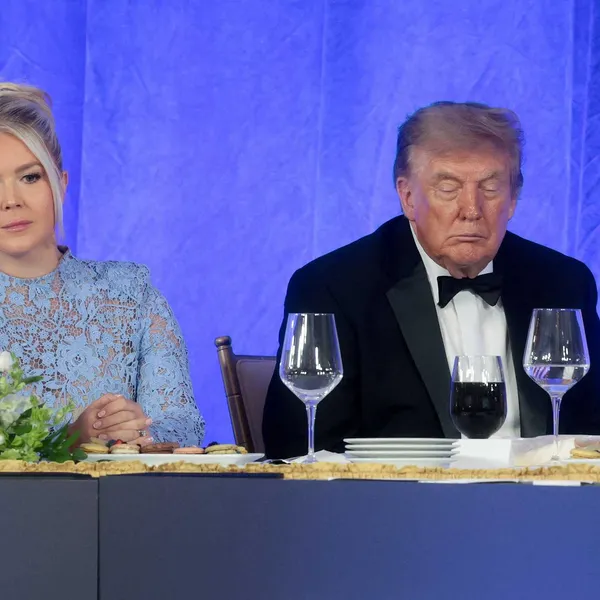
One of the most consequential decisions of Trump's second administration was the early appointment of Susie Wiles as Chief of Staff. Wiles, whatever else may be said of her, is widely regarded as politically adept. Her behind-the-scenes management is reflected in the unusually low staff turnover within this White House — a sharp contrast to the chaotic reshuffling that defined Trump's first term.
That stability has extended to the press room, where Karoline Leavitt has established herself as a formidable presence. Combining sharp messaging instincts with a combative style, Leavitt has navigated a steady barrage of scandals with a durability that has surprised many observers. Leavitt, like Wiles, has become essential to Trump's political operation. Yet unlike Wiles, she remains a source of potential vulnerability — particularly as the midterm elections approach.
The history of Trump's press secretaries underscores how difficult the role is. The first term saw four in four years: Sean Spicer, Sarah Huckabee Sanders, Stephanie Grisham, and Kayleigh McEnany — each of whom departed under significant pressure. The role has grown steadily more combative across recent administrations, a trajectory that predated Trump but accelerated sharply during his first term. Leavitt, who assumed the role at just 27, has already outlasted all of them. Before her appointment, her primary credentials included an unsuccessful congressional campaign and her marriage to a wealthy businessman approximately 30 years her senior.
Several factors explain her longevity. Wiles's behind-the-scenes management has reduced internal drama and minimized the damaging leaks that plagued the previous administration. McEnany also established a template for the combative press secretary role that energized the MAGA base. And perhaps most importantly, from Trump's perspective, things had been going relatively smoothly. With a Republican Congress, scandals were largely deflected. Prior to the Iranian War, Trump faced few existential political threats, and his approval ratings remained stable.
That calculation, however, is shifting.
Republican senators — far more than their Democratic counterparts, who have largely been sidelined — are increasingly vocal in their alarm. With the midterm elections looming, the GOP is confronting the reality that the Iranian War appears unwinnable, with escalating gas prices driving up costs across the economy. The job market is weakening, with the exception of sectors tied to data center construction benefiting Trump's allies. Public dissatisfaction is rising over healthcare cuts enacted alongside billions in daily war spending. Trump's approval ratings have dropped to their lowest levels, according to polling analysis from Nate Silver's Bulletin.
The pattern has historical precedent. Presidents whose parties controlled Congress during periods of prolonged military engagement and economic strain have typically seen their majorities erode — George W. Bush's Republicans lost both chambers in the 2006 midterms amid deepening public dissatisfaction with the Iraq War. Midterm elections historically punish the president's party, and that tendency intensifies when voters perceive an administration as indifferent to hardship at home.
This deteriorating environment is where Leavitt's lack of experience becomes most consequential. In recent weeks, she has made two notable unforced errors. The first came when she remarked that Gen Z is lazy and accustomed to silver spoons — a comment that drew immediate criticism given that Leavitt herself is a member of Gen Z, is married to a wealthy older man, and received her position from a president who has publicly commented on her appearance. The remark landed at a moment when affordability and healthcare are becoming central political concerns heading into September.
The second area of concern involves her public criticism of judges who rule against the administration, treating routine judicial oversight as though it were an act of hostility. This posture, documented by Fox News coverage, risks alienating not only legal observers but also Republican senators who will soon return to Washington and face their own electoral pressures.
The challenge for Leavitt is that she has made herself the public face of the administration's response to every issue — and lacks the experience to navigate questions that have no easy answers. Pressed on how the administration justifies cuts from the Department of Government Efficiency (DOGE) — the cost-cutting initiative led by Elon Musk that has targeted federal programs across agencies — and healthcare programs while continuing to spend billions daily in Iran — months after Trump declared the war effectively won — she will face mounting pressure as the conflict remains unresolved. Even Fox News has expressed mild criticism of the administration's handling of the war.
Republican members of Congress, facing their own grim polling numbers, will have little choice but to push back against the White House. In Texas, for instance, Ken Paxton is polling behind James Talarico. Voters across the political spectrum are angry, and many expect someone in the administration to demonstrate genuine concern about economic hardship.
Sounding empathetic, however, is not among Leavitt's demonstrated strengths. In her determination to defend the president, she risks becoming the face of a White House that appears indifferent to public suffering — a perception that could make an already difficult political environment substantially worse.
The question now is whether the combination of rising public discontent, an unwinnable war, economic deterioration, and her own tone-deaf instincts will transform Leavitt from an asset into a liability. She has undeniably demonstrated talent for deflecting scrutiny of presidential actions that might have sunk previous administrations. But that talent has not yet been tested under conditions of sustained voter anger and economic distress.
Susie Wiles may be able to manage much of the fallout behind the scenes. But it is Leavitt who most frequently speaks for the administration in public. As voters grow more frustrated, the demand for reassurance and competence will only intensify — and it is not clear that Leavitt possesses the skills to meet that demand.
If she does not, the president who elevated her may eventually decide that loyalty and combative instinct are not enough. And Leavitt may find that the same qualities that made her effective in calmer political waters are precisely the ones that undo her when those waters turn rough.
Jason Miciak is a Raw Story columnist, former editor of Occupy Democrats, author, political consultant, and attorney. He can be reached at jasonmiciak@gmail.com.
Source: Raw Story
