Kansas Emerges as 2026's Unlikeliest Senate Battleground, Threatening GOP's 94-Year Streak
Key Takeaways
- •Kansas has not elected a Democratic senator since 1932 and has supported every Republican presidential nominee since 1968.
- •The New York Times/Siena poll gives Marshall a one-point advantage over Hamilton, 47% to 46%.
- •Democrats need a net gain of four Senate seats to take the majority, making the Kansas race nationally significant.
- •Republican Senate candidates won Kansas by wider margins than polling suggested in both 2014 and 2020.
- •Trump’s Kansas approval rating is 40%, while Democrat Laura Kelly won the governorship in 2018 and 2022.
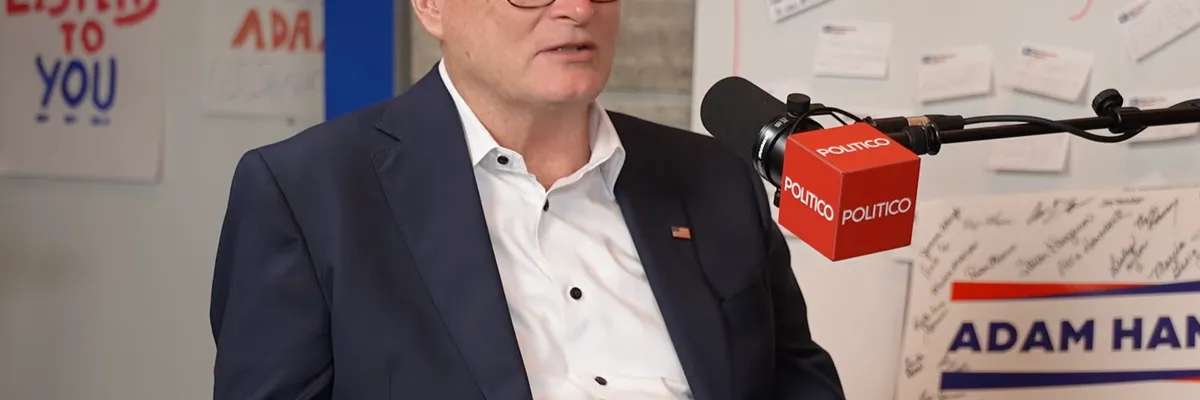
President Donald Trump's slumping approval ratings have turned several unlikely states into midterm battlegrounds, and according to NBC News's top data analyst, this year's "unlikeliest" battleground is a genuine competition that could end up breaking a 94-year electoral trend.
Steve Kornacki, best known for his data-driven coverage of election results and polling, published his latest analysis for the network on Tuesday morning, examining why the Senate battle in Kansas between incumbent Republican Sen. Roger Marshall and Democratic nominee Adam Hamilton has become a "prisingly tight contest." The Sunflower State has not elected a Democrat to the Senate since 1932, and it has sided with every GOP presidential nominee since 1968 — a pair of streaks that gives this race implications well beyond Kansas.
While reliable polling still gives the edge to Marshall, his lead is now perilously thin for a Republican in a longtime red state.
"A New York Times/Siena poll over the weekend gives Marshall, who has faced scrutiny over his residency status, a scant edge of 1 percentage point, 47 percent to 46 percent," Kornacki explained. "The national implications of a Hamilton win would be enormous, dramatically increasing the likelihood of Democrats' regaining control of the Senate." The party needs a net gain of four seats to win the majority, which means it must successfully defend every seat Democrats currently hold while flipping four more. That arithmetic leaves no margin for a single missed race, which is why an unexpected contest like Kansas carries outsized weight in the battle for the chamber.
Kornacki cautioned, however, that recent history provides notable evidence that this seemingly competitive race might be an illusion. In 2014, he noted, Democrats backed independent Senate candidate Greg Orman against incumbent Sen. Pat Roberts. Although Orman held a narrow lead heading into that year's midterms, Roberts ultimately prevailed by 12 points. Roberts later retired and backed Marshall in 2020, when Marshall went on to win by 11 points despite polling only 4 points ahead. In both cycles, the final result landed well to the right of what pre-election polling showed — the track record behind Kornacki's caution about the current numbers.
"That having been said, the political climate does appear more favorable to Democrats now than in either of those elections," Kornacki added. "Roberts was boosted by what proved to be a national GOP tide in '14, when Barack Obama was president and facing a low approval rating in Kansas. And Marshall in '20 shared the ticket with Donald Trump, who had a 51 percent approval rating in the state and carried it easily in his re-election campaign. But in the new NYT/Siena poll, Trump's approval is just 40 percent in Kansas."
He continued: "While it has remained a reliably Republican state in federal elections, Kansas has gotten a shade less red during the Trump era, thanks to a handful of counties where Democrats have made inroads. Back in 2012, the last pre-Trump election, Mitt Romney handily won it by 22 points over Obama. In his three campaigns, Trump has won by 21 points in 2016, 14 in '20 and 16 in '24. The state also twice elected a Democratic governor, Laura Kelly, in 2018 and 2022." Those twin victories illustrate the pattern Kornacki is describing: Kansas voters have recently shown a willingness to split their tickets, electing a Democrat to the governor's office even as the state remained reliably Republican in Senate and presidential races. Between now and November, the benchmarks to watch are the ones Kornacki cited — subsequent public polling on the race, and any movement in Trump's 40 percent approval in the state.

