Kalshi Hands Former Rep. George Santos a Lifetime Ban Over State of the Union Market Manipulation
Key Takeaways
- •Kalshi said Santos placed large trades in a market linked to whether he would attend the State of the Union address, a market he was not allowed to trade in because he could influence the outcome.
- •The exchange found that Santos made public comments about his attendance that were false or misleading and intended to affect the prices of the contracts.
- •Kalshi said those actions generated $17,839.57 in profit and resulted in a $71,356 fine and a permanent platform ban.
- •Santos was expelled from the House in December 2023 and later pleaded guilty to federal fraud charges in 2025.
- •The case comes as prediction markets face increasing scrutiny over insider-trading and market-integrity risks.
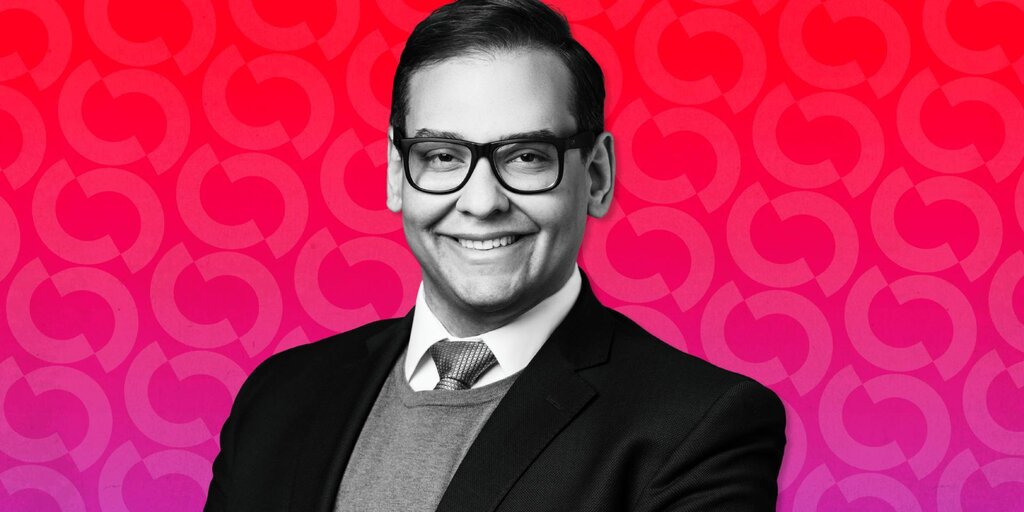
Prediction market Kalshi has permanently banned former Rep. George Santos after finding that he manipulated a market tied to his own attendance at the State of the Union address, profiting nearly $18,000 in the process. The exchange also fined him $71,356—the first lifetime ban Kalshi has ever issued to a former member of Congress.
Santos, a New York Republican, was expelled from the House in December 2023 after an Ethics Committee report found substantial evidence of campaign-finance violations and fraud; he later pleaded guilty to federal fraud charges in 2025. The Kalshi action marks another chapter in his post-Congress legal troubles.
In a disciplinary notice dated Aug. 28, Kalshi's compliance department said Santos placed a series of large trades between Feb. 2 and Feb. 25 in a market whose outcome hinged on whether he would attend the event. Because he was someone capable of influencing that outcome, exchange rules barred him from trading in it.
According to the notice, Santos then made a string of public statements about his attendance—some of them false or misleading—in an effort to move the price of the "Yes" and "No" contracts. The compliance department found that he made those statements with the intent to manipulate prices, and that they did in fact do so, allowing him to profit $17,839.57 in the targeted markets. The case is a textbook example of what market integrity rules are designed to prevent: participants with control over an outcome—much like corporate insiders trading their own company's stock—hold an informational edge over other traders.
Kalshi said the conduct violated multiple rules, including prohibitions on market manipulation, trading with influence over an event's outcome, and using deceptive schemes to defraud. Santos was also cited for failing to cooperate with the investigation.
As punishment, Kalshi permanently suspended Santos from direct or indirect access to the platform and imposed a $71,356 penalty.
Prediction markets allow users to bet real money on the outcome of real-world events—elections, sports, economic data—by buying "Yes" or "No" contracts whose prices move with perceived odds. Platforms such as Kalshi, a CFTC-regulated exchange, and its crypto-native rival Polymarket have exploded in popularity over the past year, drawing billions in trading volume, mainstream attention, and a wave of institutional interest as event contracts go mainstream.
The action against Santos is the latest sign of the insider-trading and integrity risks dogging prediction markets as they boom. The CFTC recently fined a former White House teleprompter operator for trading on advance knowledge of presidential speeches, a MrBeast video editor was fired amid a Kalshi insider-trading probe, and a U.S. soldier was charged over alleged Polymarket trades. How exchanges and regulators police self-referential and insider-influenced markets will be a key test of the industry's credibility as it seeks wider mainstream adoption.
Kalshi has since rolled out new safeguards in response to the mounting scrutiny.

