Justice Samuel Alito Emerges as Trump's Most Unwavering Supreme Court Ally, Washington Post Reports
Key Takeaways
- •Justice Samuel Alito has supported the Trump administration in every major Supreme Court case of the president's second term, even when the court's majority ruled against policies such as tariffs, the birthright citizenship ban, and federalized mail-in voting.
- •Legal experts describe the 76-year-old justice, appointed in 2006, as having shifted significantly rightward over recent decades and as now more closely aligned with the Trump wing of the Republican Party.
- •Alito has become adept at writing strongly conservative opinions that still attract five justices' votes without reading as political compromises, according to a former clerk.
- •A Democratic takeover of the Senate in November could increase pressure on Alito to resign, because the subsequent lame-duck period would represent Trump's last opportunity to seat a nominee through a Republican-controlled Congress.
- •Alito has denied retirement rumors and said in a recent interview that he intends to remain on the court through the current term.
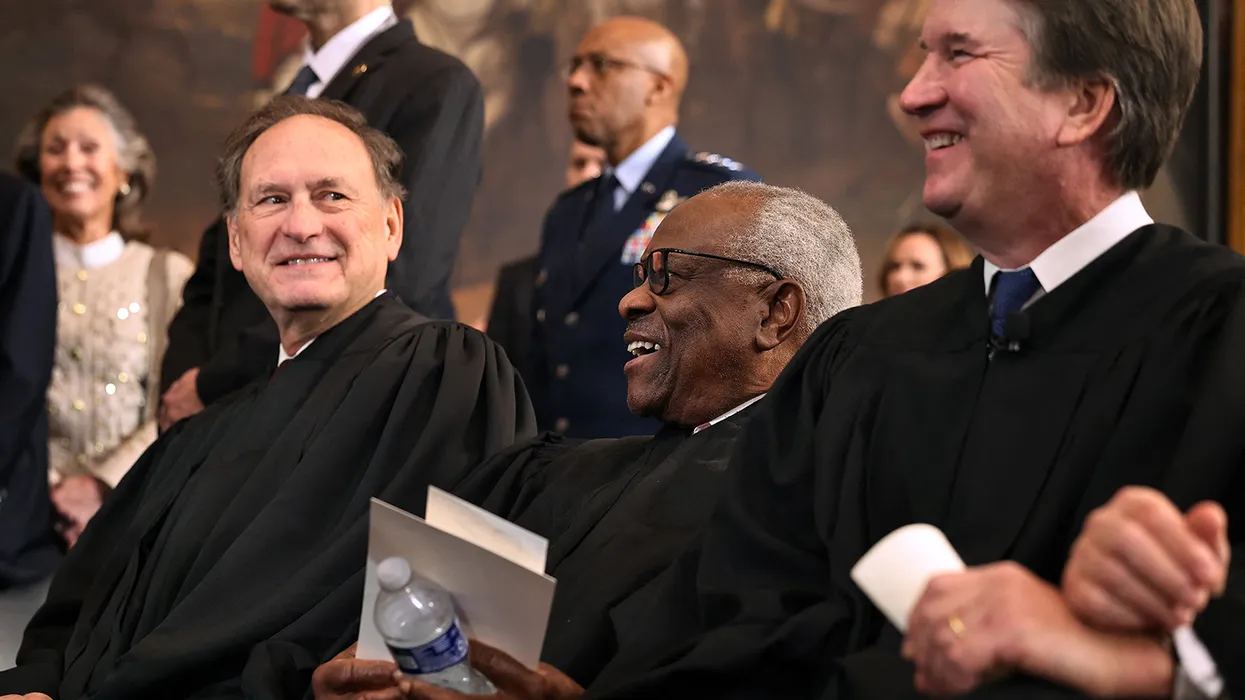
Justice Samuel Alito has grown increasingly emboldened in asserting President Donald Trump's agenda on the Supreme Court, positioning himself as the president's most steadfast ally on a bench that has moved further to the right, according to a report published Friday by The Washington Post.
Alito, who joined the court in 2006 after being nominated by President George W. Bush, now serves alongside the three justices appointed during Trump's first term — a six-justice conservative majority in which each future vacancy carries outsize weight.
Supreme Court reporter Justin Jouvenal wrote that Alito, 76, "has achieved new prominence on the court in the Trump era. As the president's agenda has come to dominate the court's docket, Alito has boosted his profile as its most unwavering supporter. His unabashed conservative voice on race, transgender rights and other culture war issues resonates with Trump and his base."
According to the report, Alito has backed the Trump administration in every major case it has brought before the high court during the president's second term, including instances in which he broke with the majority as the court blocked Trump's sweeping tariffs, his proposed ban on birthright citizenship, and his attempt to federalize mail-in voting. Those episodes have shown that even a solidly conservative bench has at times ruled against the administration's signature priorities, making Alito's unbroken support stand out.
Peter Canellos, author of a book about Alito titled "Revenge for the Sixties," told the Post that "this is his moment," saying the justice "is at the peak of his powers… Many of the battles on the court are among conservatives between a more traditionalist approach with Chief Justice Roberts, and Alito's approach, which is to move the law in a more conservative direction. Alito feels like he can win a lot of those battles."
Richard Lazarus, a law professor at Harvard University, told the Post that Alito has evolved in a way that has brought him more in concert with the Trump wing of the Republican Party, adding that "he is a very different Alito than he was a few decades ago." While Alito was always reliably conservative, Lazarus said, he once fit a more Reagan mold. "Alito has, in my view, moved far to the right and with a very different personality," Lazarus said. "His voice, his opinions and his votes are now loud, they're mocking and they're contentious."
Jouvenal reported that legal experts said Alito's sentiments, which are sometimes couched in grievance, share a similar style with Trump's, as does the sense that an older America is slipping away. In the book, Alito portrays traditional values as under siege.
J. Joel Alicea, a Catholic University law professor and former Alito clerk, said the justice has become adept at writing opinions that are extremely conservative while still bringing along other justices. "[Alito] doesn't produce opinions that get five votes that kind of feel like a political compromise," Alicea said. "He writes opinions that get five votes, and each justice feels their own originalist and conservative principles are respected."
Jouvenal noted that if Democrats take the Senate in November, as polls suggest is possible, it could put fresh pressure on Alito to resign, since the lame-duck period between November and January would represent Trump's last chance to get a nominee through a Republican-controlled Congress. Because Supreme Court justices hold life tenure, the timing of any such vacancy could shape the court's direction well beyond a single presidency.
Alito, however, has denied rumors that he intends to retire — a step that would give Trump an opportunity to name his fourth justice — apparently because he believes he can continue the court's march to the right himself. In a recent interview, he said he intends to remain on the court through the term, leaving the November midterm results and his own stated timeline as the key markers in any succession watch.

