Federal Judge Rejects Trump's Third Attempt to Move Felony Convictions to Federal Court
Key Takeaways
- •Judge Alvin Hellerstein denied for the third time Trump's request to transfer his New York criminal case to federal court, finding his lawyers' arguments neither new nor legally sufficient.
- •Hellerstein wrote that the trial evidence showed no relationship to official presidential acts, rejecting Trump's claim of immunity under the Supreme Court's 2024 Trump v. United States decision.
- •Trump was convicted in 2024 of 34 felonies for falsifying business records tied to hush-money payments to Stormy Daniels, and in 2025 received an unconditional discharge that upheld the convictions without penalties.
- •Because the president's pardon power covers only federal offenses, Trump cannot pardon away these state convictions and must rely on the Supreme Court to overturn them.
- •Any appeal will now proceed through New York's state appellate courts before possible Supreme Court review.
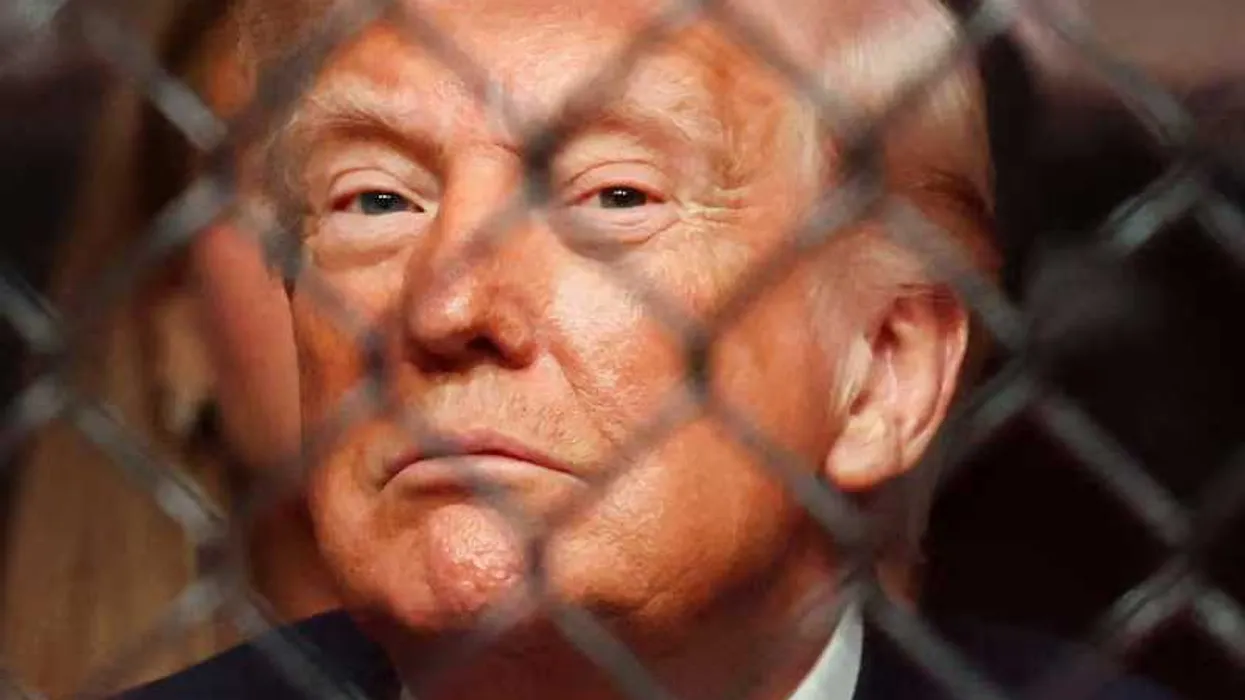
A federal judge on Friday denied President Donald Trump's latest attempt to transfer the New York criminal case that produced his 34 felony convictions into federal court — a move that would have allowed him to fast-track his appeal to the Supreme Court.
Judge Alvin Hellerstein, a Clinton appointee and senior district judge for the U.S. District Court for the Southern District of New York, found the arguments from Trump's attorneys "neither new nor legally sufficient." "He has failed to show good cause and diligence," the judge wrote.
Adam Klasfeld, Editor-in-Chief of All Rise News, noted that "Trump's gambit here was pretty low stakes," since the appeal will likely still reach the Supreme Court — but it must now work its way through the New York judiciary first, a process that typically runs through intermediate appellate courts before any possible review by the high court. Klasfeld added, however, that "this finding doesn't bode well for Trump."
Trump's legal team argues that he is immune under a prior Supreme Court ruling holding that presidents are immune from prosecution for "official acts" — the July 2024 decision in Trump v. United States on presidential immunity — and that his felony convictions should therefore be overturned. Hellerstein countered that argument directly, writing, "The trial evidence shows no relationship to official acts," and that the evidence cited "showed the absence of anything that could qualify as an official act." Klasfeld's reporting on the rulings is available at https://x.com/KlasfeldReports/status/2093381762139201778?s=20 and https://x.com/KlasfeldReports/status/2093385484995121402?s=20.
Trump was found guilty in 2024 of 34 felonies for falsifying business records to disguise hush-money payments made to adult film star Stormy Daniels, making him the first former U.S. president convicted of felony crimes. In 2025 he received an unconditional discharge, which upheld the convictions while eliminating prison, financial, and probationary penalties. Although Trump has previously expressed a desire to pardon himself, state convictions cannot be overturned by a federal pardon — the president's pardon power extends only to federal offenses — leaving him reliant on the Supreme Court to do it for him.
Friday's ruling was the third time Hellerstein rejected a transfer request from Trump's attorneys, all sought under the federal removal statute that lets certain officials move state criminal cases to federal court. Reporting on the earlier oral arguments, Klasfeld wrote that "Hellerstein left little doubt that he would reject Trump's effort a third time on multiple grounds. First, Hellerstein indicated that Trump waived his right to transfer the case to federal court by first choosing to litigate the fallout of the Supreme Court immunity's decision in state court. 'That's a strategic decision,' the 92-year-old jurist said." Klasfeld further reported that "with an adverse state court ruling imminent, Trump filed his second removal request nearly 60 days later — after the statutory 30-day clock expired. Hellerstein said that Trump's lawyers were seeking a 'second bite of the apple' after losing in New York, which the removal statute doesn't allow."
When Trump's lawyers asked for the transfer a third time, the judge responded: "I think we are beating a dead horse." According to Klasfeld, "Toward the end of oral arguments, Hellerstein noted that Trump is 'not above the law.'"

