Federal judge rebukes DOJ lawyer who dismissed her 'unserious question' in Trump golf course shutdown hearing
Key Takeaways
- •The Justice Department ultimately conceded that three interrelated factors shaped the Nov. 15 closure date - safety concerns, the loss of a course operator, and President Trump's public statement - retreating from an earlier insistence that the alignment was pure coincidence.
- •The government offered two justifications for the shutdown: that the course poses a danger to the public and that no operator remains after the administration terminated the management contract.
- •Judge Ana Reyes questioned why safety issues flagged since a May hearing had gone unaddressed for months, observing that the urgent safety emphasis surfaced only after Trump announced the Nov. 15 deadline.
- •The department's claim that the island is so dangerous children could be injured was challenged by the judge's observation that a marathon recently drew 30,000 people to the area.
- •The hearing included a tense exchange in which DOJ lawyer Adam R.F. Gustafson suggested one of the judge's questions was not serious, prompting a direct rebuke from Reyes.
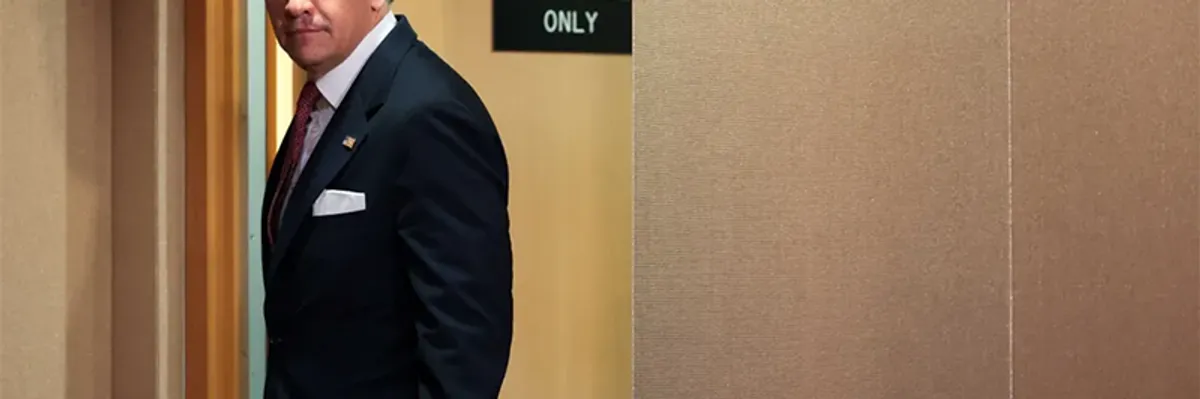
A federal judge clashed publicly with the Justice Department on Friday during a hearing over the pending closure of a public golf course in Washington, D.C., that President Donald Trump is seeking to renovate, at one point rebuking a department lawyer who implied her questions were not serious. At stake was whether the shutdown, set to begin Nov. 15, would proceed as scheduled.
The dispute centered on the timing of the shutdown. Last month, Nov. 15 was fixed as the closure date after Trump posted on Truth Social that the park had to shut down on that day. In court, Principal Deputy Assistant Attorney General Adam R.F. Gustafson faced pointed questioning from Judge Ana Reyes about how the Nov. 15 date was chosen, maintaining that its alignment with the president's edict was pure coincidence.
The department offered two justifications: first, the course must close because it poses a danger to the public; and second, no one will be available to manage it because the government terminated the operating contract.
The second rationale irritated the judge, who observed that the management problem was created by the administration itself. According to Lawfare's Molly Roberts, who reported on the hearing as it unfolded, Reyes argued that the government cannot say, "I set my house on fire, and now because my house is on fire I get insurance proceeds." Gustafson countered that the situation was more complicated than that, but the judge was not persuaded.
Gustafson then faced questioning about the condition of the seawall, which figured in Friday's court battle. The DOJ contends the island is so dangerous that children could be injured. That assertion came shortly after a marathon drew 30,000 people to the area — a fact the judge highlighted, asking why the event would have proceeded if the site were truly so hazardous.
Gustafson compared the situation to roads across the United States, saying that with more funding the country would do more work to make them safer. Reyes pressed the analogy, asking whether a dangerous building that could collapse and kill someone would be condemned and closed. Gustafson wavered again.
"Let me just understand: I can walk into a government building that poses a safety risk, at any moment it could kill me, it's just a dangerous building, and it wouldn't be closed?" the judge asked.
"Your Honor, I'm not sure that's a serious question," Gustafson replied.
The remark did not sit well with Reyes. "You can be assured it's a serious question because I asked it, and I don't ask unserious questions," she said.
It was also not the first time the DOJ has been accused of disrespect toward the court. One observer noted that Woodward repeatedly addressed the judge as "ma'am" rather than "your honor."
The safety claims before the court are a recent addition to the case; the May hearing included no urgent assertions of imminent danger.
"If there are critical safety issues that have been identified where thousands of members of the public go through, you address some of those issues, right?" the judge asked. The DOJ responded that such matters were handled "gradually."
Reyes noted that nothing had been addressed since May, and that the new safety emphasis surfaced only after Trump declared the park would close on Nov. 15.
"Why has nothing been done on those for months and now on Nov. 15 it's a basis for emergent safety action?" she asked.
The department ultimately acknowledged that three interrelated factors determined the date: safety; the absence of a course operator; and the president's public statement about closing on Nov. 15. The acknowledgment marked a shift from Gustafson's earlier insistence that the alignment was pure coincidence, and it put the president's public statement squarely inside the government's explanation of the timing.
The judge then announced a lunch break.

