John Paulson Says Gold Is Entering a Long-Term Bull Market as Central Bank Demand Continues to Rise
Key Takeaways
- •Paulson believes the current gold rally reflects the start of a broader structural bull market rather than a short-term move.
- •Central banks have been increasing gold reserves as part of efforts to diversify away from traditional reserve assets and strengthen financial resilience.
- •Private investors, institutions and wealth managers are showing renewed interest in gold as a store of value during periods of uncertainty.
- •Gold demand is being supported by concerns over inflation, fiscal deficits, rising sovereign debt and geopolitical risks.
- •Potential headwinds for gold include stronger economic growth, higher real interest rates, reduced geopolitical tensions and a stronger U.S. dollar.
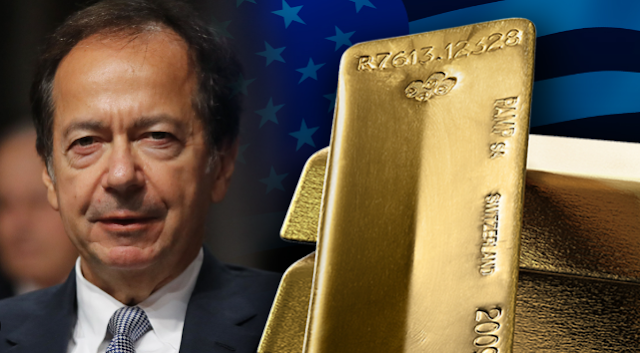
John Paulson Says Gold Is Entering a Long-Term Bull Market as Central Bank Demand Continues to Rise
Billionaire investor John Paulson believes gold is only in the early stages of what could become a prolonged bull market, citing sustained central bank purchases and growing private investor demand as the primary forces underpinning the precious metal's long-term outlook.
Paulson, widely recognized for his successful investments during the global financial crisis, said the current macroeconomic environment continues to favor gold as governments, institutional investors, and individual buyers seek assets capable of preserving value amid economic and geopolitical uncertainty.
His comments have drawn attention across global financial markets and were subsequently highlighted by Cointelegraph on X. While Paulson's original statement was brief, analysts note that the broader implications extend beyond gold itself, reflecting a wider shift in investor sentiment toward safe-haven assets at a time when inflation concerns, fiscal uncertainty, and geopolitical risks remain elevated.
The remarks also come at a moment when gold continues to trade near historically strong price levels, bolstered by central bank accumulation and expanding investor interest worldwide.
Source: Cointelegraph on X
Paulson's Bullish Thesis on Gold
John Paulson has long been regarded as one of the world's most influential hedge fund investors. His market views frequently attract significant attention, owing in part to his track record of identifying major macroeconomic trends before they gain mainstream acceptance.
According to Paulson, the current gold rally should not be interpreted as a short-term price movement but rather as the beginning of a broader structural bull market. He contends that multiple long-term factors are converging to support sustained demand for the precious metal in the years ahead, including central bank purchases, geopolitical uncertainty, inflation risks, and the pursuit of portfolio diversification.
Central Banks Continue Accumulating Gold
One of the strongest pillars of Paulson's outlook is the ongoing pace of central bank gold purchases. In recent years, monetary authorities across numerous countries have steadily built up their gold reserves. Many economists attribute this trend to central banks seeking greater diversification away from traditional reserve assets while reinforcing financial resilience during periods of global instability.
Gold has historically functioned as a critical reserve asset because it is not directly tied to any single government's monetary policy. Sustained demand from the official sector has emerged as one of the most significant structural sources of support for global gold prices. Central bank buying is also closely watched because official reserve managers typically operate on longer time horizons than short-term traders, making their activity an important signal for the broader bullion market.
Private Investors Return to Precious Metals
Alongside central bank accumulation, private investors have demonstrated renewed interest in gold. Periods of elevated inflation, financial market volatility, geopolitical instability, and economic uncertainty frequently prompt investors to increase their allocations to defensive assets.
Gold has traditionally been regarded as a store of value capable of preserving purchasing power over long investment horizons. Retail investors, family offices, institutional asset managers, and wealth preservation funds continue to evaluate gold as a component of diversified portfolios, and this growing investment demand has reinforced broader market optimism.
Gold's Role as a Safe-Haven Asset
Gold has maintained its status as one of the world's premier safe-haven investments for centuries. Unlike many financial instruments, gold carries no credit risk and is not dependent on the financial performance of any corporation or government. During periods of market stress, investors routinely increase their exposure to precious metals as a defensive measure.
Economic slowdowns, inflationary pressures, banking instability, currency weakness, and geopolitical conflicts have historically driven demand for gold. Current global conditions continue to reflect several of these factors simultaneously.
Inflation Remains a Key Consideration
Inflation continues to shape investment decisions worldwide. Although inflation rates have moderated in several major economies compared to previous peaks, many investors remain concerned about long-term purchasing power. Persistent fiscal deficits, expanding government debt, and shifting monetary policy continue to fuel uncertainty regarding future inflation trends.
Gold has frequently been used as an inflation hedge, as its long-term value has historically remained comparatively stable relative to many fiat currencies. Paulson believes these dynamics remain favorable for precious metals.
Fiscal Risks Reinforce Gold Demand
Government borrowing has expanded significantly across many advanced economies in recent years. Large fiscal deficits and rising sovereign debt levels have led investors to reassess long-term financial risks. Some market participants warn that expanding public debt could eventually place pressure on currencies and government finances.
Gold is widely viewed as an asset capable of offering protection during periods of fiscal uncertainty, a perspective that has contributed to rising demand from both institutional and private investors.
How Gold Compares With Other Assets
Gold occupies a distinctive position within diversified investment portfolios. Unlike equities, its value is generally not tied to corporate earnings. Unlike bonds, it does not generate fixed income, but it also avoids the interest-rate risk associated with long-duration debt securities. Compared with cryptocurrencies, gold benefits from centuries of historical acceptance as a reserve asset.
Many portfolio managers therefore allocate a portion of their holdings to gold alongside stocks, bonds, cash, and alternative investments. Diversification remains one of the principal reasons investors continue to hold precious metals.
Market Outlook for Gold
Analysts remain divided on gold's future price trajectory. Supportive factors include central bank purchases, geopolitical tensions, inflation uncertainty, and continued investor demand. Potential headwinds could include stronger economic growth, higher real interest rates, diminished geopolitical risks, or a stronger U.S. dollar.
These variables matter because gold is priced globally in U.S. dollars and does not pay interest, making real yields, currency strength, and monetary policy expectations key inputs for many professional investors. As a result, central bank communications, inflation data, reserve reports, and geopolitical developments are likely to remain closely monitored by gold market participants.
Nonetheless, many investment firms continue to forecast favorable long-term conditions for gold. Paulson's remarks reinforce the view that structural demand may persist even in the face of short-term price volatility.
Looking Ahead
Paulson's conviction that gold is entering the early stages of a long-term bull market mirrors a broader optimism among investors regarding the metal's prospects. His confidence is underpinned by continued central bank buying, increasing private investor participation, and persistent macroeconomic uncertainty across global financial markets.
While no investment outlook can be guaranteed, prevailing market conditions continue to underscore gold's role as a strategic store of value during periods of economic, fiscal, and geopolitical turbulence. As central banks diversify reserves and investors seek defensive assets capable of preserving long-term purchasing power, gold is likely to remain a closely monitored component of global financial markets.
Whether the current rally ultimately evolves into the extended bull market Paulson envisions will hinge on future inflation trends, monetary policy decisions, geopolitical developments, and investor sentiment. His latest remarks, however, highlight an increasingly important reality: demand for gold remains robust among both institutional and private investors.

