Trump 'doesn't understand' what's at stake in Ukraine, ex-adviser John Bolton says
Key Takeaways
- •Former national security adviser John Bolton said on Times Radio that President Trump does not understand the stakes in Ukraine and has focused on domestic American politics rather than geopolitics in recent weeks.
- •Bolton argued Trump's Russia outreach aims to announce lower oil prices for domestic political benefit rather than produce results, with inflation and fuel costs weighing on Republican election prospects.
- •He claimed Putin views Trump as an 'easy mark' rather than a friend, and that agreeing to deals gives Russia an enormous favor to call in later.
- •Former Secretary of State Madeleine Albright offered a similar assessment in 2019, warning that Trump's desire for flattery from Kim Jong-un could lead to concessions with long-term effects.
- •Bolton, a frequent Trump critic, pleaded guilty to one count of inappropriately sharing classified information after an 18-count indictment brought by the Trump administration's Justice Department.
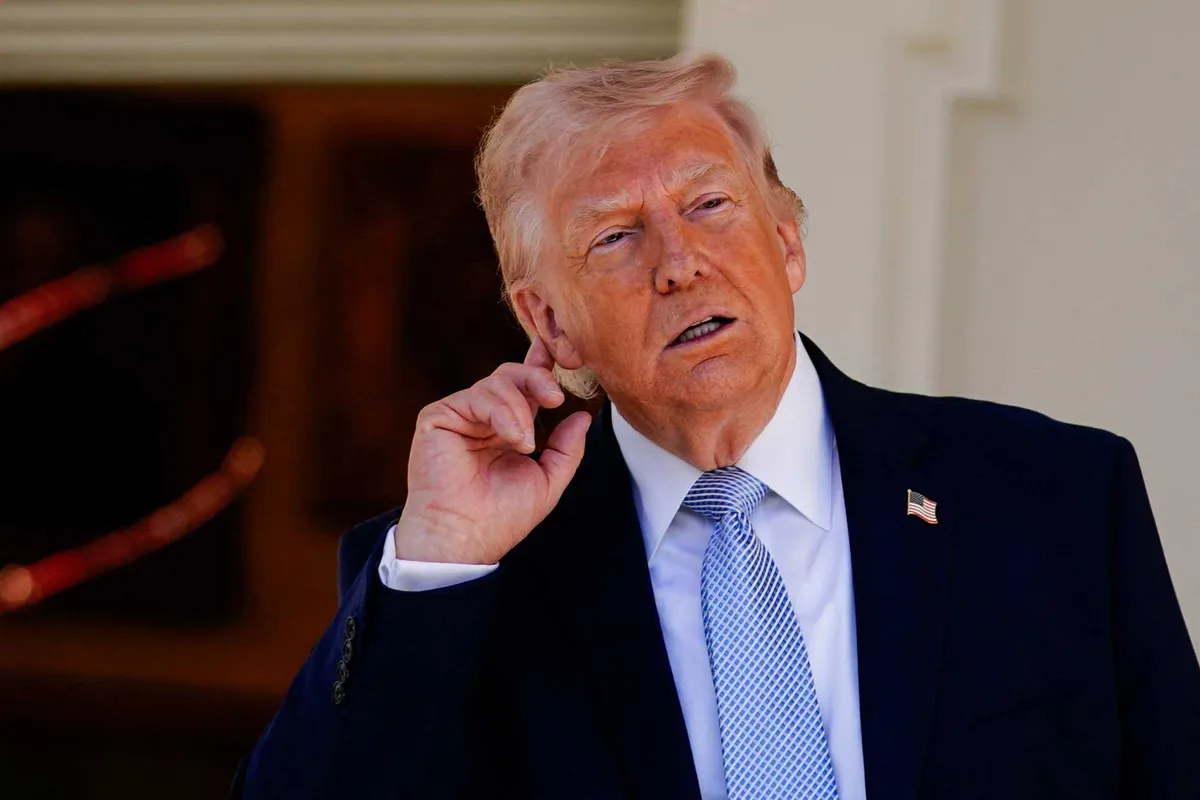
President Donald Trump's former national security adviser, John Bolton, accused his onetime boss on Sunday of failing to grasp basic global politics, with particular criticism centered on the president's handling of Ukraine, where Russia launched its full-scale invasion in February 2022. Bolton, who had earlier served as UN ambassador under President George W. Bush, held the national security adviser post from 2018 to 2019.
Invoking Soviet leader Vladimir Lenin, Bolton told Times Radio that the revolutionary "has called people like this useful idiots" — an epithet popularly attributed to Lenin for people seen as unwittingly advancing an adversary's goals. "Trump really doesn't understand what's at stake in Ukraine. And in the past several weeks, he has been focused not on geopolitics, but on domestic American politics. He's in deep trouble."
Bolton then turned to the domestic political pressures shaping the administration's approach.
"The Republicans are facing a referendum on the Trump administration," Bolton told Boulton. "People are unhappy. There are gonna be substantial Republican losses. Inflation is one of the factors working against Republican candidates. Diesel fuel, gasoline are factors in that. And what Trump is trying to do is take steps to say domestically, 'I'm gonna be able to bring down oil prices.' Now, none of what he's doing with Russia will do that, but for Trump, it's announcing the deal. It's not necessarily the results of it." Energy prices sit at the heart of that argument: Russia is one of the world's largest oil exporters, and Western sanctions on its crude have been a principal lever of pressure on Moscow since the full-scale invasion began.
He added that the consequences of the president's dealings with Moscow extend well beyond American politics.
"But the international effect of what he's doing is to give Russia an enormous favor to call in at some point, because Putin, by agreeing to this deal and other things, has given Trump a favor when Trump needs it at home. So it's a very disturbing development all the way around.n
The former adviser also contended that Trump is easily manipulated, citing the president's deference toward Russian President Vladimir Putin as a prime example.
"If he and Vladimir Putin are good friends, he thinks US-Russia state-to-state relations are good," Bolton told Boulton. "That's not correct for many reasons. Most importantly, because Vladimir Putin doesn't see Trump as a friend. He sees him as an easy mark. And every time Trump, in a very needy way, comes to Putin to ask for this diesel deal or something like that, Putin's more than happy to give it to him and put it in his pocket to call him later."
Bolton is not alone in observing that Trump is easily swayed by flattery. Speaking with Salon in 2019, former Secretary of State Madeleine Albright, who held the post from 1997 to 2001, offered a similar assessment of the president's approach to North Korean dictator Kim Jong-un, saying: "I do think that what is worrisome to me is, in an effort to be flattered by Kim Jong-un, that he gives away something that might have a longer term effect for the next administration."
Bolton has been a frequent critic of Trump, and the president has responded by targeting his former adviser through the Justice Department. After being investigated under an 18-count indictment brought by the Trump administration, Bolton pleaded guilty to one count of inappropriately sharing classified information.

