No bailout for Jaguar Land Rover, says business secretary
Key Takeaways
- •Business Secretary Jonathan Reynolds said the government will not financially support Jaguar Land Rover if the purpose is to bail out jobs, though it may invest in long-term projects.
- •JLR plans to cut 4,000 jobs through a voluntary redundancy programme as it targets approximately £1.7 billion of savings over the next two years and a break-even point of 300,000 vehicles.
- •JLR directly employs 34,000 people across three UK sites and supports a further 120,000 jobs through its supply chain, making the cuts significant for the West Midlands economy.
- •The company faces falling sales, US import tariffs affecting North America, its largest market at 29 per cent of sales, and a five-week production halt after a September cyberattack.
- •Unite general secretary Sharon Graham will meet Reynolds and Balaji next week, with the outcome likely to shape whether the redundancy programme proceeds as planned.
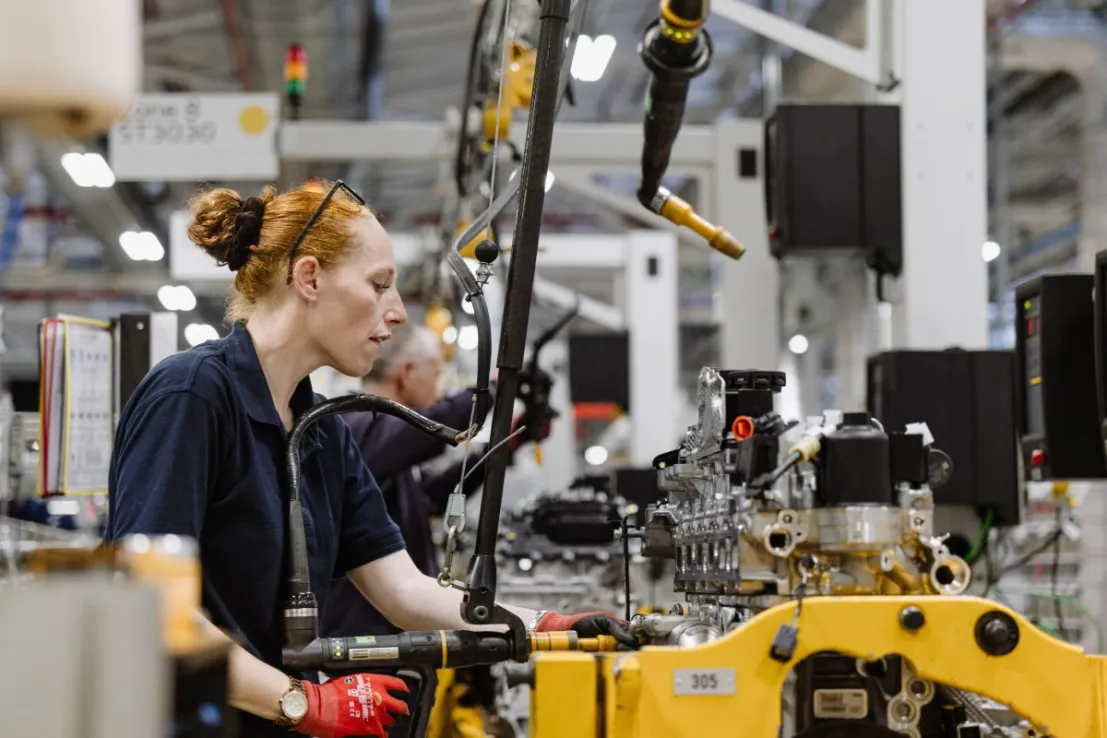
Business secretary Jonathan Reynolds has said the government will not bail out Jaguar Land Rover (JLR) after Britain's biggest carmaker announced plans to cut 4,000 jobs.
The standoff sets up a significant test of Labour's industrial policy, coming as the UK car industry as a whole grapples with weak demand, the shift to electric vehicles and the cost of new US import tariffs.
Reynolds has already spoken to PB Balaji, JLR's chief executive, and is due to meet the company's leadership in the coming days. But he told the BBC's Laura Kuenssberg show that the government will not offer financial support to protect jobs "if it's to bail people out".
JLR has unveiled a sweeping voluntary redundancy programme as it seeks to cut costs in response to falling sales and the fallout from US tariffs. According to the Sunday Times, the manufacturer's bosses are due to formally announce the programme on Monday.
The company directly employs 34,000 people across its three UK sites and supports a further 120,000 British jobs through its supply chain, meaning the cuts carry broader significance for the West Midlands economy, where its plants at Halewood, Solihull and Castle Bromwich are concentrated.
Tata Motors, JLR's Indian owner, has been pressuring Balaji to reduce costs at the firm after he was parachuted in last year to shore up its balance sheet.
JLR was forced to pause production at its factories for five weeks following a cyberattack in September last year. Donald Trump's tariffs on UK car imports have weighed on the group's performance in North America, its biggest market, which accounts for 29 per cent of sales. The exposure matters because JLR is a major exporter of higher-margin vehicles, making it more vulnerable to import duties than manufacturers that produce locally.
The manufacturer's revenue fell by nearly 10 per cent in the three months to June, while pre-tax profit slumped by more than two thirds to £109m.
Speaking on Sunday, Reynolds said: "A company the size of JLR, which is a huge British success story, at various times in its business cycle, the number of, directly, people it employs will change.
"If this is about making sure over time that the workforce is right to make the business as competitive as possible, that's the conversation we need to have. Of course you want to mitigate any job losses."
However, the government will not be giving JLR support "if it's to bail people out. If it's about long-term investment in the future, we do invest alongside industry on that."
'Death by a thousand cuts'
A spokesperson for JLR said: "Over the past three years, we have strengthened our House of Brands and transformed our product portfolio for the next generation.
"As we deliver the next phase of our strategy we need to adapt to evolving global market conditions while targeting approximately £1.7 billion of savings over the next two years and reduce break-evens to 300,000 vehicles.
"To achieve this, we must further simplify our organisation, improve efficiency and build greater resilience."
A government spokesperson said it has already taken measures to support the UK's car industry, including a cut to energy bills and £4bn of capital and research and development funding for zero-emission vehicles.
"We understand that this will be an uncertain and concerning time for affected workers, their families and wider communities," they said.
Sharon Graham, general secretary of the Unite union, said she will meet with Reynolds and Balaji next week. "Death by a thousand cuts has been going on under the nose of successive governments," she said.
The coming meetings between Reynolds, Balaji and union leaders are likely to determine whether the redundancy programme proceeds as planned and whether any government support is directed towards retraining or long-term investment rather than protecting existing roles directly.

