Nvidia CEO Jensen Huang Joins X, Champions Open AI Models in First Post
Key Takeaways
- •Nvidia CEO Jensen Huang published his first post on X to publicly advocate for open AI models through a joint letter co-signed by Nvidia.
- •The letter argues that open models enhance security, promote innovation, and support technological sovereignty, while warning that closed systems concentrate power and create systemic vulnerabilities.
- •Huang's stance aligns with Meta's open-source approach to AI models and contrasts with the proprietary strategies pursued by companies such as OpenAI and Anthropic.
- •A broad coalition of organizations including Microsoft, Meta, IBM, Palantir, Mozilla, and the Linux Foundation endorsed the open AI initiative.
- •Bitwise consultant Jeff Park observed that the letter's emphasis on decentralization, transparency, and open infrastructure closely parallels foundational cryptocurrency principles, despite no direct mention of digital assets.
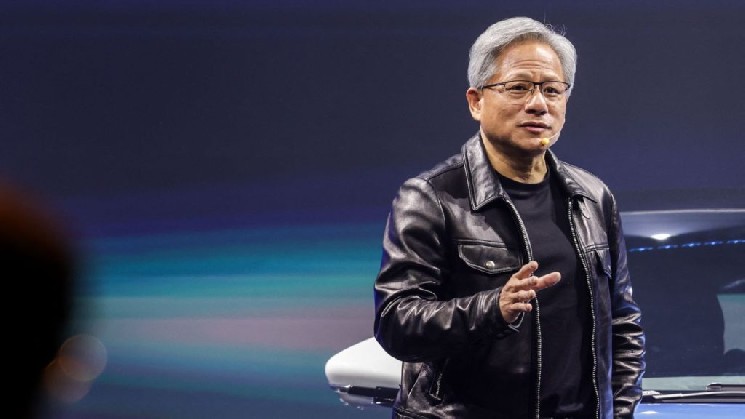
Nvidia founder and CEO Jensen Huang has activated his personal account on the X platform and published his first post, using the occasion to publicly endorse open AI models. The move places the head of the world's dominant AI chipmaker squarely in the ongoing industry debate over whether frontier models should be openly published or kept proprietary, a fault line that has drawn attention from policymakers in both the United States and European Union as they draft AI governance frameworks.
In his inaugural post, Huang shared a joint letter—also signed by Nvidia—titled "Open Source and American AI Leadership." Huang wrote that artificial intelligence will transform every industry and company, and argued that open models strengthen security and cybersecurity, accelerate the spread of innovation, and support the technological sovereignty of nations. He added that the world needs both closed and open frontier models to advance the field.
The letter cautioned that concentrating advanced AI capabilities in the hands of a small number of closed-loop model providers creates isolated points of failure, weakens competition, and leaves critical technologies under the control of a few companies. By contrast, it stated, open-loop models enable researchers to study system behavior, identify vulnerabilities, and develop protection mechanisms. The argument aligns with positions staked out by Meta, which has released its Llama series of models under permissive licenses, and contrasts with the approach of companies such as OpenAI and Anthropic, which limit external access to their most capable systems.
Relying solely on closed systems is not inherently safer, the letter continued, arguing that transparency—similar to what is found in open-source software—can enhance AI security. It noted that open models permit independent testing, benchmarking, and red-team exercises. In addition to Nvidia, a broad coalition of organizations endorsed the initiative, including Microsoft, Meta, IBM, Palantir, Mozilla, and the Linux Foundation.
Jeff Park, a consultant at Bitwise, viewed Huang's first post positively in the context of the intersection between cryptocurrency and artificial intelligence. Park observed that while the CEO of one of the world's most valuable technology companies did not directly mention cryptocurrencies in his message, the themes he emphasized—the risks of centralized structures, the value of transparency, and the importance of open infrastructure—resonate with crypto sector principles.
According to Park, the approach outlined in the letter—"distributed structure instead of concentration, transparency instead of closure, and open infrastructure instead of closed intermediaries"—closely mirrors the foundational ideas behind cryptocurrency networks.
Source: CryptoNews

