Reform UK's Jenrick refuses to rule out bank tax, telling investors to 'watch this space'
Key Takeaways
- •Robert Jenrick refused to rule out a banking tax floated by Nigel Farage, saying no plans had been set out but telling investors to "watch this space".
- •Jenrick said he is fully confident Chancellor John Healey will target banks at the Budget, describing the sector's record profits as "low hanging fruit" for revenue raising.
- •Farage's main focus is ending Bank of England interest payments on reserves held by commercial lenders, a manifesto proposal Reform claims would save taxpayers £40bn.
- •Reform announced £80bn in planned spending cuts, mainly from welfare reform, and pledged a budget within the first 100 days of entering government.
- •Jenrick said he would keep Bank of England independence but backs reforming the MPC to include members with private-sector and practical economic experience.
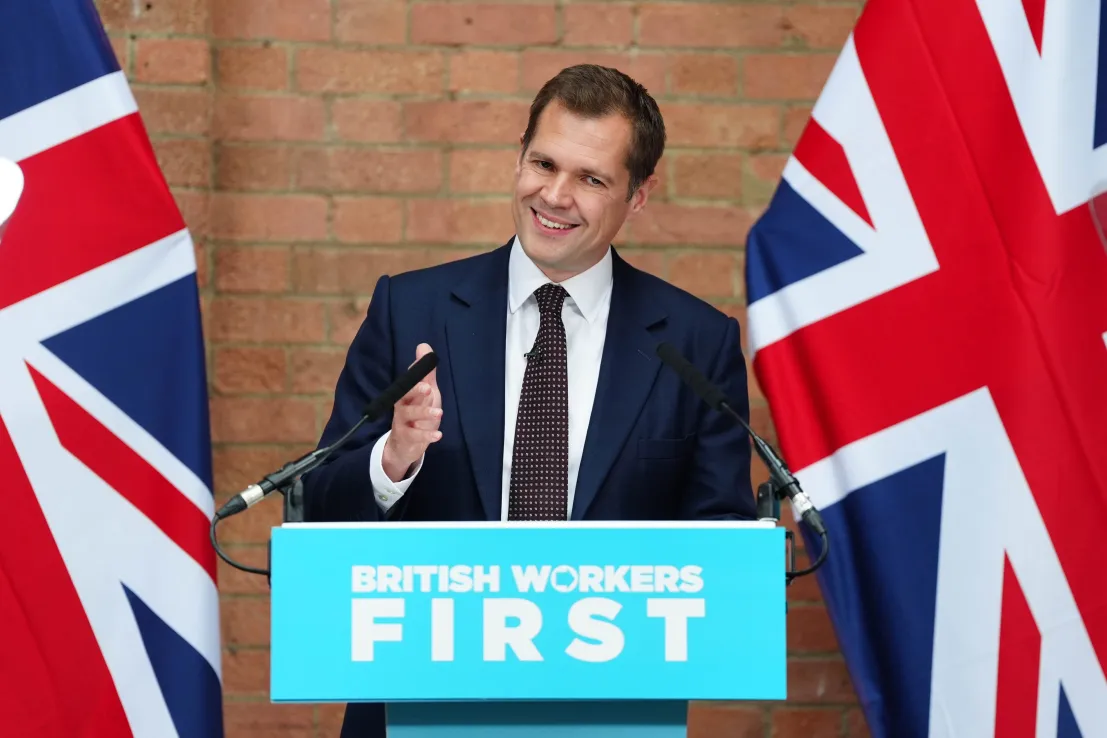
Reform UK's Treasury spokesman Robert Jenrick has refused to rule out a banking tax floated by party leader Nigel Farage, who previously said he would target lenders because he didn't "like" them.
Speaking at a Reform conference event organised by City industry representatives, Jenrick said the party had not committed to banking taxes. However, the party's economic chief warned investors to "watch this space" as he declined to say Reform opposed a tax on profitable banks, though he suggested there could be changes to remuneration payments given some cross-party agreement on the issue.
"We haven't set out any plans to increase taxes on banks," Jenrick said.
He added that he "100 per cent" believes Chancellor John Healey would target banks at the Budget in order to raise revenue, arguing that huge profits across the sector made them "low hanging fruit". UK banks have reported record or near-record profits in recent reporting seasons, keeping the sector in focus whenever chancellors hunt for revenue.
Jenrick also explained that Farage was more focused on the Bank of England's interest payments on reserves held on its balance sheet by commercial lenders. Jenrick said there was "merit" to considering ending reserve payments altogether. Reform's 2024 manifesto included a proposal to stop the Bank paying interest on reserves, which the party said would save taxpayers £40bn. Paying interest on reserves is standard practice among major central banks, and critics of ending the payments — including former Bank officials — have argued it could distort money markets and interfere with monetary policy transmission.
The party told investors to watch for further policy announcements on financial services, which could include slashing red tape for lenders.
Bank tax on the cards?
The Bank pays interest on reserves created during the quantitative easing process, although central bank officials are now unwinding those holdings through a bond sell-off. The scale of those interest payments has grown sharply since rates rose from near-zero levels. Richard Tice, Reform's deputy leader, has been a staunch critic of the Bank's quantitative tightening programme, alongside figures such as Labour's Louise Haigh, the chancellor of the Duchy of Lancaster.
In Davos earlier this year, Farage said he would tax banks, citing his past de-banking by NatWest's private bank Coutts.
"We are going to do it. Some of the banks won't like it. Well, I don't like the banks very much," he said in an interview with Bloomberg.
"This will be tough for banks to accept, but I am sorry, the drain on public finances is just too great. It's not a tax.
"They are just not going to get free money anymore. They'll adjust; business always does."
A Reform source claimed the party did not back bank taxes and said policy was still being prepared. The mixed signals reflect the tension between Reform's simultaneous courtship of City executives and Farage's combative rhetoric towards the banking sector.
Reform UK officials have used their first-ever Business Day to court City executives and other business leaders. Jenrick announced he had written to top banks setting out Reform's plans for £80bn in spending cuts, mainly through welfare reform, and said he would hold a budget within the first 100 days of entering government.
Former Chancellor Rachel Reeves declined to raise taxes on banks — which already pay a levy on top of corporation tax compared with other companies — despite increasing government revenue by roughly £65bn across her two budgets.
Banking tax speculation is intensifying ahead of this year's Budget, as Healey's £22.7bn headroom looks set to be slashed due to the Iran war.
Changing the MPC
Jenrick, a former Tory minister attending his first Reform conference since switching parties, added that he would maintain the Office for Budget Responsibility and the Bank of England's independence, although he would consider a number of reforms relating to the Bank's relationship with the Treasury.
He suggested that Bank's Monetary Policy Committee should not be composed solely of academic economists and could benefit from appointments from the private sector. MPC members are appointed via a process involving the Treasury, and any shift towards more business-focused appointments would mark a change in the committee's longstanding composition.
"I think the MPC could have a broader range of views within it, including different perspectives on economics, but also on the economy," Jenrick said.
"So people perhaps with more experience of the real economy.
"I think having people with perhaps some more practical experience of the economy would be useful to inject into the mix."

