Kansas Pastor Adam Hamilton Rebuts JD Vance's 'Not Real Christianity' Attack
Key Takeaways
- •Vice President JD Vance characterized the United Methodist faith of Kansas pastor Adam Hamilton as "left-wing radicalism" and "not real Christianity."
- •Hamilton, pastor of the largest United Methodist church in Kansas and the country, called the remarks desperate and challenged Vance to compare theology and their faith's impact on the world.
- •A conservative commentator repeated claims from an attack ad against Hamilton that The Kansas City Star has debunked, illustrating how locally fact-checked claims can resurface in national broadcasts.
- •Journalists in the debate compared the dispute to historical clashes over candidates' religion, noting that the Constitution prohibits any religious test for public office.
- •Hamilton told ABC News that every line of the attack ad was false and said the episode reflects broader chaos and corruption he sees in Washington.
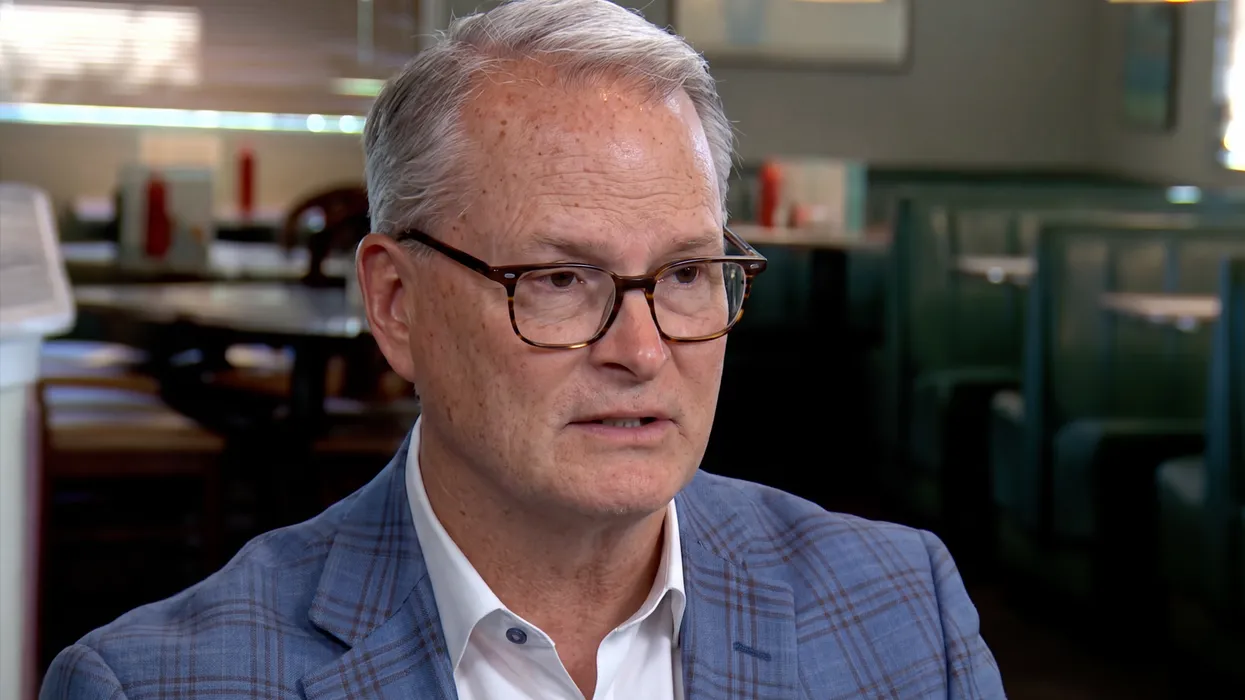
Vice President JD Vance dismissed the faith of a Kansas megachurch pastor as "not real Christianity," prompting a pointed response from the pastor himself — and an on-air debate over an uncomfortable question for the vice president: Is he defending Christianity, or attacking Christians whose politics he dislikes?
The pastor, Adam Hamilton, answered with a direct challenge: "Let's compare our faith and the impact we're having on the world."
Hamilton leads a United Methodist megachurch located down the road from the Saint Paul School of Theology, where his ministry emphasizes supporting one's community, helping one's neighbor, and being better stewards of the Earth. The United Methodist Church is one of the largest mainline Protestant denominations in the United States, and the dispute over how its pastoral message is characterized has already traveled from a Kansas pulpit to national television. According to Vance, the pastor's Methodist faith is one of "left-wing radicalism" and "not real Christianity."
Hamilton called the remarks "a sign of desperation, and I thought it was really sad. It was pathetic. He doesn't know me, doesn't know anything about my faith. He came in attacking, you know, when do we start attacking people's faith? I thought it was a sad statement that the vice president of the United States would come here and attack the faith of the pastor of the largest church in the state of Kansas, the largest United Methodist church in the country."
Anchor Audie Cornish noted that Vance "would literally go after the Pope," as he has done multiple times, despite being a convert to Catholicism.
Axios senior media reporter Sara Fischer recalled the panic surrounding John F. Kennedy, when voters worried that, as a Catholic, he would be more loyal to the Pope than to Americans. Faith and eligibility for office have collided in American campaigns since the founding era; the Constitution itself prohibits any religious test for public office.
"And to think that we're still at this point, 50 years later, the type of faith that you are within the Christianity sect is still so hotly debated," Fischer said. "It kind of speaks to the fact that it feels like we're going back in time a little bit, that we're having these debates."
Tiana Lowe Doescher, a commentator for the conservative Washington Examiner, insisted that Vance was not attacking Methodists when he described the religion as "not real Christianity." She then repeated claims from an attack ad against Hamilton that The Kansas City Star has debunked. The ad falsely asserts that Hamilton told his congregation it was a sin to be white. The moment illustrates how a claim debunked by local fact-checking can resurface in a national broadcast debate.
"Yeah, so every single line of what you just read was a lie," Hamilton told ABC News on Sunday. "It was a false hit. It was, like, 180 degrees different from reality. So there was no part of what he said was true."
Speaking with veteran journalist Jonathan Karl, Hamilton explained that the sermon in question is about changing how people think — fostering a "change of mind that leads to a change of heart that leads to a change in behavior." On the subject of race, he said, the goal is to see the world through someone else's eyes.
Cornish observed that a reemergence of Democrats of appears to be underway beyond Kansas, noting that several candidates have backgrounds in theology or attended seminary. She also mocked Vance's book, Communion, which chronicles his conversion to Catholicism but features a Methodist church on its cover.
Doescher again maintained that Vance was not attacking Methodists themselves, but rather the idea of preaching about "the evils of climate change." Many Christians regard the Earth as a gift from God; Genesis 2:15 calls on humanity to "work" and "take care" of the garden while serving as good stewards of the land.
"But do the people in Kansas recognize that distinction?" Fischer asked. "Because I think just coming out here and speaking ill of anybody — targeting their religion, I don't think people are necessarily interpreting it to that level of detail. I think it just looks like, you know, one politician attacking another politician over religion."
Hamilton told Karl that the episode reflects many of the things he sees wrong with what is happening in the United States today. Such lies, he said, are reminders of the chaos and corruption in Washington — to the point that even the "vice president would say things like that."
"I slip to my knees, I offer my life to Christ, I pray for the Holy Spirit to lead me, I read scripture, I carry the Bible with me everywhere I go," Hamilton said, pulling a small Bible from his back pocket during the interview.
"I not only seek to be a follower of Jesus, but to practice that in how I treat other people," he added. "And I just would say examine my life, examine the way I've tried to live and then I want to see, Mr. Vice President, let's compare. Let's compare theology. Let's compare our faith and the impact we're having on the world." Whether the vice president takes up that comparison directly is among the open questions the exchange leaves behind.

