Jamie Dimon Once Called Bitcoin a 'Fraud' — Now JPMorgan Expects BTC to Beat Stocks and Gold
Key Takeaways
- •JPMorgan's recent research report predicts bitcoin will likely outperform large-cap stocks, real estate investment trusts, and gold over the next 10 to 15 years, with an estimated 10% annual compounded return.
- •CEO Jamie Dimon has publicly denounced bitcoin for nearly a decade, calling it a fraud in 2017, worthless, a decentralized Ponzi scheme in 2022, and stating at a 2023 Senate hearing that he would shut it down if he ran the US government.
- •JPMorgan now permits institutional clients to pledge bitcoin and ether as loan collateral, extending a borrowing structure long standard for stocks and bonds to native crypto assets.
- •The bank has expanded onto public blockchains, making JPM Coin available on Ethereum and Base, launching tokenized money-market funds on Ethereum, and expanding JPM Coin to the Canton Network.
- •JPMorgan has partnered with Coinbase to make crypto purchases more accessible to Chase customers, and JPMorgan Securities serves as an authorized participant for BlackRock's spot Bitcoin ETF.
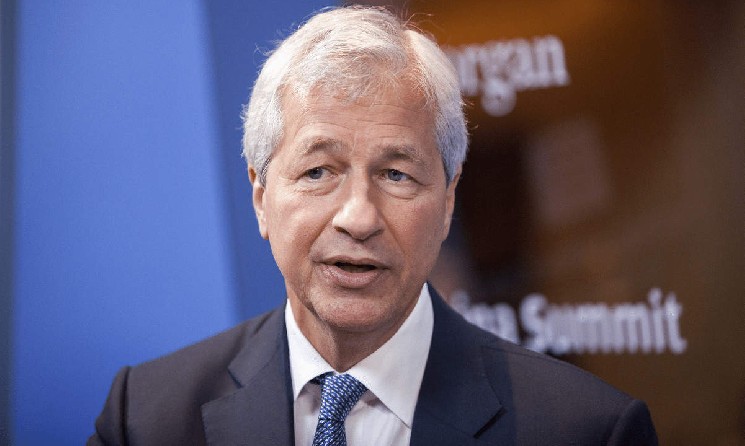
JPMorgan Chase CEO Jamie Dimon has spent nearly a decade denouncing bitcoin, branding it a "fraud," "worthless," and a "decentralized Ponzi scheme," and once declaring that, if he were in charge of the US government, he would shut it down.
Fast-forward several years, and the picture looks markedly different. The Wall Street banking giant he runs is putting traditional finance on public blockchains, accepting bitcoin (BTC) and ether (ETH) as loan collateral, and, in a recent research report, predicting that BTC could outperform stocks and gold over the next 10 to 15 years.
A Decade of Public Criticism
Dimon's earliest widely reported criticism dates to at least 2017, when he called the largest cryptocurrency a "fraud" that would eventually blow up. He added that JPMorgan traders caught dealing in it would be fired, and he compared BTC to the infamous tulip bubble. Although he later expressed regret over using the word "fraud," his hostile stance continued.
Four years later, Dimon advised investors to "stay away" from crypto, arguing that the asset class could not compare with fiat currencies or gold. He described bitcoin as "worthless" and the "fool's gold of the future."
By 2022, the rhetoric had intensified, with Dimon describing bitcoin and other digital assets as "decentralized Ponzi schemes." In 2023, he dismissed BTC as a "pet rock."
That same year produced perhaps his most memorable attack. During a Senate hearing, Dimon said that if he were running the US government, he would "close it down," while claiming that cryptocurrencies were heavily associated with criminal activity.
The Business Charted a Different Course
Even as Dimon's comments made headlines, JPMorgan's commercial strategy was already moving in different direction. The bank launched JPM Coin, built its Onyx blockchain infrastructure, executed tokenized collateral transactions involving BlackRock and Barclays, invested in blockchain intelligence company TRM Labs, and gave wealth-management clients access to crypto funds.
The divergence between the CEO's public remarks and the bank's commercial decisions has since become harder to ignore. JPMorgan recently allowed institutional clients to use BTC and ETH as collateral for loans, one of its most direct integrations of native crypto assets into conventional banking. Such collateral arrangements let institutions borrow against assets they already hold rather than selling them — a structure long standard for stocks and bonds, now extended to native crypto assets.
The bank has also worked with Coinbase to make crypto purchases more accessible to Chase customers, while JPMorgan Securities has served as an authorized participant for BlackRock's spot Bitcoin ETF. An authorized participant is one of the institutions that can create and redeem ETF shares directly with the fund — a role that places JPMorgan Securities in the core mechanics of the Bitcoin ETF market.
On the blockchain side, JPMorgan has expanded into public networks: JPM Coin (JPMD) is now available on Ethereum and Base, the bank has launched tokenized money-market funds on Ethereum, and it is expanding JPM Coin to the Canton Network. Tokenization — representing traditional financial instruments as digital tokens on blockchains — is the thread connecting these moves.
A Shift in the Research
The change in tone crystallized in JPMorgan's report last week. While the bank still believes BTC could be highly volatile, it predicted that the leading cryptocurrency — once labeled a "fraud" and "worthless" by its own chief executive — is likely to outperform large-cap stocks, real estate investment trusts (REITs), and gold over the next 10 to 15 years, with a 10% annual compounded return.
The benchmark set matters as much as the return figure: by measuring bitcoin against the traditional building blocks of diversified portfolios — equities, real estate funds, and bullion — the bank's analysts effectively assessed it as a long-horizon asset class rather than a passing speculation. The near-term markers to watch are already in place: the expansion of JPM Coin to the Canton Network, the Coinbase-powered purchase channel for Chase customers, and the collateral program accepting BTC and ETH. Dimon, for his part, remains chief executive, leaving the bank to address bitcoin with a dual voice — his commentary in one register, its research and product desks in another.

