Itaú Unibanco Partners with OpenAssets for ANBIMA Tokenization Pilot in Brazil
Key Takeaways
- •Itaú Unibanco is collaborating with OpenAssets on an ANBIMA-led pilot to test the issuance, trading, and settlement of fixed-income securities and investment funds using blockchain technology.
- •The bank holds over $562 billion in total assets, making it a flagship participant in Brazil's growing tokenization sector.
- •Brazil has established itself as a regional leader in tokenization, with firms including VERT Capital and Mercado Bitcoin announcing plans to tokenize over $1 billion and $200 million in assets respectively.
- •Itaú previously participated in Brazil's Drex pilot in 2023, which tested blockchain-based transactions involving tokenized money and assets.
- •OpenAssets raised $10 million in funding last year from investors including Valor Capital Group, Tether, and members of Itaú Unibanco's founding family to build its tokenization platform.
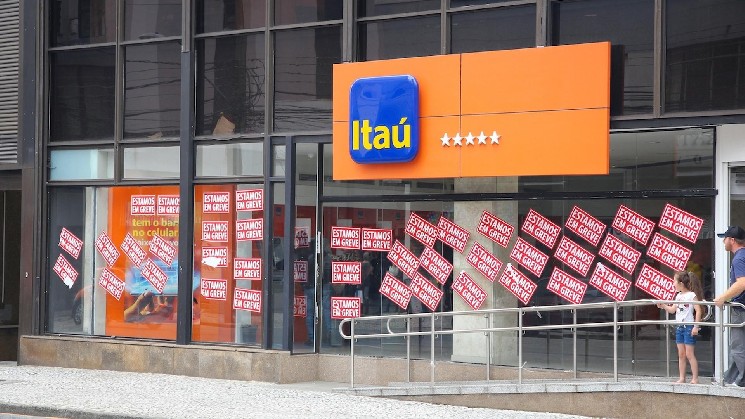
Itaú Unibanco, Brazil's largest bank and Latin America's biggest lender by total assets, is deepening its push into blockchain-based tokenization through a new pilot program conducted under the auspices of the Brazilian Financial and Capital Markets Association (ANBIMA), the self-regulatory organization that sets industry standards for Brazil's banks, asset managers, and brokerage firms.
The São Paulo-based institution has begun collaborating with digital-asset infrastructure provider OpenAssets on the initiative, the companies announced Tuesday. According to a press release, the pilot will evaluate how fixed-income securities and investment funds can be issued, traded, and settled using distributed-ledger technology. The project will also assess the regulatory frameworks and technical standards required for banks and asset managers to adopt such systems at scale — a particularly relevant consideration in Brazil, where the central bank has been formalizing rules for digital assets following the enactment of a crypto-assets legal framework in late 2022.
Itaú brings considerable weight to the effort. The bank holds more than $562 billion in total assets, according to S&P Global, making it a flagship participant in Brazil's rapidly expanding tokenization landscape.
Tokenization — the process of representing traditional financial instruments on blockchain networks — has gained significant traction among global financial institutions. Banks and asset managers are increasingly experimenting with digitizing bonds, funds, private credit, and equities. Citi has projected that tokenized securities could grow into a $5.5 trillion market by 2030 as financial assets migrate onto blockchain-based systems.
Brazil's Broader Tokenization Ecosystem
Brazil has positioned itself as a regional leader in tokenization, with initiatives extending well beyond bank-led pilots. In July 2025, Brazilian credit structuring and securitization firm VERT Capital announced plans to tokenize up to $1 billion in debt and receivables on the XDC Network. Separately, Brazil-based cryptocurrency exchange Mercado Bitcoin disclosed plans to tokenize $200 million in assets — including fixed-income and equity instruments — on the XRP Ledger.
Tokenization has even reached unconventional sectors of Brazil's economy. In one notable example, farmers in the state of Paraná, who faced difficulty securing traditional bank loans, tokenized 10 dairy cows and made the tokens available for trading through infrastructure linked to Brazil's B3 stock exchange.
The ANBIMA-led initiative is not Itaú's first engagement with tokenization. In 2023, Brazil's central bank selected the lender as one of the institutions to participate in the Drex pilot, which tested blockchain-based transactions involving tokenized money and assets. Drex is Brazil's planned central bank digital currency, designed to operate on a permissioned distributed ledger and serve as infrastructure for settling tokenized financial instruments.
"Brazil has been one of the most forward-looking markets in finance and it is a natural place to move tokenization from exploration to production," said Gabor Gurbacs, chairman and CEO of OpenAssets.
OpenAssets raised $10 million last year to build out its tokenization infrastructure. The funding round was led by Valor Capital Group, a venture firm focused on Latin America, with participation from Tether, the issuer of the USDT stablecoin, and members of the founding family of Itaú Unibanco.
Source: CryptoNews | CoinDesk

