Israel's UN Ambassador Rules Out Palestinian Statehood Following October 7 Events
Key Takeaways
- •Israel's UN ambassador formally confirmed that the country will not pursue or support a Palestinian state following the October 7 Hamas attacks.
- •Prime Minister Netanyahu has argued that a Palestinian state would present an existential security threat, reflecting a unified Israeli government stance against statehood concessions.
- •In May 2024, Spain, Norway, and Ireland formally recognized Palestinian statehood, prompting Israel to recall its ambassadors from those countries in protest.
- •The United States vetoed full Palestinian membership at the UN Security Council in April 2024, despite the General Assembly voting overwhelmingly to expand Palestine's rights within the organization.
- •Israel's rejection of statehood complicates the long-standing two-state solution framework and disrupts broader regional normalization efforts, including discussions involving Saudi Arabia.
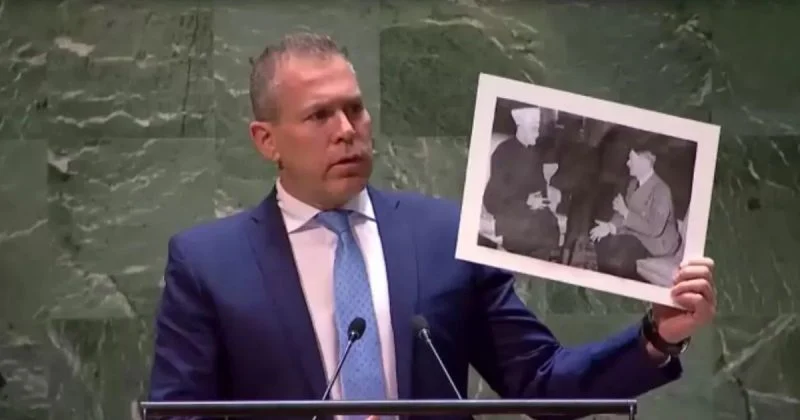
Israel's ambassador to the United Nations has formally confirmed that Israel will not pursue or support the establishment of a Palestinian state in the aftermath of the October 7 attacks carried out by Hamas.
The declaration comes against the backdrop of the ongoing Israel-Hamas war, which began on October 7, 2023, when Hamas militants launched a large-scale surprise attack on southern Israel, killing approximately 1,200 people and taking over 200 hostages, according to Israeli authorities. Israel's subsequent military campaign in Gaza has resulted in widespread destruction and a significant humanitarian crisis, drawing international scrutiny and divergent diplomatic responses.
The ambassador's statement aligns with the long-standing position of Israeli Prime Minister Benjamin Netanyahu, who has repeatedly rejected the concept of Palestinian statehood in the post-conflict landscape. Netanyahu has argued that a Palestinian state would pose an existential security threat to Israel, particularly following the October 7 attacks. This posture underscores a unified Israeli government stance against concessions on statehood negotiations.
The announcement also highlights growing international division over the Palestinian question. Several Western nations have moved toward unilaterally recognizing Palestine as a state. In May 2024, Spain, Norway, and Ireland formally recognized Palestinian statehood, prompting Israel to recall its ambassadors from those countries in protest. Israel has consistently opposed such recognitions, characterizing them as effectively rewarding terrorism and undermining negotiated diplomacy.
At the United Nations, the Palestinian issue remains a focal point of diplomatic tension. The UN General Assembly voted overwhelmingly in May 2024 to grant Palestine additional rights within the organization and called on the Security Council to reconsider its membership bid. The United States vetoed full Palestinian membership at the Security Council in April 2024.
Israel's firm rejection of Palestinian statehood signals a continued hardening of its diplomatic position and sets the stage for further friction with international actors advocating for a two-state solution, a framework that has underpinned international peace efforts since the 1993 Oslo Accords. The Oslo process established the Palestinian Authority, which administers parts of the West Bank but has not controlled Gaza since Hamas seized power there in 2007. The deepening rift over statehood also complicates broader regional normalization efforts, including discussions involving Saudi Arabia and Israel that were disrupted by the current conflict.

