Trump's Iran War Has an Unexpected Side Effect: A Drop in Global Carbon Emissions
Key Takeaways
- •MS NOW columnist Hayes Brown argues that President Trump's war with Iran has inadvertently produced a measurable decline in global greenhouse gas emissions.
- •A Washington Post analysis of International Energy Agency data attributes the drop to Tehran closing the Strait of Hormuz, which has stymied Middle East energy shipments and reduced worldwide oil and gas consumptionThe IEA projects global oil demand will fall 2.5 percent in 2026, erasing emissions equivalent to 42 million internal combustion engine cars, while the difference from its January projections equals avoiding the emissions of 103 million cars.
- •The column notes Trump appointed a climate-apathetic official to lead the EPA and a climate skeptic to oversee the National Climate Assessment, resulting in emissions regulations and clean energy initiatives being gutted and labeled a 'Green New Scam.'
- •The last comparable emissions decline occurred during the 2020 COVID-19 lockdowns, but demand rebounded afterward, indicating that crisis-driven emission cuts have historically not lasted without structural changes in energy production and consumption.
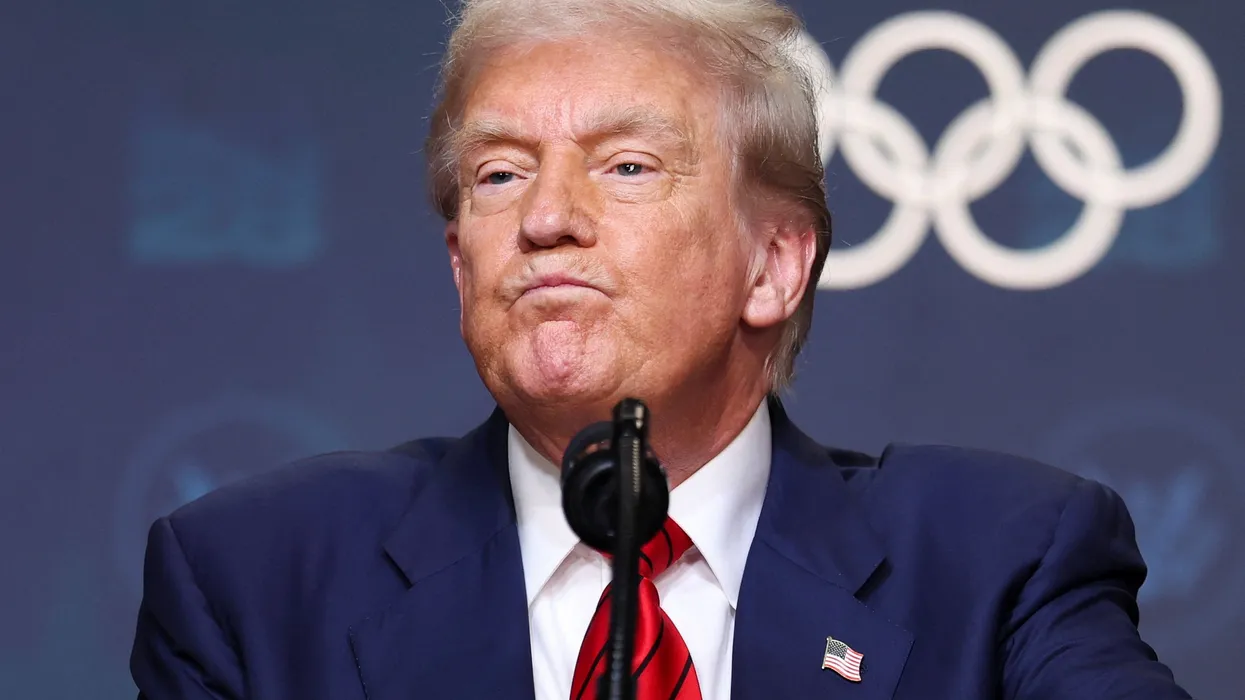
A new analysis published by MS NOW suggests that the war with Iran — a conflict that has seemed to have "no concrete goals in mind" — is producing an unexpected consequence that could make Donald Trump a historically impactful president in one of the ways he never wanted: a measurable decline in global greenhouse gas emissions.
In a column published Sunday morning, MS NOW reporter and columnist Hayes Brown argued that Trump may have inadvertently "done the environment a favor" by waging his war against Iran, even though "it is hard to imagine Trump doing anything that benefits the climate." As the conflict continues to drive gas prices into the stratosphere, new reports have found that global greenhouse emissions made a noticeable decline as people the world over are forced to drive less.
"[According] to a Washington Post analysis of International Energy Agency data, that's exactly what has happened," Brown explained. "The IEA predicted a big jump in emissions this year compared with last year. But energy shipments from the Middle East remain stymied by Tehran closing the Strait of Hormuz. That in turn has prompted a reduction in oil and gas consumption around the world, which has significantly reduced overall carbon emissions." The strait, which links the Persian Gulf to the Gulf of Oman, is a waterway the U.S. Energy Information Administration has described as the world's most important oil transit chokepoint — one reason its closure can ripple through global energy supplies so quickly.
The Post's report detailed further: "The IEA analysis suggests global demand for oil in 2026 will decline 2.5 percent compared with last year. That would erase the amount of greenhouse gas emissions created by 42 million internal combustion engine cars. And the IEA had initially projected the world's appetite for oil and gas would grow significantly over last year, so much so that the difference between its January projections and what is actually happening is the equivalent of avoiding the emissions from 103 million cars." Annual declines of that size are unusual: global oil demand has historically shrunk only amid major economic disruptions, such as the 2008–09 financial crisis and the 2020 pandemic.
Brown added that he could "not stress enough" the degree to which this outcome was not intentional on Trump's part, given the president's long-established obsession with pushing for greater oil production and consumption, summed up by his oft-repeated energy motto: "Drill, baby, drill." Ironically, he noted that this is not the first time something like this has happened on Trump's watch as a result of his negligent leadership.
"Trump has appointed a man who is, at best, climate apathetic to head the Environmental Protection Agency and an outright climate skeptic to oversee the newest draft of the National Climate Assessment," Brown wrote. "As a result, major regulations intended to reduce emissions and initiatives to promote cleaner energy have been gutted and branded as part of a 'Green New Scam.'"
He added: "What makes this case even more intriguing is that Trump was also in office the last time we saw such a major dip in global carbon output. In early 2020, when COVID-19 was just beginning to take hold, America was woefully unprepared for a pandemic. After Trump spent weeks publicly denying the virus was a major threat, it became clear that the administration was ill equipped to effectively contain it. The resulting nationwide quarantines were emulated on a global scale, prompting a massive slowdown in economic output. With that reduced demand, fossil fuel consumption and the resultant CO2 emissions also plummeted."
Studies would show that, for a moment — as the saying went — nature was healing, but only for a moment. As lockdowns ended and economies came back to life, demand rose again and undid most of the progress that had been made, a dynamic also examined in United Nations analysis. The episode left a durable lesson for climate watchers: emissions cuts that stem from crisis-driven demand destruction, rather than from structural changes in how energy is produced and consumed, have historically not lasted on their own. Whether this year's dip proves more durable, or evaporates as post-lockdown emissions did, is one of the central questions as the IEA refreshes its monthly forecasts.

