Iran Reports No Progress on Reviving Interim Peace Deal with the United States
Key Takeaways
- •Iran and the United States have made no progress in mediator-facilitated talks to revive the June interim ceasefire agreement or establish a timeline for its implementation.
- •The June deal unraveled within weeks as each side accused the other of failing to honor commitments, with the U.S. demanding Iran reopen the Strait of Hormuz and Iran insisting Washington lift its port blockade and release frozen assets.
- •Iran-backed Houthis killed four crew members in an attack on a cargo vessel in the Bab el-Mandeb Strait, marking the group's first deadly maritime strike since the conflict began in February.
- •Oil prices have been highly volatile throughout the war, with Brent crude peaking at $126 per barrel before settling near $88 as supply disruption concerns persist.
- •The conflict has resulted in thousands of deaths, primarily in Iran and Lebanon, since the United States and Israel launched attacks on Iran on February 28.
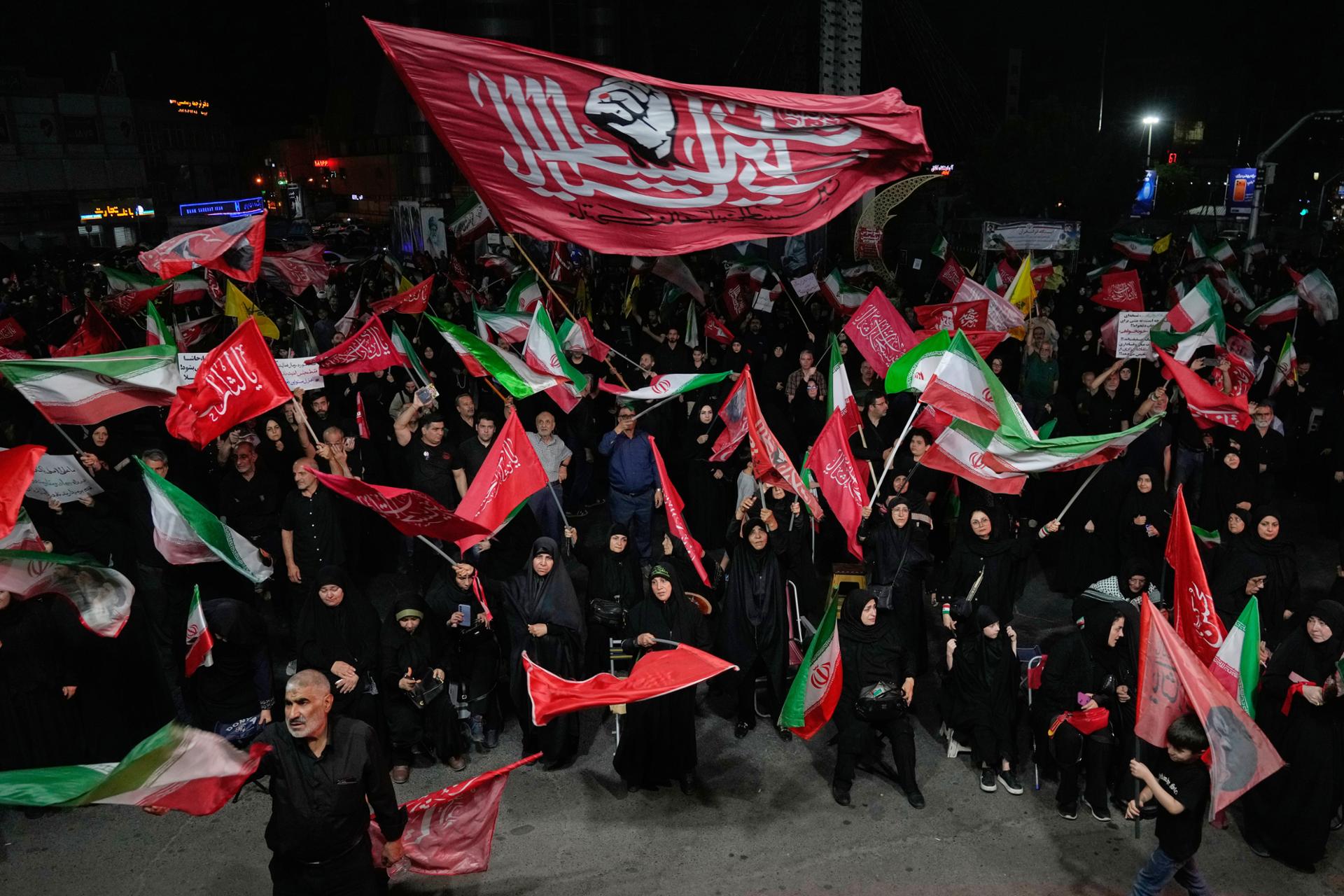
DUBAI — Iran and the United States remain deadlocked over efforts to reach a permanent end to the Gulf war, with a senior Iranian source stating that no progress has been made in talks to revive the interim agreement reached in June or to establish a timeframe for its implementation.
The remarks dealt another blow to prospects for resolving the crisis, coming amid new attacks on shipping in the region on Tuesday.
The June agreement had declared an "immediate and permanent termination of military operations on all fronts," but it quickly frayed. U.S. President Donald Trump declared the deal "over" on July 7, and Iran's foreign ministry announced it was "suspended" a week later.
Washington accuses Tehran of failing to honor its commitment under the deal to reopen the strategically vital Strait of Hormuz shipping route. Iran counters that the United States has reneged on its own obligations, including lifting a blockade on Iranian ports and releasing frozen Iranian assets.
"One of the issues that is being discussed via mediators is the U.S. returning to the interim agreement and defining a timeframe for implementing the commitments. There has been absolutely no progress on this issue," the Iranian source said. The two countries have not maintained formal diplomatic relations since 1980, leaving all communication between them dependent on intermediary channels.
There was no immediate comment from Washington.
Thousands of people have been killed in the conflict — primarily in Iran and Lebanon — since the United States and Israel launched attacks on Iran on February 28. Iran has retaliated by striking U.S. assets and infrastructure in countries including Oman, Jordan, Kuwait, Israel, the United Arab Emirates, and Saudi Arabia.
Both Sides Step Up Rhetoric
The June interim ceasefire established a 60-day period, extendable by mutual consent, during which Iran and the U.S. were expected to negotiate a final agreement limiting Tehran's nuclear program and lifting U.S. sanctions.
The Iranian source dismissed a Wednesday report from Turkey's Anadolu news agency that cited Pakistani government sources claiming the 60-day period had been extended.
"There is no talk of an extension because, from Iran's perspective, there is no period that began and therefore nothing to extend. The United States violated the interim agreement 48 hours after it was reached and withdrew from it a few days later," the source told Reuters.
Both Iran and the United States have escalated their rhetoric over the past two days. Iran's top security official, Mohsen Rezaei, said Tuesday that the Strait of Hormuz would remain closed unless the U.S. accepted Iran's conditions for ending the war.
Rezaei's statement followed a new demand from Trump on Monday that Iran pay compensation for people killed in 50 years of wars, attacks, and protests.
Throughout the conflict, Trump has alternated between threats of escalation and assertions that a peace deal is imminent. Speaking to reporters after a visit to Ohio on Tuesday, Trump said: "Iran is going fine, going just absolutely fine."
"We have a country that has been the bully of the Middle East for 50 years, really 51 if you think about it ... and they're no longer the bully of the Middle East," he added.
Attacks on Shipping
The Strait of Hormuz, a narrow waterway between Iran and Oman at the entrance to the Gulf, handled a fifth of global oil and liquefied natural gas flow before the war. Benchmark Brent crude futures have surged since the conflict began in February, peaking at $126 a barrel — roughly 75 percent above pre-war levels — with volatile trading reflecting concerns over disruptions to Gulf oil supplies and shifting signals on peace negotiations.
Those concerns were compounded by separate attacks on shipping Tuesday. At the southern end of the Red Sea, four crew members were killed when Iran-backed Houthis attacked a small cargo ship in the Bab el-Mandeb Strait, a critical maritime chokepoint linking the Red Sea to the Gulf of Aden through which a substantial share of seaborne oil and Asia-Europe container trade transits, marking the first deadly strike on shipping by the group since the war began.
The U.S. military, meanwhile, reported that a U.S. Navy MH-60 helicopter fired two Hellfire missiles to disable the steering gear of a Panama-flagged cargo ship. According to U.S. Central Command, the vessel had ignored repeated warnings to stop violating a naval blockade on Iranian ports. Maritime sources told Reuters the ship was struck off Pakistan while sailing into the Gulf of Oman.
Oil prices rose but then steadied in volatile trading on Wednesday after forecasters cut projections for 2026 oil demand. Brent crude futures were trading at approximately $88 a barrel, and U.S. West Texas Intermediate crude was at around $83 a barrel.
