Iran Warns Strait of Hormuz Will Stay Closed Unless US Meets Seven Demands
Key Takeaways
- •Iranian General Razai tied the Strait of Hormuz’s reopening to the United States meeting seven conditions.
- •Razai said Iran would not enter talks until its demands are fulfilled, while Washington disputes Tehran’s closure claims.
- •The strait handles approximately one-fifth of global petroleum liquids consumption and liquefied natural gas trade.
- •Saudi and Emirati pipelines provide about 6.5 million barrels per day of bypass capacity, well below normal strait throughput.
- •Market pricing puts the chance of an agreement by September 30 at 7.3%, with diplomatic, military and maritime developments remaining key indicators.
Iran's General Razai has issued a stark warning that the Strait of Hormuz will remain closed unless the United States meets Iran's seven conditions, according to IRIB News, Iran's state-run broadcaster.
The announcement escalates the ongoing maritime standoff over the strategic waterway, a critical chokepoint for global shipping. The United States has contested Iran's closure claims while maintaining its naval presence in the area. Razai also emphasized that Iran will not engage in talks unless its demands are satisfied, further complicating prospects for negotiation and deepening the confrontation between Washington and Tehran over the waterway.
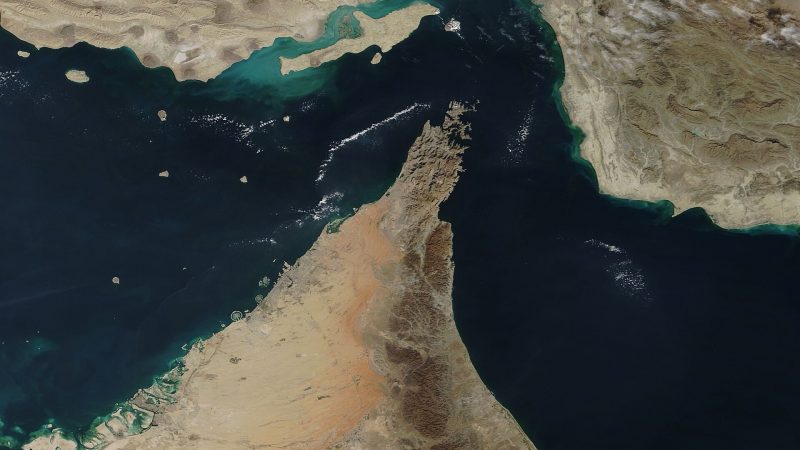
The Strait of Hormuz lies between Iran and Oman, connecting the Persian Gulf to the Gulf of Oman and the Arabian Sea beyond. At its narrowest point it is only about 21 miles wide, with inbound and outbound shipping lanes each spanning roughly two miles. The U.S. Energy Information Administration has long identified it as the world's most important oil transit chokepoint, with roughly one-fifth of global petroleum liquids consumption — on the order of 20 million barrels per day — moving through its waters in recent years. About one-fifth of global liquefied natural gas trade, led by Qatari and Emirati exports, transits the strait as well, and most of its crude shipments are destined for Asian buyers such as China, India, Japan and South Korea.
Some volumes can circumvent the waterway: Saudi Arabia's East-West pipeline across the kingdom and the United Arab Emirates' pipeline to the port of Fujairah offer combined bypass capacity of roughly 6.5 million barrels per day — far short of the strait's normal throughput. Iran has repeatedly raised the threat of closure during earlier periods of tension with the United States, though the waterway remained open even during the tanker attacks of the 1980s Iran–Iraq War.
Market pricing points to declining confidence in a resolution by the September 30 deadline, with YES odds currently at 7.3%. Recent pricing movements indicate that market participants view the situation as increasingly tense and less conducive to a near-term agreement.
Attention now turns to diplomatic and military developments between the United States and Iran that influence the strait's reopening. Key indicators include statements from Iranian Foreign Minister Abbas Araghchi or U.S. President Donald Trump that could suggest a softening stance or a breakthrough. Reports of vessel movements and maritime enforcement actions in the region will also be critical in assessing the likelihood of an agreement by the deadline, while any new threats or escalatory actions could further decrease the probability of a resolution.

