Iran's Pezeshkian Says Tehran Would 'Immediately' Reciprocate if U.S. Returns to June Deal
Key Takeaways
- •President Pezeshkian said Iran would immediately reciprocate if the U.S. returned to its commitments under the June memorandum of understanding.
- •Pezeshkian blamed Washington's repeated violations and pressure policies for the collapse of the Islamabad memorandum, while affirming diplomacy remains Iran's preferred path.
- •The war began in late February with U.S. and Israeli attacks on Iran that killed former supreme leader Ayatollah Ali Khamenei, and the deal subsequently fell apart with each side accusing the other of breaches.
- •Iran and the United States resumed exchanging fire on Monday over the Strait of Hormuz after more than a month of relative calm.
- •Tehran says it will reopen the Strait of Hormuz, which normally carries about a fifth of globally traded oil and LNG, only if Washington lifts the naval blockade, removes oil sanctions, and unfreezes Iranian assets.
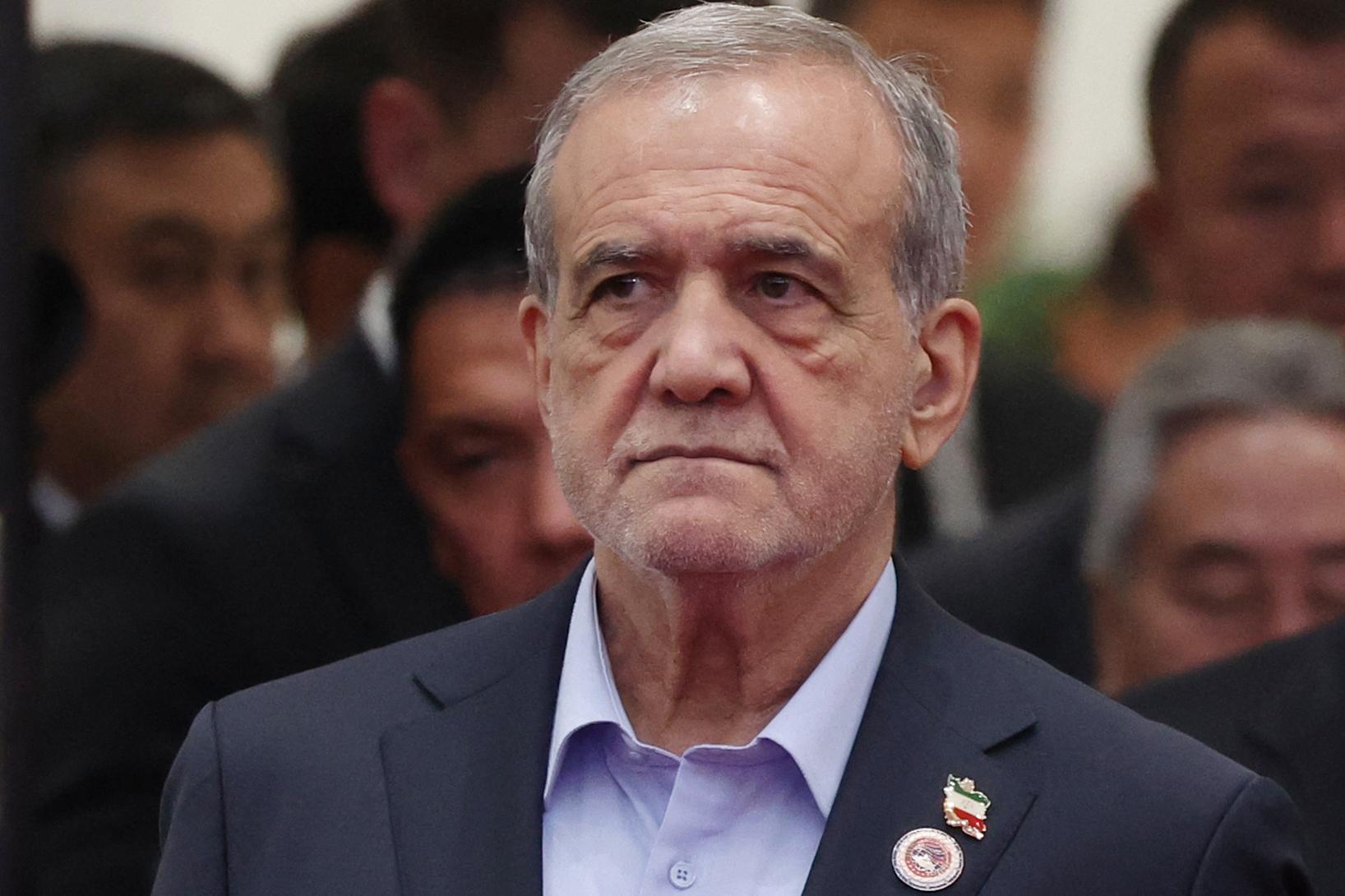
Iranian President Masoud Pezeshkian said Tuesday that Tehran would "immediately" reciprocate if the United States returned to a June deal aimed at ending their war.
"I state explicitly that if the United States returns to its commitments under the aforementioned memorandum of understanding, the Islamic Republic of Iran will immediately take reciprocal action," Pezeshkian said at a Shanghai Cooperation Organisation (SCO) summit in Kyrgyzstan, according to the website of the Iranian presidency. He was speaking at a SCO+ format meeting in Bishkek. The summit gathered leaders and representatives of the bloc's member states, a grouping that includes Russia, China, India and Pakistan alongside Iran, and has served Pezeshkian as a platform to appeal to non-Western powers over the standoff with Washington.
The memorandum of understanding was intended to end months of hostilities between Tehran and Washington, hostilities that began in late February with U.S. and Israeli attacks on Iran that killed former supreme leader Ayatollah Ali Khamenei. The deal subsequently collapsed, with each side accusing the other of violating its terms.
In a later speech at the summit, Pezeshkian blamed Washington for the breakdown. "The repeated violation by the United States of its commitments under the Islamabad Memorandum of Understanding showed that... the absence of effective enforcement guarantees and a return to a policy of pressure and threats could derail the path of diplomacy," he said.
"Iran has continued to regard diplomacy and negotiations as the primary path to resolving disputes. But diplomacy without good faith, without respect for commitments and without refraining from the use of force cannot create lasting peace," he added.
His remarks came as the Strait of Hormuz remains a key point of contention between Iran and the United States, which resumed exchanging fire on Monday after more than a month of relative calm.
The strait is one of the world's most important energy chokepoints, typically carrying roughly a fifth of globally traded oil and liquefied natural gas, so its continued closure has kept it a focal point for global energy markets and shipping.
Tehran has kept the strategic waterway closed, insisting it would reopen it only if Washington meets its demands: lifting the U.S. naval blockade on Iranian ports, removing oil sanctions, and unfreezing Iranian assets abroad under the deal.
On Monday, Iranian Foreign Minister Abbas Araghchi said "the United States must return to its commitments and to what their president signed" under the deal. "In that case, everything can be put back on the right track."
