Iran Weakened but Defiant Six Months Into War, With Hormuz as Its Remaining Leverage
Key Takeaways
- •Treasury Secretary Scott Bessent announced an 'economic onslaught' of measures to isolate Iran on August 24 and will press G20 finance ministers on the effort at meetings in Asheville, North Carolina, on August 31-September 1.
- •About 80 percent of Iran's exported oil goes to China, but Iranian crude accounts for only 12-13 percent of China's crude imports, leaving Tehran far more dependent on Beijing.
- •US officials say Iran's defense-industrial base suffered 80-90 percent attrition, yet Iran's remaining forces continue to disrupt shipping through the Strait of Hormuz.
- •Iranian oil sales denominated in yuan and settled outside the US dollar network are seen by experts as an effort to erode the dollar's role in the global energy market.
- •A study led by Bradley Bowman documented 616 incidents of security cooperation among China, Russia, Iran, and North Korea between January 2019 and December 2025.
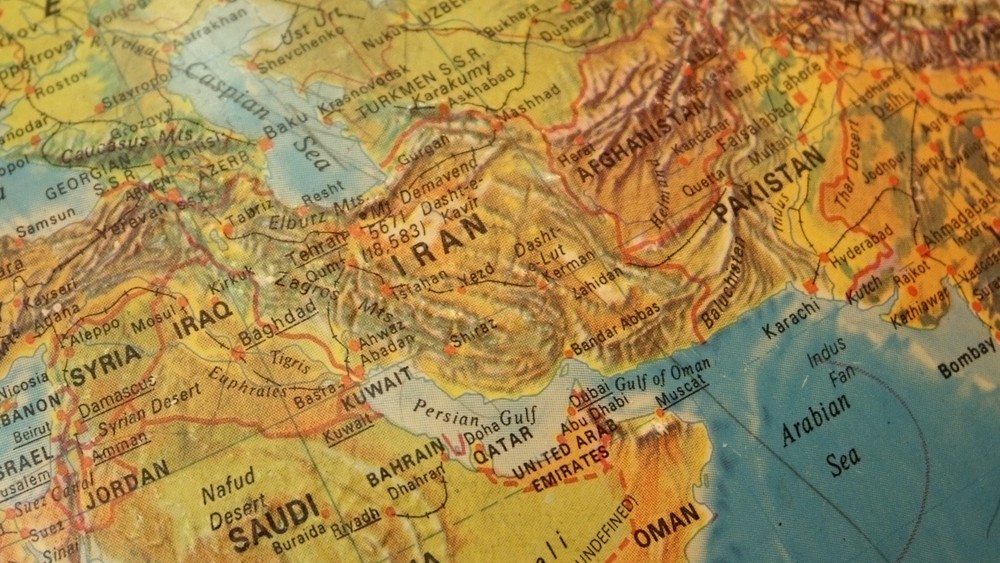
Six months after US and Israeli air strikes on Iran ignited a conflict that has shaken energy markets and disrupted global shipping, the confrontation still has no clear end in sight. Iran's military capabilities have suffered major damage, yet Tehran retains meaningful leverage over the Strait of Hormuz — the narrow chokepoint through which the bulk of the region's oil and gas exports must pass.
Experts interviewed by RFE/RL from across Washington's policy spectrum identify four questions that will shape the next phase: how long Iran can withstand economic pressure; whether diplomacy can convert military gains into a durable settlement; what happens to Hormuz; and whether Russia and China help Tehran rebuild.
'Economic Onslaught'
Retired Vice Admiral Robert Harward, a former deputy commander of US Central Command, describes the situation as a "steady state" — but argues the clock is ticking for Tehran.
"Time is their biggest problem," Harward told RFE/RL, saying sustained economic pressure could eventually become an internal threat to the Iranian government.
Bread-and-butter issues sparked the mass demonstrations of December-January, which were put down only through brutal force involving the killing of thousands of protesters.
Washington is now framing the conflict around that pressure. Treasury Secretary Scott Bessent on August 24 announced what he called an "economic onslaught" of measures to further isolate Iran, and he will press G20 finance ministers on the effort during meetings in Asheville, North Carolina, on August 31-September 1.
Harward said the pressure could become an internal threat if Tehran eventually struggles to pay the Islamic Revolutionary Guards Corps (IRGC), the Basij militia, and other state institutions, or if ordinary Iranians face shortages of fuel and other essentials. Winter conditions, he noted, could make the pressure particularly consequential.
China sits at the center of the calculation. Elaine Dezenski, head of the Center on Economic and Financial Power at the Foundation for Defense of Democracies, said China's economic relationship with Iran is significant but not an alliance in the traditional sense. About 80 percent of Iran's exported oil goes to China, she said, but Iranian crude accounts for only about 12 to 13 percent of China's crude imports — an asymmetry that leaves Tehran far more dependent on Beijing than the reverse.
"If China were to cut off its purchases of Iranian oil...that would have a huge effect," Dezenski said. So far, however, Beijing has pushed back on US pressure over its trading relationship with Tehran.
The issue also has a longer-term financial dimension. Iranian oil sales denominated in yuan and payment through systems outside the US dollar network can strengthen alternative financial infrastructure.
"The way that Iran is engaging in these transactions and the way that China is supporting those transactions is an attempt to really erode the US dollar's role in the global energy market," Dezenski said.
Can Diplomacy Reemerge?
While further military action has not been ruled out, officials have suggested it may have reached the limits of its effectiveness — in other words, there is not much left to target.
US Secretary of State Marco Rubio said in June that Iran's defense-industrial base had suffered "massive destruction" of 80 to 90 percent attrition. President Donald Trump initially said 90 percent of Iran's missiles and launchers had been knocked out, later giving an 82 percent estimate, and he has repeatedly said the navy is destroyed. Yet what remains of Iran's forces has proven stubbornly able to prevent shipping through the Strait of Hormuz.
For Bradley Bowman, senior director of the Center on Military and Political Power at the Foundation for Defense of Democracies, the central distinction is between military degradation and a lasting political outcome.
"America has struggled consistently in the Middle East to convert battlefield success into sustainable and positive political outcomes," Bowman told RFE/RL. "We often win on the battlefield and lose at the negotiating table."
A sustainable political transformation in Iran would require decisive action by Iranians themselves, he said, adding that Washington does not have the political will to send "thousands and thousands" of troops into Iran and sustain the casualties such an operation would entail. Bowman also said the war has demonstrated the scale of US weapons expenditure and raised questions about the quantities of offensive and defensive munitions available for other potential theaters.
Signals from Iran are mixed. Some elements, including the IRGC, appear in no hurry to push ahead with talks ahead of November's midterm elections in the United States, while other key members of the clerical authorities have spoken repeatedly in recent days of the economic pain and the importance of reviving diplomacy.
Hormuz: Iran's Key Leverage
For Gawdat Bahgat, a professor of national-security affairs at the National Defense University's Near East South Asia Center for Strategic Studies, the most important development of the past six months may be the emergence of the Strait of Hormuz as Iran's principal remaining bargaining instrument.
"Even if a temporary agreement is signed, it will be temporary, but in the future they will keep threatening to close the strait," he said.
The waterway traditionally carries about one-fifth of the world's oil, liquefied natural gas, and other vital commodities, serving as the main export route for producers including Saudi Arabia, Iraq, Kuwait, the United Arab Emirates, and Qatar. That has also translated into economic pressure on the United States, as global markets push up gasoline prices.
The strait is only about 39 kilometers wide at its narrowest point. Iran and Oman both claim the maximum 22.2 kilometers allowed under the United Nations Convention on the Law of the Sea (UNCLOS) as territorial waters, meaning there are no international waters in the area. UNCLOS is supposed to guarantee the right of transit passage for commercial vessels and prohibits their blockade. Tehran, however, never ratified UNCLOS and says it is not bound by the treaty; the United States has also not ratified it.
Bahgat said the Gulf states may eventually press for an arrangement that restores stability, even if it formalizes some Iranian role in the strait, as their priority is returning to economic stability. The more difficult question is whether Washington can accept some form of Iranian control over, or economic benefit from, the waterway.
Bowman argues the critical issue is whether commercial ship captains and insurers regard the route as safe. Iran therefore does not necessarily need to close Hormuz completely: intermittent missile or drone attacks can raise war-risk insurance costs and deter shipping, while attacks on infrastructure in Gulf states can create additional pressure on countries that cooperate with Washington.
"That actually turns our Arab partners into vehicles of leverage that Iran is exerting on Washington," Bowman said.
Iran's Helping Hand From Russia and China
Another major question is whether Iran's external partners can help it rebuild. Bowman cited Chinese shipments of chemical precursors and Russian targeting information and drone support as evidence of growing assistance. He said Moscow is considering whether to deliver Su-35 fighters to Iran, while Beijing could move from supplying dual-use materials toward finished weapons and munitions.
The future of that support, he said, will depend heavily on how Beijing and Moscow assess the likely US response.
"The No. 1 thing China fears is secondary sanctions from the United States," Bowman said. Bessent's announcement hinted at such measures, but they also carry the risk of Chinese retaliation, and it is not clear how far Washington is prepared to ratchet up pressure of this kind.
Iran's military recovery cannot be separated from the broader network supporting it, he said. A study led by Bowman documented 616 incidents of security cooperation among China, Russia, Iran, and North Korea between January 2019 and December 2025, covering areas including arms development and transfers, military exercises, intelligence sharing, and military diplomacy.
By RFE/RL
