Iran Central Bank Governor Denies US Claims of State Links to Sanctioned Crypto Exchanges
Key Takeaways
- •Central Bank of Iran Governor Abdolnasser Hemmati has denied that cryptocurrency exchanges targeted by the United States have any operational connection to the Iranian government.
- •The US Treasury sanctioned Nobitex, identified as Iran's largest cryptocurrency exchange, in June 2026 for allegedly processing transactions on behalf of the Central Bank of Iran and the IRGC.
- •Tether froze approximately $131 million in digital assets following the Treasury's July 2026 sanctions on four wallets linked to the Central Bank of Iran, undermining Hemmati's assertion that Tehran controls its own funds.
- •The Treasury has carried out three rounds of sanctions over three months under its Economic Fury initiative, indicating a sustained enforcement campaign likely to continue with further actions.
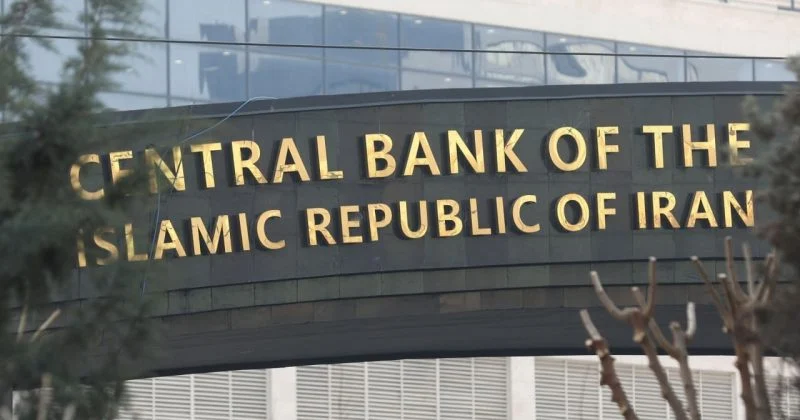
The governor of Iran's central bank has firmly rejected Washington's expanding cryptocurrency sanctions campaign, denying that recently targeted exchanges and wallets have any connection to the Iranian state.
Central Bank of Iran Governor Abdolnasser Hemmati, who assumed the position in late December 2025, asserts that the exchanges targeted by the United States are not affiliated with Iran and that Tehran maintains full control over its funds.
US Treasury Sanctions Timeline
In June 2026, the US Treasury imposed sanctions on Nobitex, Iran's largest cryptocurrency exchange. The Treasury accused Nobitex of processing transactions on behalf of the Central Bank of Iran and the Islamic Revolutionary Guard Corps (IRGC). The IRGC is designated by the United States as a foreign terrorist organization, which means any financial facilitation involving the group carries significant legal consequences. Iran's economy has operated under extensive US sanctions for years, including restrictions that effectively cut the country off from the global SWIFT banking network, making cryptocurrency channels one of the few avenues for moving value internationally.
In July 2026, the Treasury sanctioned four cryptocurrency wallets it identified as linked to the Central Bank of Iran. Following these designations, Tether froze approximately $131 million in digital assets connected to those addresses.
On August 7, the Treasury sanctioned two additional Iranian cryptocurrency exchanges as part of what it has branded the "Economic Fury" initiative.
Hemmati's Response
Hemmati's position centers on two key claims. First, he asserts that the exchanges sanctioned by the United States have no operational connection to the Iranian government. Second, he maintains that Iran controls its own funds regardless of US actions.
The first claim directly contradicts the Treasury's findings. In the case of Nobitex, the Treasury's accusation was specific: that the exchange processed transactions benefiting sanctioned state entities, including the CBI and the IRGC.
The second claim regarding Iran's control over its funds comes into question given that approximately $131 million in assets were frozen by Tether at the request of the US Treasury, meaning those funds are no longer accessible to Iran.
Stablecoin Compliance and Enforcement Reach
Tether's decision to freeze $131 million in assets following a government request is consistent with a broader pattern in which stablecoin issuers have increasingly acted as compliance partners within the US financial system. Any exchange or wallet transacting in USDT is, in practice, subject to US enforcement jurisdiction. The freezes illustrate a structural reality of USDT: despite operating on decentralized blockchain networks, the token's issuer retains the technical ability to blacklist addresses at its discretion, creating a centralized control point that regulators can leverage.
The designation of Nobitex is particularly significant because it targeted what was reported to be the largest cryptocurrency exchange in Iran. Targeting a country's dominant trading platform rather than smaller peripheral operations indicates a strategy focused on maximum enforcement impact. The Treasury's Office of Foreign Assets Control (OFAC), which administers these designations, has previously sanctioned cryptocurrency entities linked to other sanctioned jurisdictions, including wallets tied to North Korean actors and Russian illicit finance networks.
The US Treasury has conducted three rounds of sanctions over three months, targeting exchanges, individual wallets, and the central bank itself. This sustained pace of designations signals a continuing enforcement campaign with the likelihood of additional actions.

