Iowa Ag Secretary Mike Naig Announces Record Cover Crop Cost-Share Signup at 2026 Farm Progress Show
Key Takeaways
- •Iowa Agriculture Secretary Mike Naig announced a record cover crop cost-share signup on September 3, 2026, at the Farm Progress Show.
- •The signup is expected to nearly triple cover crop acreage in the Greater Des Moines Watershed.
- •The watershed is a priority area under Iowa's 2013 Nutrient Reduction Strategy, which aims to cut nitrogen and phosphorus losses by roughly 45 percent.
- •Naig also fielded reporter questions on beef producer sentiment, MCOOL and voluntary meat labeling, water quality, and Iowa cancer rates.
- •State officials have noted that meeting the strategy's targets requires conservation adoption well beyond current levels.
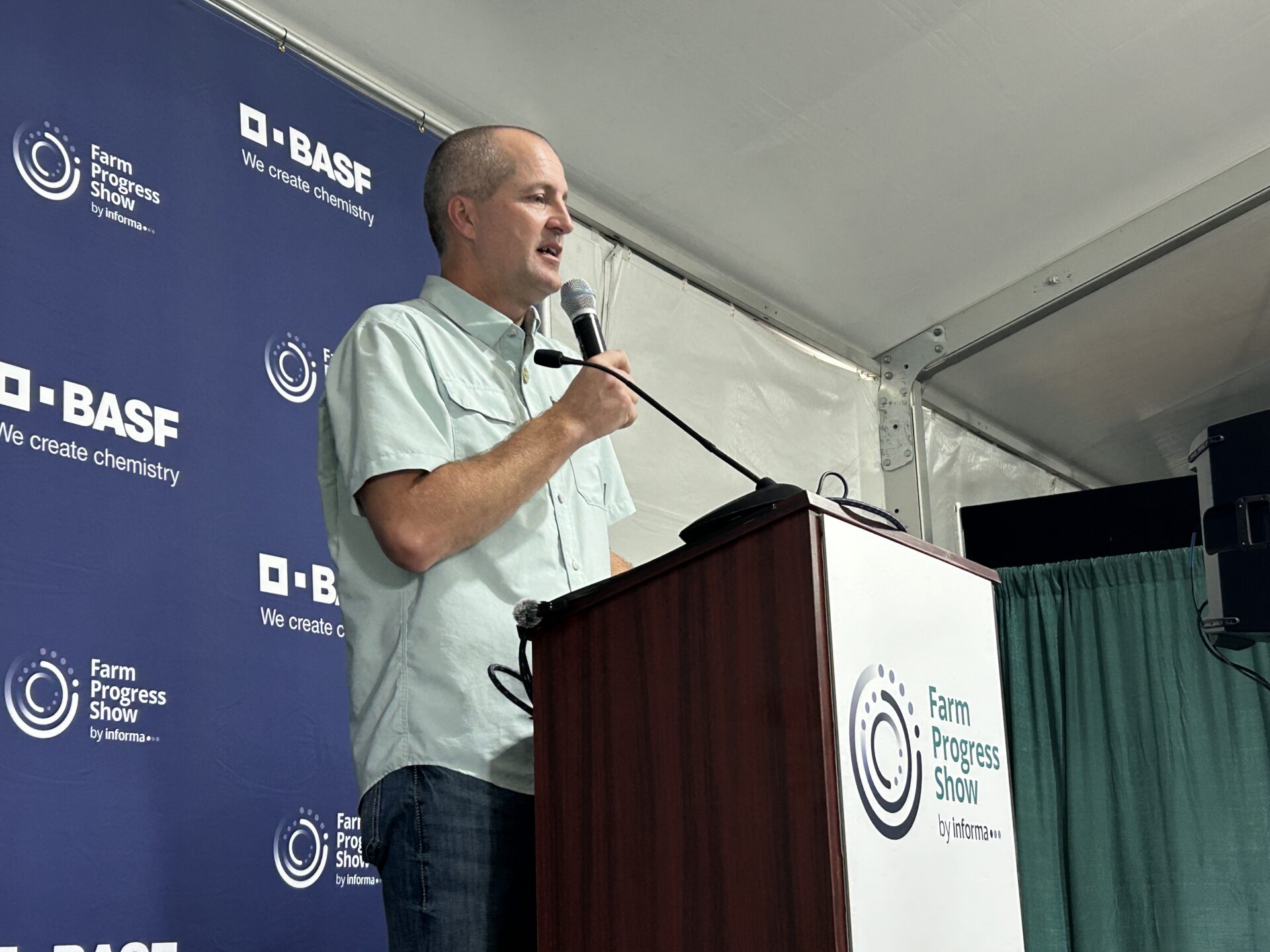
Iowa Secretary of Agriculture Mike Naig announced a new record cover crop cost-share signup while meeting with reporters at the 2026 Farm Progress Show on September 3, 2026. According to the Secretary, the signup will nearly triple cover crop acres in the Greater Des Moines Watershed.
Cover crops are non-commodity crops such as rye, oats, and clover that farmers plant between regular growing seasons. They are widely used in Iowa and across the Midwest to reduce soil erosion, improve soil health, suppress weeds, and limit nutrient runoff into waterways. Cost-share programs, which are commonly administered by state agriculture departments in partnership with local watershed and conservation organizations, help offset a portion of farmers' expenses for seed and planting. In practice, cost-share rates typically cover only part of the per-acre cost, and adoption has historically been limited by factors such as timing of fall planting after harvest and the upfront expense borne by the farmer.
The Greater Des Moines Watershed is one of several priority watersheds in Iowa targeted for water quality improvement efforts under the state's Nutrient Reduction Strategy, a framework adopted in 2013 in response to the federal push for states along the Mississippi River basin to address hypoxia in the Gulf of Mexico. The strategy sets a long-term target of reducing nitrogen and phosphorus losses from farmland by roughly 45 percent, and Iowa's progress toward that goal has been the subject of ongoing public debate, particularly given the watershed's connection to the Des Moines water supply. A near-tripling of cover crop acres in a priority watershed would represent a measurable expansion of one of the strategy's key in-field conservation practices, though state officials have long noted that meeting the strategy's targets requires adoption at a scale well beyond current levels.
In addition to the cover crop announcement, Naig fielded questions from reporters on several other topics, including beef producer sentiment, Mandatory Country of Origin Labeling (MCOOL) and voluntary meat product labeling, water quality, and cancer rates in Iowa. The breadth of the questions reflects several issues that have drawn sustained attention in the state, including depressed cattle market conditions that have weighed on producer margins and recurring public discussion of Iowa's cancer rates and their possible relationship to agricultural inputs, topics on which state leaders have faced calls for further study and response.
The announcement was reported by Brent Barnett for Brownfield Ag News at the 2026 Farm Progress Show, an annual rotating agricultural trade show that is among the largest farm events in the country and a regular venue for policy announcements and reporter briefings with state and federal officials.
Source: Brownfield Ag News

