Army Secretary Dan Driscoll Resigns, Deepening Crisis at the Pentagon Under Pete Hegseth
Key Takeaways
- •Dan Driscoll resigned as Secretary of the Army on Monday after repeated clashes with Defense Secretary Pete Hegseth, per The Wall Street Journal.
- •Driscoll, an old friend of JD Vance from Yale Law School, reportedly resigned over concerns that Hegseth was harming Army modernization by pushing out leaders guiding it.
- •The Army now lacks both a Senate-confirmed secretary and chief of staff, and the nominee General Christopher LaNeve does not yet have the votes for confirmation, according to CNN.
- •The ongoing Iran war has required deployment of 19 warships plus air-defense units, fighter squadrons, and paratroopers, creating troop strain and a maintenance backlog that could take years to resolve, the Journal reports.
- •Senior military leaders including Admiral Daryl Caudle have warned Hegseth that operations against Iran cannot be sustained indefinitely without an anticipated end date, the Washington Post reports.
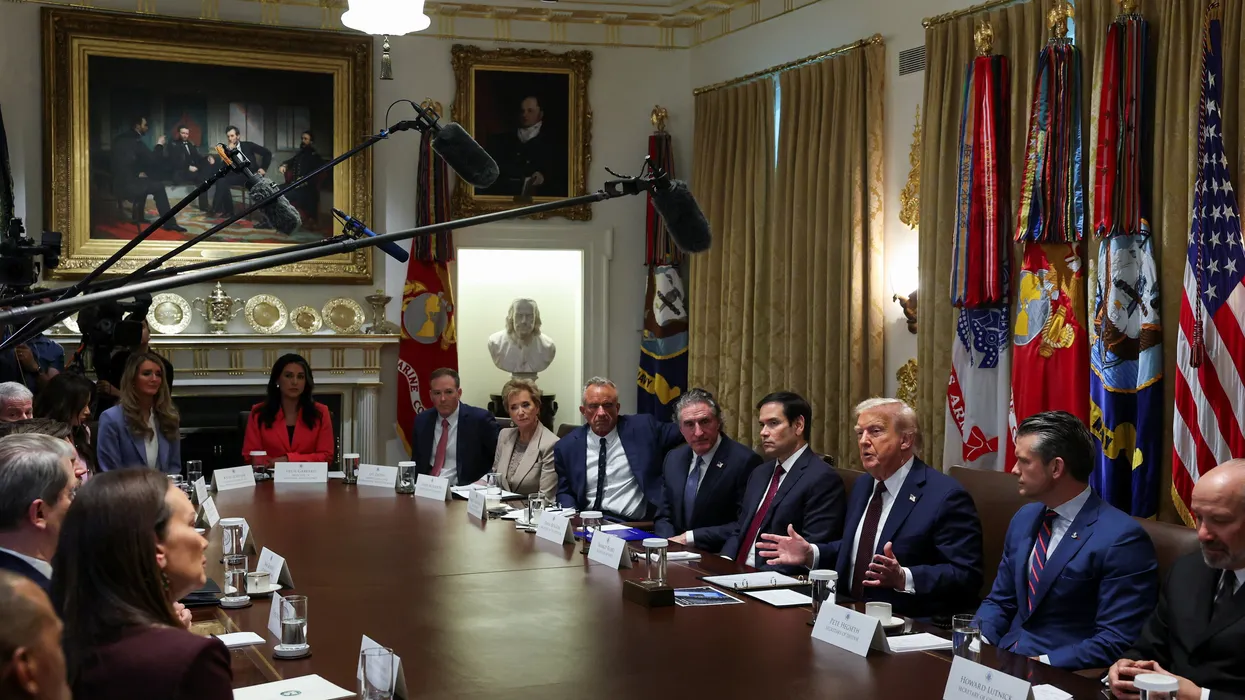
The latest casualty of Pete Hegseth's turbulent tenure as defense secretary is Dan Driscoll, who resigned Monday as Secretary of the Army after repeatedly clashing with Hegseth, according to The Wall Street Journal.
Driscoll is not a liberal in lion's clothing. He is an old friend of JD Vance from their Yale Law School days, and his resignation is notable precisely because it comes from within the administration's own circle rather than from its customary critics. According to CNN, he resigned out of concern that Hegseth is damaging the Army's efforts to modernize and adapt to the 21st-century battlefield — where drone warfare is playing an increasingly important role — by firing or pushing out the leaders spearheading those efforts.
A defense official in Europe told CNN that even though Hegseth talks about technology reform, he is focusing instead on "muscles, dudes in dresses, testosterone."
Hegseth's tenure has been troubled from the moment he walked into the Pentagon. Even if Trump were capable of hearing sound advice, in the author's assessment Hegseth has not come close to providing it. Instead, he has pursued grievances about DEI, promoted testosterone, and denigrated or fired women and Black officers.
The Army now has no Senate-confirmed secretary or chief of staff. The nominee to replace George, General Christopher LaNeve, so far does not have the votes to be confirmed, per CNN. The twin vacancies leave the service's roughly 450,000 active-duty soldiers without Senate-confirmed civilian and uniformed leadership at the top — an unusual situation for a branch of that size, and one that complicates everything from budget advocacy on Capitol Hill to personnel decisions requiring confirmed leadership.
The Iran war, meanwhile, is requiring the ongoing deployment of 19 warships, air-defense units, fighter squadrons and paratroopers across the region, according to The Wall Street Journal — straining service members and their families and creating a maintenance backlog that could take years to unwind.
The Washington Post reports that multiple senior military leaders — those still remaining — have warned Hegseth that the United States cannot indefinitely extend military operations against Iran. Even the chief of naval operations, Admiral Daryl Caudle — who campaigned for the job by signaling agreement with Hegseth's culture-war preoccupations, per The New York Times — told Hegseth that the Navy cannot "sustain its current level of support for the Iran conflict because there is no anticipated end date."
Hegseth's response was to castigate the media for revealing classified information.
The author writes of having known many other defense secretaries, starting with Cap Weinberger, who served under Reagan, and states without fear of contradiction that Pete Hegseth is the stupidest and least qualified of them all.
Hegseth's incompetence and determination to curry favor with Trump helped launch the war against Iran in the first place, the piece argues. Among the administration's senior officials, Hegseth was the only one who supported Trump's vision of a quick victory. Marco Rubio was against the war, as was JD Vance; even former Director of National Intelligence Tulsi Gabbard told Trump that a war with Iran was not winnable.
Since then, Hegseth has, in the author's words, lied his way through more than six months of Pentagon and Iran war mayhem.
At a press briefing in March, Hegseth complained about a CNN report that the Trump administration had underestimated Iran's ability to disrupt global oil traffic by closing the Strait of Hormuz. "Patently ridiculous," Hegseth told reporters, adding — even as the strait's blockage was proving to be Iran's most powerful leverage in the war — that we "don't need to worry about it." The author calls it a false and insulting claim directed at an American public that deserved to know what the administration planned to do about soaring gas prices directly caused by the blockage.
He also denied that the U.S. bombed the school where some 175 children were killed — a claim belied, the author says, by mounting evidence that the U.S. did bomb the school. Hegseth's further insistence that the U.S. "never targets civilians" was refuted by the U.S. military's killing of over 200 people on small boats in the Caribbean without evidence they were "narcoterrorists" rather than civilians.
Hegseth then lied, the author writes, about the severity of Iranian attacks on U.S. bases in the Persian Gulf that disrupted logistical support for American forces, leading to the deprivations suffered by the crew of the aircraft carrier USS Abraham Lincoln.
Hegseth evidently believes his job is to cheerlead and defend Trump with claims like "We didn't start this war, but under President Trump we're finishing it," "America is winning decisively, devastatingly, and without mercy," and "we will show no quarter for our enemies." As the author notes, "no quarter" means killing everyone and taking no prisoners, which is a war crime.
In the days leading up to the U.S. attack on Iran, Hegseth spent his time criticizing "wokeness" at American universities and forcing Scouting America to abandon programs aimed at promoting diversity.
Last year, he did not just mistakenly share the military's plans with the editor of The Atlantic; we now know he shared them with a second Signal group that included his wife, brother, and personal lawyer.
John Ullyot, who resigned as Pentagon spokesman, said Hegseth had brought "total chaos" to the Pentagon and that the Pentagon "is in disarray under Hegseth's leadership."
Hegseth dismisses war crimes, brushes aside the rules of engagement, and projects unequivocal belligerence at a time when the United States is rapidly losing whatever moral standing it once had in the world, the author argues.
The piece concludes that Pete Hegseth is the most incompetent person in the Trump administration — with the exception of Trump himself — and a clear and present danger to the security of the United States and the world. If Trump will not fire him, the author writes, Democrats should impeach him when they take over the House next January, and two-thirds of the Senate should convict him. What bears watching in the months ahead is whether further civilian-leadership departures follow Driscoll's, whether LaNeve can secure confirmation, and how the strain of an open-ended Iran deployment interacts with a Pentagon losing senior officials who were guiding modernization.
