India to Build New Mangaluru Oil Storage Site as Strategic Reserve Push Follows Hormuz Supply Shock
Key Takeaways
- •ONGC's new Mangaluru facility will have a capacity of 1.75 million metric tons, roughly equivalent to 13 million barrels, split evenly between strategic reserves and commercial operations.
- •India's existing strategic petroleum reserves cover only eight days of national oil demand, significantly below the 90-day net import coverage benchmark recommended by the International Energy Agency.
- •The project was prompted by severe crude flow disruptions through the Strait of Hormuz during the Iran war, which compelled India to replace lost Middle Eastern supply with record Russian imports.
- •The estimated investment for the new facility is $1.6 billion, and ONGC will be responsible for funding the entire project.
- •India imports more than 85% of its crude oil requirements, making it one of the world's most vulnerable major economies to global energy supply shocks.
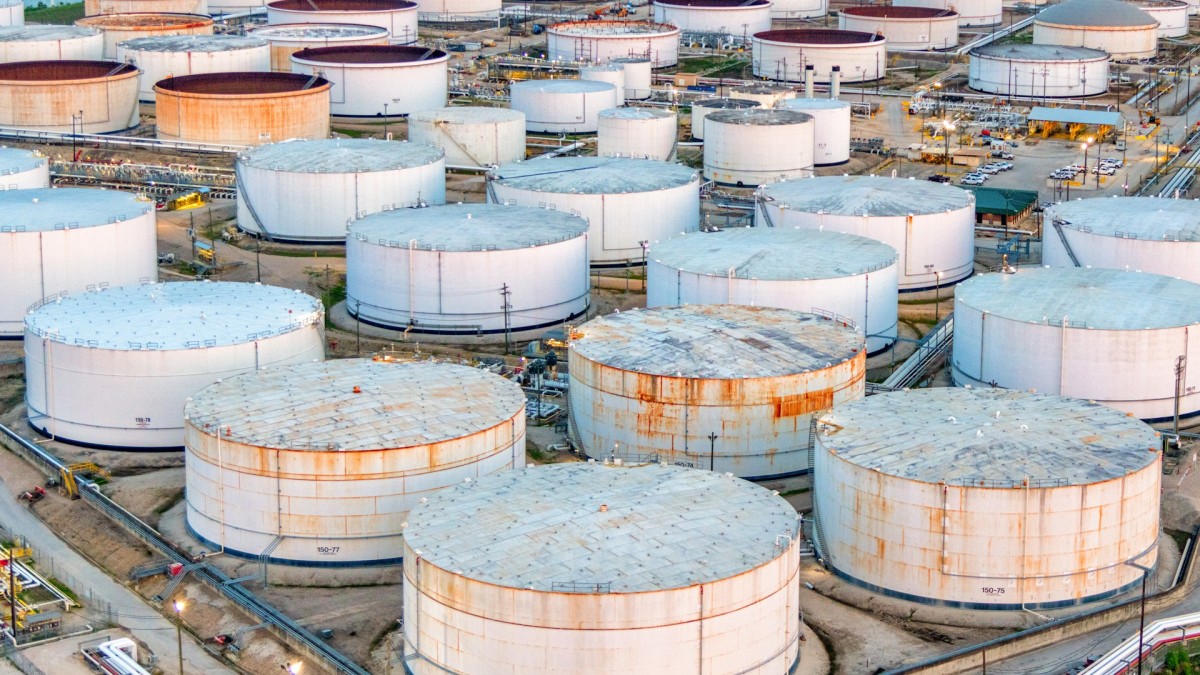
India's state-owned Oil and Natural Gas Corporation (ONGC), the country's top exploration company, will construct a new oil storage facility at Mangaluru capable of holding approximately 13 million barrels, as the world's third-largest crude importer moves to strengthen its resilience against supply disruptions.
The decision follows the Iran war and the severe disruption of crude flows through the Strait of Hormuz, which forced India to seek alternatives to replace lost Middle Eastern supply. Record crude oil imports from Russia helped cushion the impact, but Indian authorities concluded that additional storage infrastructure is needed to accommodate both commercial and strategic reserves.
India ranks among the world's largest crude oil importers but is also one of the most vulnerable to supply shocks. Its current maximum reserve capacity covers only eight days of national oil demand — far below the 90-day net import coverage benchmark recommended by the International Energy Agency for its member countries. India is not an IEA member, but the gap highlights the structural exposure of an economy that imports more than 85% of its crude oil needs.
Under the new plan, ONGC will develop a storage site in Mangaluru, located in the southwestern state of Karnataka on the Arabian Sea coast. The facility will have a capacity of 1.75 million metric tons of oil, equivalent to roughly 13 million barrels. Half of the new capacity will be allocated to strategic storage, while the other half will support ONGC's commercial operations, according to Suresh Gopi, India's Minister of State for Petroleum and Natural Gas, who addressed Parliament on the matter (Press Information Bureau, Government of India).
Mangaluru already hosts one of India's three existing underground strategic reserve sites, operated by Indian Strategic Petroleum Reserves Ltd (ISPRL). The new ONGC facility would add to established storage and pipeline infrastructure on Karnataka's coast, a key landing point for crude cargoes arriving from the Middle East and beyond.
Gopi confirmed that ONGC will fund the project (The Print).
Four months into the Middle East crisis, India's government directed ONGC to build and fill a new strategic petroleum reserve site, with an estimated investment of $1.6 billion, the Economic Times reported in June, citing sources familiar with the plans (OilPrice.com).
India's existing underground Strategic Petroleum Reserve currently has a total capacity of 5.33 million metric tons of crude oil, equal to approximately 39 million barrels — enough to cover just eight days of the country's oil consumption. By comparison, the United States, China, and Japan each maintain strategic reserves measured in hundreds of millions of barrels. The Mangaluru expansion represents one of India's most significant single reserve capacity additions since the original Phase I facilities were commissioned.
Source: OilPrice.com

