India’s IFF Challenges GitHub Takedown Order Targeting BitChat Repositories
Key Takeaways
- •India's cybercrime agency ordered GitHub to disable three BitChat repositories within three hours, citing the app's potential to bypass internet shutdowns and facilitate unlawful activity.
- •IFF argues the government used Section 79(3)(b) of the IT Act instead of India's formal website-blocking framework, which includes procedural protections for affected parties.
- •The takedown order did not identify specific unlawful content but instead targeted BitChat's decentralized Bluetooth-relay architecture as the basis for removal.
- •BitChat, launched in July 2025, has seen increased adoption during unrest and outages in countries including Nepal, Jamaica, Madagascar, Uganda, and Iran.
- •IFF has demanded withdrawal of the notice and public disclosure of all takedown orders issued under Section 79(3)(b) as a transparency measure.
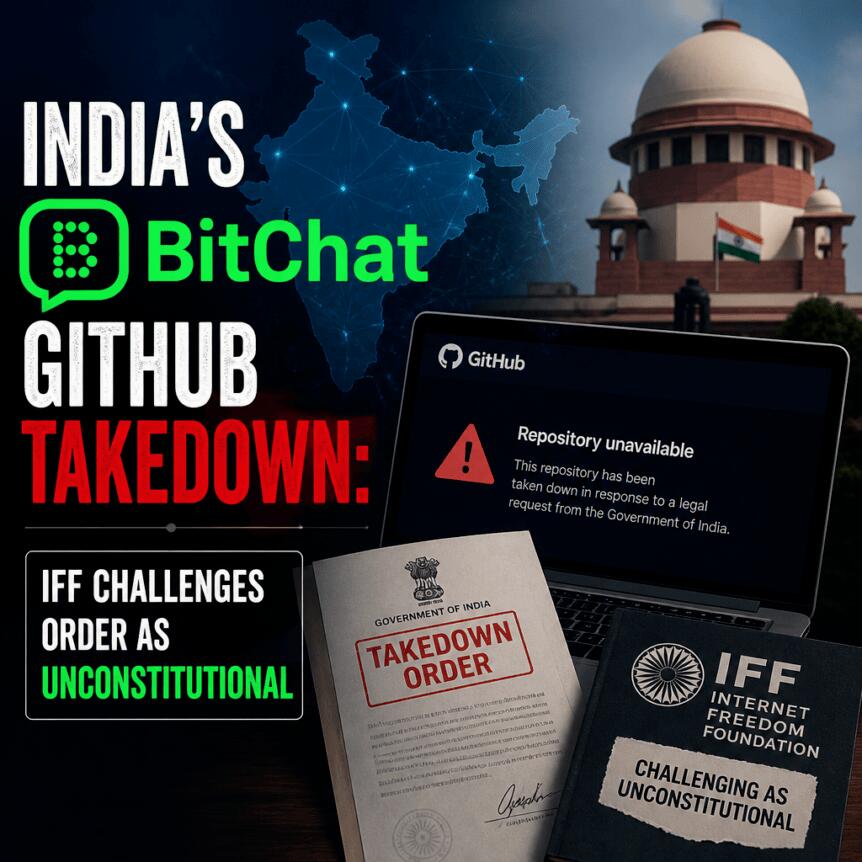
India’s Internet Freedom Foundation (IFF) has criticized a government order directing GitHub to remove repositories associated with BitChat, the decentralized messaging app linked to Jack Dorsey, calling the action unconstitutional and a threat to free speech and open-source software development.
The dispute focuses on the legal basis used by Indian authorities to seek the takedown. According to IFF, the order relied on Section 79(3)(b) of India’s Information Technology Act instead of the country’s formal website-blocking process, which the organization says contains procedural safeguards. IFF has urged the government to withdraw the notice and disclose all takedown orders issued under the same provision.
GitHub repositories targeted over shutdown-circumvention concerns
A day before IFF issued its public response, India’s cybercrime agency reportedly ordered GitHub to disable access to three BitChat repositories within three hours. According to IFF’s account, the directive said the decentralized messaging app could be used to bypass internet shutdowns, avoid lawful surveillance and facilitate unlawful activity.
BitChat is designed to reduce reliance on the public internet. Rather than routing messages through centralized servers or requiring continuous network access, the app can relay encrypted communications between nearby devices using Bluetooth. That design allows it to function when mobile networks or internet services are disrupted, a feature that has drawn attention from users in restrictive or unstable environments and scrutiny from authorities concerned about oversight.
The repositories at issue were linked to BitChat’s open-source code. IFF said the order did not identify specific unlawful content inside those repositories. Instead, the organization argued, the government treated the app’s decentralized architecture — including peer-to-peer Bluetooth communication without internet access — as the basis for removal. Because GitHub repositories often serve as the public record for code, documentation and collaboration, takedown orders aimed at repositories can affect not only end users but also developers, researchers and maintainers seeking to inspect or build on open-source software.
IFF disputes the legal route used for the order
In a statement posted on X, IFF said the government’s approach exceeded its legal authority. The organization argued that the notice should have followed India’s formal website-blocking framework rather than Section 79(3)(b) of the Information Technology Act.
IFF said the distinction is important because the formal blocking process includes procedural protections. The group’s position is that using a different legal route may affect transparency and the ability of affected parties to contest a takedown. It also asked authorities to publish all takedown orders issued under Section 79(3)(b), describing the request as a transparency measure.
The organization framed the order as a broader threat to both constitutional rights and open-source development. If authorities can require removal based on the capabilities of software rather than identified unlawful material, developers and maintainers may face uncertainty over which features can be safely published, documented or mirrored.
Decentralized messaging during outages and unrest
BitChat was released in July 2025 and has reportedly seen increased adoption during unrest, natural disasters and internet outages. Earlier Cointelegraph coverage described the app’s Bluetooth-relay model and how it can help communities communicate without relying on internet infrastructure: Jack Dorsey launches Bluetooth-relayed decentralized messaging app BitChat.
According to Cointelegraph reporting cited in the original coverage, adoption increased in countries including Madagascar, Nepal, Uganda, Jamaica and Iran. Related coverage includes reports on Nepal, Jamaica and broader global unrest: 48,000 Nepalis install Jack Dorsey’s BitChat amid protests, BitChat second-ranked app in Jamaica as hurricane strikes, and decentralized messaging adoption during global unrest.
The pattern highlights a recurring tension between emergency communications and state control over connectivity. When networks fail or governments restrict access, tools that do not depend on centralized infrastructure can help users communicate when traditional channels are unavailable. Authorities, however, may view the same resilience as a means to avoid monitoring or undermine shutdown measures.
Although the dispute concerns GitHub repositories rather than a blockchain protocol, it falls within a wider policy debate affecting decentralized technology. Software that continues operating despite disruptions can be treated by regulators as part of a threat model, especially when it is associated with privacy, censorship resistance or communications outside centralized systems.
Next questions in the BitChat takedown dispute
The immediate questions are whether access to the affected GitHub repositories remains disabled and whether the government will provide more detail about the content or functionality it considers unlawful. IFF’s requests for withdrawal of the notice and publication of all Section 79(3)(b) takedown orders could shape whether the dispute develops into a broader debate over constitutional limits, administrative procedure and transparency.
The case may also influence how open-source teams publish, document and mirror code for tools that regulators could interpret as enabling circumvention during internet shutdowns. For projects focused on decentralized networking, privacy or censorship-resistant communications, the BitChat order underscores how technical design choices can become the subject of legal and regulatory scrutiny.

