IMO Global Carbon Price Set for December Showdown as Majority Backs Net-Zero Framework
Key Takeaways
- •At the ISWG-GH 22 meeting in London, 38 countries explicitly supported shipping carbon pricing while 17, mostly oil-producing states, opposed it.
- •The proposed Net-Zero Framework could generate $10bn-$15bn per year to incentivise zero-emission fuels and support a just transition in developing countries.
- •If adopted, the measure would be the first global carbon-pricing mechanism applied across an entire industry sector.
- •International shipping accounts for roughly 3% of global greenhouse gas emissions, and the IMO's 2023 strategy targets net-zero by around 2050 with interim reduction checkpoints.
- •Negotiators face a compressed schedule, with a technical working group, MEPC 85, and the resumed extraordinary MEPC session all concluding by December 4.
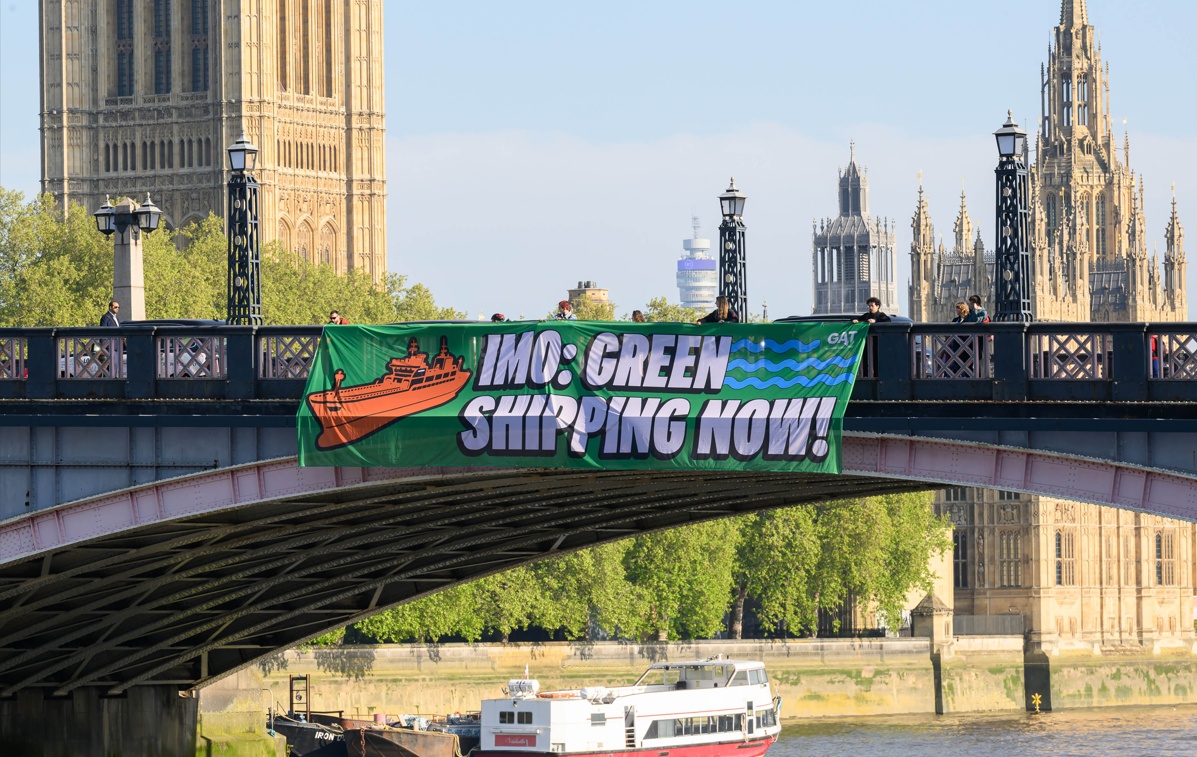
Shipping's proposed global carbon price has come through another bruising week at the International Maritime Organization (IMO), with a clear majority of countries continuing to back the core architecture of the Net-Zero Framework ahead of a decisive round of negotiations in December.
Nearly 1,200 delegates took part in last week's ISWG-GHG 22 meeting in London, where governments worked to bridge the divisions that derailed formal adoption of the framework last year.
During the session, 38 countries speaking on the record explicitly supported carbon pricing and the associated revenue mechanism, while 17 countries—predominantly oil-producing states—opposed it.
The framework could generate an estimated $10bn-$15bn annually. Revenues are intended to reward early adoption of zero- and near-zero-emission fuels and to support a just transition, particularly in developing countries. If adopted, it would become the first global carbon-pricing mechanism applied across an entire industry sector, a milestone closely watched by other parts of the transport and energy economy.
The stakes are significant for climate policy: international shipping accounts for roughly 3% of global greenhouse gas emissions, and the IMO's revised 2023 strategy commits member states to reaching net-zero emissions from shipping around 2050, with indicative checkpoints of 20%-30% reductions by 2030 and 70%-80% by 2040 compared with 2008 levels. The fuel intensity pathway under negotiation is the principal mechanism for delivering those nearer-term targets.
Substantial issues nonetheless remain unresolved. Analysis from UCL suggested the initial global fuel intensity reduction pathway could be softened around 2030 before becoming considerably steeper towards 2040. Proposals covering rewards, surplus-unit trading and compliance mechanisms also remain under negotiation.
Japan's proposal to replace centralised GHG pricing with shipowner-directed contributions gained little traction. China's suggestion that compliance payments and rewards could be netted into a single transaction, by contrast, attracted broader support.
"The devil is still in the detail," UCL's Shipping and Oceans Research Group cautioned, noting that despite a more cooperative atmosphere, several important elements remained wide open.
Jesse Fahnestock, director of decarbonisation at the Global Maritime Forum, said member states had shown "a continued willingness to find common ground", but warned that ambition must remain sufficient to underpin long-term investment in zero-emission shipping.
Negotiators now face an extremely compressed timetable. The next technical working group meets from November 23 to 27, immediately followed by MEPC 85 from November 30 to December 3. The extraordinary MEPC session that was adjourned last year is scheduled to resume on December 4.
The Net-Zero Framework was agreed in principle in April 2025, only for its adoption to be delayed following intense opposition from the United States and Saudi Arabia.
(Source: Splash247)
