Governments Face Critical Decision on IMO Net-Zero Framework as Climate Pressures Mount
Key Takeaways
- •The IMO approved a draft Net-Zero Framework in April 2025 that combines a greenhouse gas pricing mechanism with a Net-Zero Fund to support an equitable transition to cleaner shipping.
- •Liberia, Brazil, and Tuvalu each submitted alternative proposals before the deadline, ranging from significantly weaker to substantially more ambitious than the current framework.
- •Japan's proposal, which would let shipowners direct compliance payments toward self-selected projects, was submitted after the deadline and cannot be voted on for adoption this year.
- •Australia, Canada, South Africa, and the United Kingdom support adopting the framework as approved rather than reopening negotiations.
- •International shipping accounts for approximately 3% of global greenhouse gas emissions and transports around 90% of the world's traded goods.
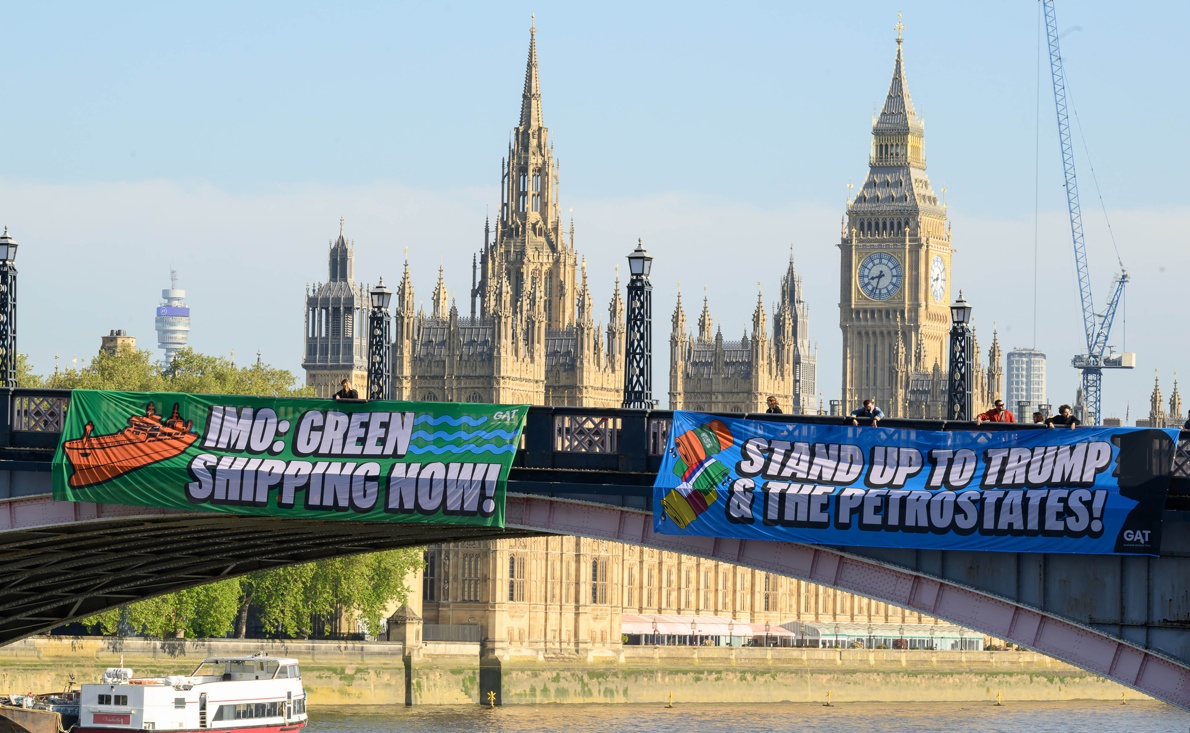
Governments face a critical decision next month: whether to protect the International Maritime Organization's (IMO) Net-Zero Framework or reopen a deal that took years to negotiate and risks becoming weaker with every compromise. Anais Rios, senior shipping policy officer at Seas at Risk, provides an overview of the various submissions circulating at IMO headquarters in London.
2026 has so far been marked by climate disasters. Europe has endured record-breaking heatwaves and one of its worst wildfire seasons in recent history. Southern and Western Africa are recovering from devastating floods, while communities worldwide continue to confront increasingly destructive climate extremes. Yet governments remain divided over whether to strengthen or weaken the IMO's climate measures for shipping.
In April 2025, the IMO approved the draft Net-Zero Framework (NZF), which remains the basis for current negotiations. While not perfect, it is the most equitable and climate-ambitious framework agreed upon to date. However, momentum has stalled. Rather than moving toward adoption, countries are now debating whether to adopt the framework as it stands, amend it, or replace it entirely.
The NZF combines a greenhouse gas pricing mechanism with a Net-Zero Fund, whose revenues help countries transition to cleaner shipping. The framework establishes a system of emission targets: ships that outperform their targets earn credits, while those that fall short must either purchase those credits or pay remedial charges. As targets become stricter over time, the financial incentive to adopt cleaner fuels and technology increases.
The urgency to decarbonise shipping has never been greater. International shipping accounts for approximately 3% of global greenhouse gas emissions, and as the backbone of global trade — carrying around 90% of the world's goods — its carbon footprint is projected to grow without coordinated action. The IMO's Revised GHG Strategy, adopted in 2023, set a goal of reaching net-zero emissions from international shipping by or around 2050, making the NZF the primary regulatory instrument to deliver on that commitment. 2024 was the first year in which global temperatures exceeded 1.5°C above pre-industrial levels — a stark warning of the trajectory ahead. Every fraction of a degree brings more extreme weather, greater pressure on food and ocean systems, and higher costs for communities and economies.
The weakest alternative proposal, submitted by Liberia — one of the world's largest flag states by registered tonnage — would significantly alter the framework's balance. Rather than relying on a combination of emission trading and fixed remedial payments, it would place greater emphasis on trading surplus units between ships and remove mandatory payments into a Net-Zero Fund. Instead of generating a dedicated fund to support a just and equitable transition, payments would largely flow between companies. If buying emission credits becomes cheaper than upgrading ships, investment in zero- and near-zero emission fuels would likely diminish.
A separate proposal from Brazil retains the overall architecture of the NZF but delays the early decarbonisation reduction threshold in exchange for steeper reductions later. While this approach may make an agreement more politically acceptable by lowering short-term costs, it would undermine climate reduction ambition and early investment in zero- and near-zero emission technologies that are critical during this decade — risking the transition before it has properly begun. It would also postpone revenues to the fund, making the transition harder and more expensive for all than under the currently approved NZF.
Tuvalu has put forward the most ambitious proposal, requiring all greenhouse gas emissions above zero to incur a charge. Estimates suggest it would raise more than US$100 billion per year during the 2030s, compared with approximately US$12 billion per year under the current NZF. Under this model, shipping would meet the IMO's decarbonisation targets while generating the funds needed for a just and equitable transition. However, the proposal is politically contentious, as it would impose higher costs from the outset and could face opposition from the United States and petrostates.
All of the above proposals were submitted to the IMO within the required deadline, making them eligible for adoption later this year.
Japan has also tabled its own proposal that would allow shipowners to direct part of their compliance payments toward projects of their own choosing, rather than contributing to a dedicated IMO fund for a just and equitable transition. This approach would make funding less predictable, reduce support to countries in need, and risk slowing the transition — making it more expensive over time. However, because Japan's proposal was submitted after the deadline, it cannot be put to a vote for adoption this year.
Meanwhile, Australia, Canada, South Africa, and the United Kingdom have agreed to preserve the Net-Zero Framework as approved in April 2025, arguing that the urgency of the climate crisis calls for implementation rather than reopening negotiations.
The current framework, while imperfect, already contains the foundations of a global system that rewards cleaner shipping, creates predictable investment signals, and supports countries that cannot achieve the transition on their own. It may not deliver every emission reduction needed to meet the IMO's climate goals, but it can — and should — be strengthened over time.
Countries can and should debate the pace of implementation and the level of ambition. At this stage, however, the framework is ready for adoption. Weakening the greenhouse gas pricing mechanism or the Net-Zero Fund would not make the transition cheaper; it would make it more uncertain, less equitable, and harder to deliver.
As the climate crisis accelerates, the question is no longer whether shipping must decarbonise. It is whether governments have the political courage to protect the framework they have spent years negotiating. The planet — and the people on it — cannot afford another year of delay.
Source: Splash247
