Hyundai and Kia Open Shanghai UX Hub for AI-Defined Vehicles
Key Takeaways
- •Hyundai Motor and Kia inaugurated UX Studio Shanghai to strengthen vehicle development tailored to Chinese consumer preferences amid intensifying competition from domestic EV makers.
- •The Korean automakers have experienced declining sales in China as local manufacturers gain market share with highly connected, software-rich vehicles.
- •The three-story facility comprises an Open Lab for public visitor interaction and an Advanced Lab equipped with driving simulators for research on human-machine interfaces and driver assistance systems.
- •Research findings from the studio will be incorporated into next-generation vehicle development and shared across Hyundai and Kia's R&D operations in China.
- •The studio was relocated from Huangpu District to a standalone building near Jing'an Temple to increase public accessibility and expand customer participation in the development process.
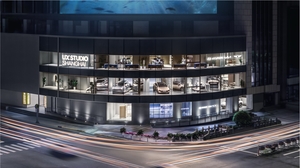
Hyundai Motor and Kia said Thursday that they have opened UX Studio Shanghai, a user experience research hub in Shanghai's Jing'an District, as the automakers seek to strengthen vehicle development tailored to China amid intensifying competition in the world's largest auto market.
The move comes as foreign automakers face mounting pressure from fast-growing domestic EV makers such as BYD, NIO, XPeng and Li Auto, which have gained market share by offering software-rich, highly connected vehicles attuned to local consumer expectations around digital integration and in-cabin technology. Hyundai and Kia, like several legacy international brands, have seen their China sales erode in recent years, prompting a renewed push to localize design and engineering around Chinese user preferences.
The facility will examine China's rapidly evolving smart mobility market and consumer trends. Hyundai and Kia said the research findings will be incorporated into the development of next-generation vehicles and AI-defined mobility technologies — an approach aligned with the broader industry shift toward software-defined vehicles, where features and user experiences are increasingly shaped by updatable code, AI assistants and data-driven personalization rather than hardware alone.
The studio has been relocated from Huangzu District to a standalone building near Jing'an Temple, one of Shanghai's busiest commercial districts. The companies said the move is intended to make the hub more accessible to the public while expanding customer participation in the vehicle development process.
Hyundai and Kia said the center will study Chinese consumers' lifestyles, driving habits and digital preferences, applying those insights from the earliest stages of vehicle and user experience design.
The three-story facility is divided into two main sections: the Open Lab, an interactive public space, and the Advanced Lab, a dedicated research center.
The Open Lab includes three experience zones where visitors can explore future mobility technologies, learn about the vehicle development process and try new features that are still under development. Visitors will also be able to provide direct feedback to researchers.
The Advanced Lab is reserved for pre-selected participants who will work with researchers on UX projects. Equipped with driving simulators and dedicated development spaces, the lab will support research into advanced human-machine interfaces and advanced driver assistance systems. It will also allow researchers to test scenarios that are difficult to reproduce on public roads.
Hyundai and Kia said the insights generated at UX Studio Shanghai will be shared across their research and development operations in China and reflected in future models designed for the local market.
"By incorporating customer insights from the earliest stages of product development, we aim to deliver differentiated mobility experiences in both China and global markets," a company official said.
