Hyundai August sales fall to four-year low after strike disrupts output
Key Takeaways
- •Hyundai’s global sales fell 14.2 percent year on year in August to 288,574 vehicles.
- •Domestic sales at Hyundai sank 41.1 percent to 34,333 units, the lowest level in 11 years.
- •Kia reported a 5 percent increase in global sales to 266,675 vehicles and outsold Hyundai domestically by nearly 6,000 units.
- •Hyundai’s labor union approved a tentative wage agreement on Tuesday, ending the strike that had caused an estimated production loss of 55,000 vehicles.
- •Hyundai plans to boost output of new models, including the Grandeur, Avante and Tucson, to improve sales in the months ahead.
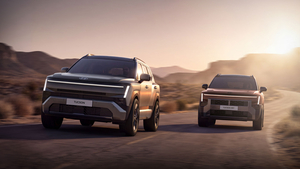
Hyundai Motor’s global sales fell below 300,000 vehicles in August for the first time in more than four years after its first full-scale strike in a decade disrupted production. The decline also sharply narrowed the sales gap between Hyundai and its smaller affiliate Kia.
Hyundai said Tuesday that global sales dropped 14.2 percent year on year to 288,574 vehicles. Domestic sales plunged 41.1 percent to an 11-year low of 34,333 units.
It was Hyundai’s first monthly domestic tally below 40,000 since February 2020, when the COVID-19 pandemic began disrupting production and demand.
Kia, by contrast, reported a 5 percent increase in global sales to 266,675 vehicles, supported by a 7.4 percent rise in overseas sales to 225,413 units. Domestic sales at Kia fell 7.6 percent to 40,213, but still came in nearly 6,000 units higher than Hyundai’s.
The two automakers also moved in opposite directions in the important US market, where monthly sales figures are closely watched as a gauge of brand momentum for Korean automakers. Hyundai’s sales slipped 1.9 percent to 94,612 vehicles, while Kia edged up 0.9 percent to a record 83,793 units for August. Combined US sales for the two brands fell 0.6 percent to 178,405 vehicles, the first monthly decline since April.
Industry officials said much of Hyundai’s weakness stemmed from an estimated production loss of 55,000 vehicles caused by the labor union’s first full-scale strike in 10 years.
The dispute, centered on wages, performance bonuses and an extension of the retirement age, led to 60 hours of walkouts and 120 hours of production disruptions this year. Workers staged 30 hours of strikes in August alone, including a full-day walkout on Aug. 21.
“Hyundai suffered from sluggish demand across key markets, excluding the US, compounded by the impact of labor strikes,” Mun Yong-kwon, an analyst at Shinyoung Securities, wrote in a Wednesday report.
“Kia, on the other hand, is benefiting from a strengthened electric vehicle and hybrid lineup in Europe and North America.”
Hyundai’s labor union voted Tuesday to accept a tentative wage agreement, ending the dispute. The deal was approved by 61.55 percent of participating union members.
With the strike over, Hyundai plans to increase production of key new models in an effort to restore sales momentum during the rest of the year.
Its updated lineup includes the Grandeur sedan, the Avante compact sedan — sold overseas as the Elantra — and the Tucson SUV. The All-New Avante received more than 10,000 preorders in Korea on its first day, while the redesigned Tucson, the model’s first full change in six years, is scheduled to launch in the fourth quarter.
Hyundai is placing particular emphasis on the new Tucson to improve its performance in the US, where hybrids and family-oriented SUVs have remained important demand drivers. The Tucson remained Hyundai’s best-selling model there in August, with 21,197 units sold. It was followed by the Elantra with 17,747 and the Santa Fe with 13,512.
Industry sources attributed the Tucson’s popularity to strong demand for its hybrid version and its appeal as a family vehicle. Since its US debut in 2021, the Tucson Hybrid had recorded cumulative sales of 233,793 units as of early 2026, making it Hyundai’s best-selling hybrid model in the country.
“Hybrid demand remained strong, helping electrified vehicles reach 34 percent of total sales and hybrids achieve a record share,” Hyundai Motor North America President and CEO Randy Parker said in the company’s monthly sales release.
