Hyperscale Data Halts Bitcoin Mining at Michigan Site for AI Deal Worth Up to $1.2 Billion
Key Takeaways
- •Hyperscale Data shut down Bitcoin mining at its Michigan facility on September 1 to ready the site for an AI customer.
- •The 20-year agreement with an unnamed California AI cloud provider could generate over $1.2 billion if both five-year extensions are exercised.
- •The customer holds an option to add 32 megawatts within the first two years, which could push total contract revenue above $3 billion.
- •Hyperscale intends to sell its retired mining servers and expects gains, but has not announced when AI operations will begin.
- •The conversion mirrors a wider trend of Bitcoin miners repurposing power capacity for AI clients, as seen with IREN, whose AI cloud revenue topped mining revenue but which wrote down $450.4 million in assets.
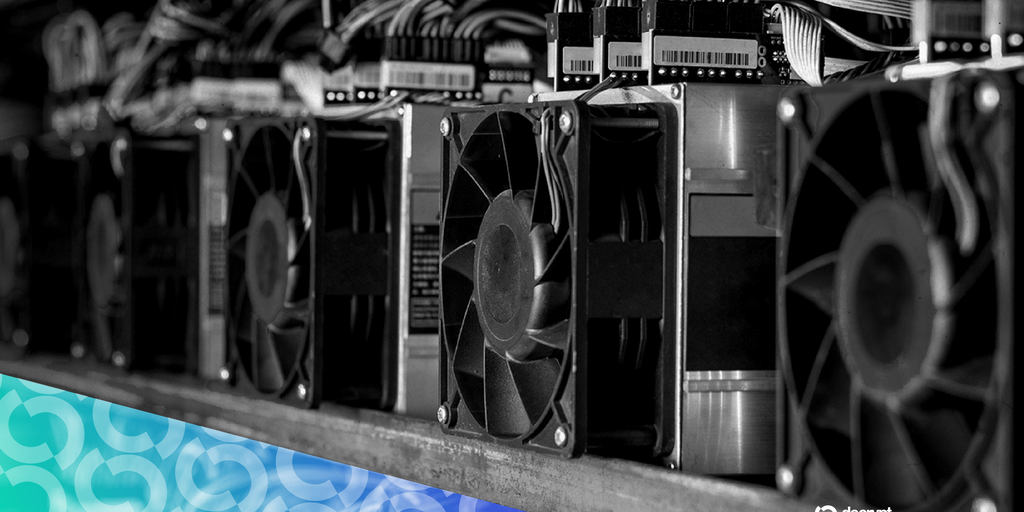
Hyperscale Data has shut down Bitcoin mining operations at its Michigan data center on September 1 to make room for an AI customer whose contract could generate more than $1.2 billion over 20 years, the company said.
In an announcement on Wednesday, Hyperscale said the previously announced deal could generate more than $1.2 billion if the customer exercises both five-year extensions to the initial 10-year term. The agreement covers 20 megawatts of capacity for an unnamed California-based provider of cloud computing services for AI.
"The immediate shutdown of the Bitcoin mining operations allows our team to focus the Facility's power, infrastructure and resources in preparing the Facility for its usage by our Customer," CEO William Horne said in the announcement.
According to Hyperscale, the agreement gives the customer an option to add 32 megawatts within the first two years. The company said exercising that option and both five-year extensions could bring total contract revenue above $3 billion.
"Further, as the expansion of the Facility to support AI computing infrastructure progresses, it is my belief that our stockholders will be rewarded as the Company's market capitalization, which currently trades at a significant discount to other data center companies, begins to normalize in comparison to its available contracted power capacity," Horne added.
Hyperscale plans to sell its mining servers and expects gains from those sales. It did not announce a start date for AI operations, and the mining shutdown applies to the Michigan site.
The pivot reflects a broader trend across the Bitcoin mining industry, where companies holding large blocks of energized power capacity—often built over years through grid interconnection processes—have found AI and cloud computing customers willing to sign long-term contracts for that capacity as AI data center demand has surged. Miners' access to power has become a key asset in its own right, and conversion allows firms to diversify away from mining revenue, which is tied to Bitcoin prices, halving-cycle economics, and mining difficulty.
Other miners have been converting sites to serve AI customers. VanEck's head of digital asset research, Matthew Sigel, argued in March that miners are "sitting on a gold mine" and could profit from repurposing their infrastructure as demand for AI computing grows.
The cost of that shift, however, can be substantial, as was evident in IREN's quarterly results released last month: AI cloud revenue surpassed Bitcoin mining revenue for the first time, but the company also wrote down $450.4 million in asset values, mostly tied to mining equipment it had retired.
For Hyperscale, key open questions include when AI operations will actually begin at the Michigan site, whether the customer exercises the 32-megawatt expansion option, and how much revenue the planned sale of the retired mining servers generates.
Source: Decrypt; official announcement

